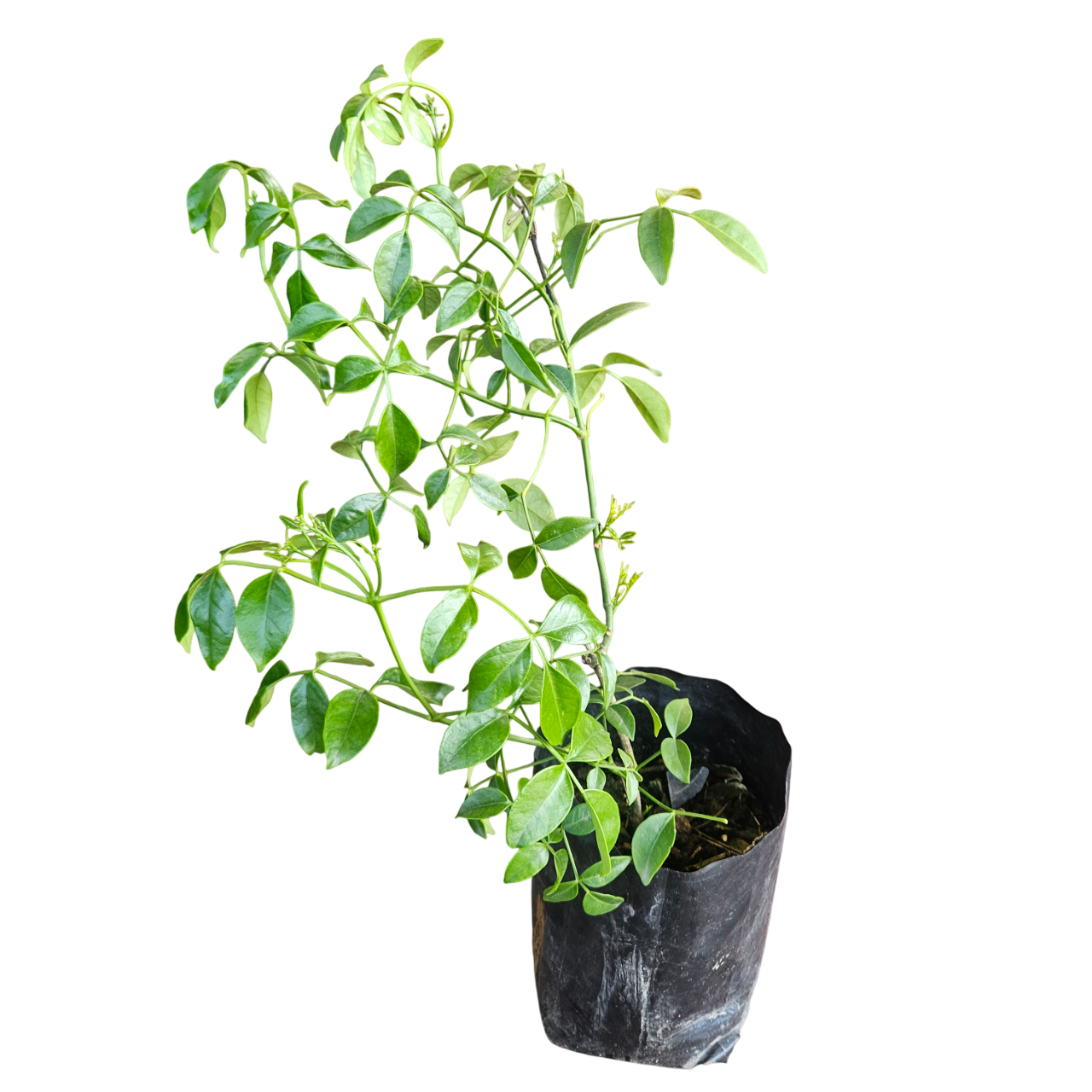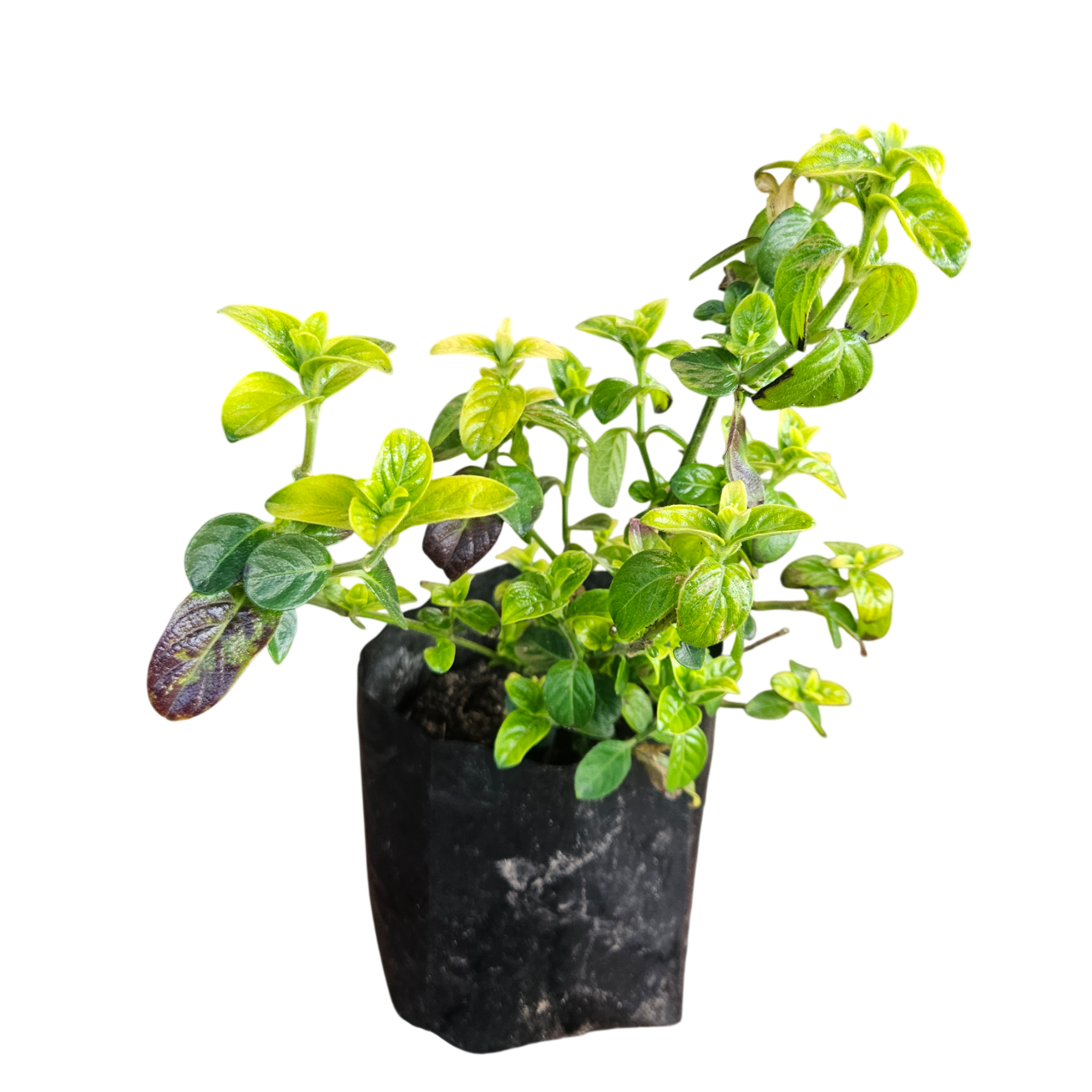
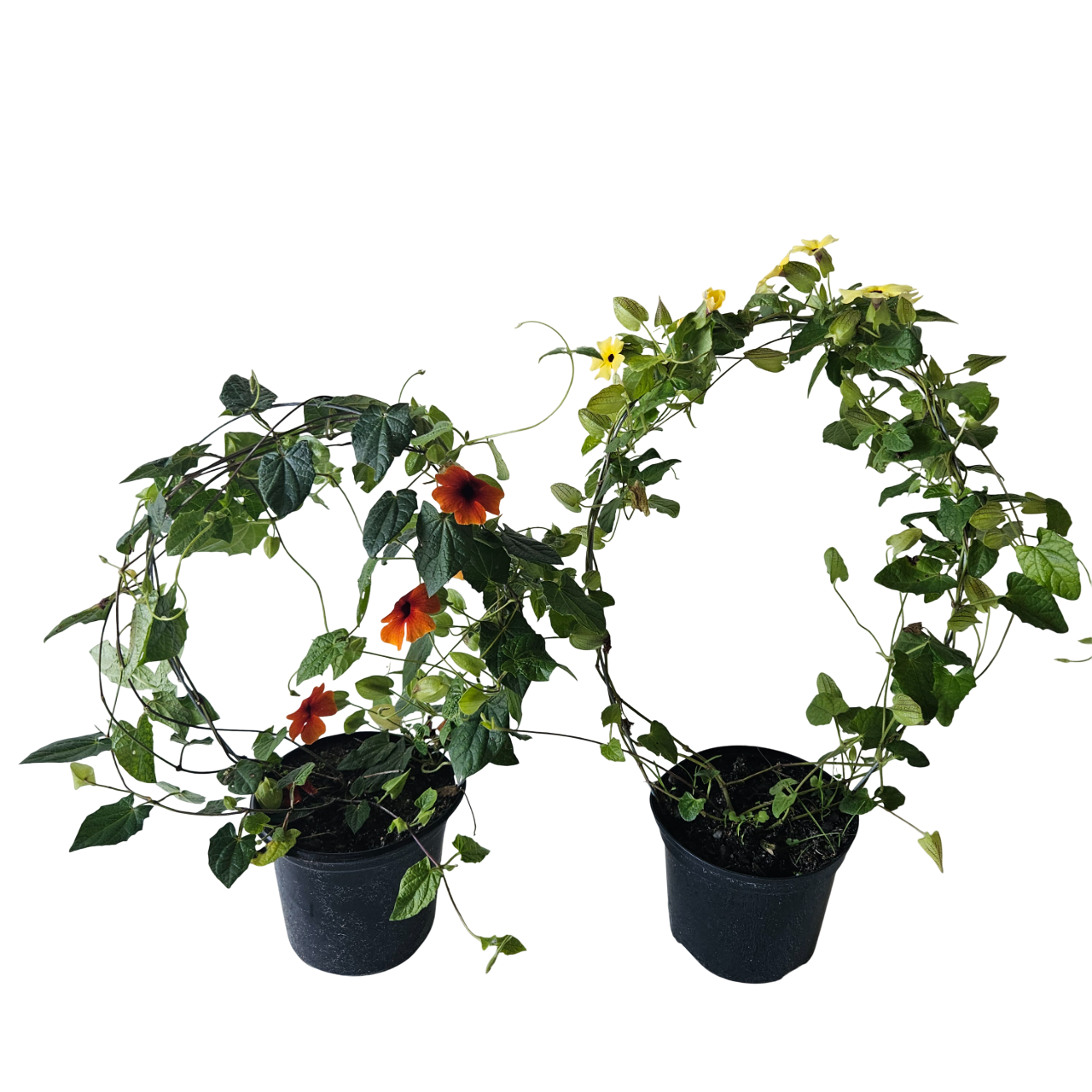


That cheerful face with the dark centre peeking out from a mass of bright petals—it’s impossible not to smile. Black-Eyed Susan, known locally as Swartoognooi, is a soft, evergreen, twining perennial treasured for its exceptionally long flowering season and its easy-going, generous nature. It features attractive, bright green, heart- or arrow-shaped leaves with softly hairy surfaces, forming a lush, leafy curtain along its twining stems. From early summer through late autumn (and all year round in milder coastal gardens), it produces an endless succession of striking, trumpet-shaped flowers in shades of warm orange, sunny yellow, or creamy white, each featuring the iconic dark centre that gives the plant its name.
Native to South Africa (from the Eastern Cape through KwaZulu-Natal and beyond), Black-Eyed Susan is wonderfully adapted to local conditions. It thrives in full sun to partial shade—full sun gives the most flowers. Give it well-drained, compost-enriched soil, and once established, it needs only moderate water. It’s semi-hardy to light frost; in colder inland valleys, it may die back, but usually resprouts from the base or self-seeds readily. With stems reaching 1–5 metres long, it’s perfect for quickly covering fences, scrambling up trellises, or spilling from hanging baskets.
Key Features:
- Masses of orange or yellow blooms with a signature dark “eye” over a long season
- A proud South African native with moderate water needs
- Attracts bees and is a host plant for the Eyed Pansy butterfly
- Fast-growing and versatile for fences, trellises, or baskets
Gardening Note: Plant in well-drained soil in a sunny to semi-shaded position. Water regularly until established; mature plants need only moderate water and tolerate some dryness. Trim back lightly in spring to encourage bushy growth. In colder inland areas, it may act as a die-back perennial, resprouting from the base in spring, or can be grown as an annual.