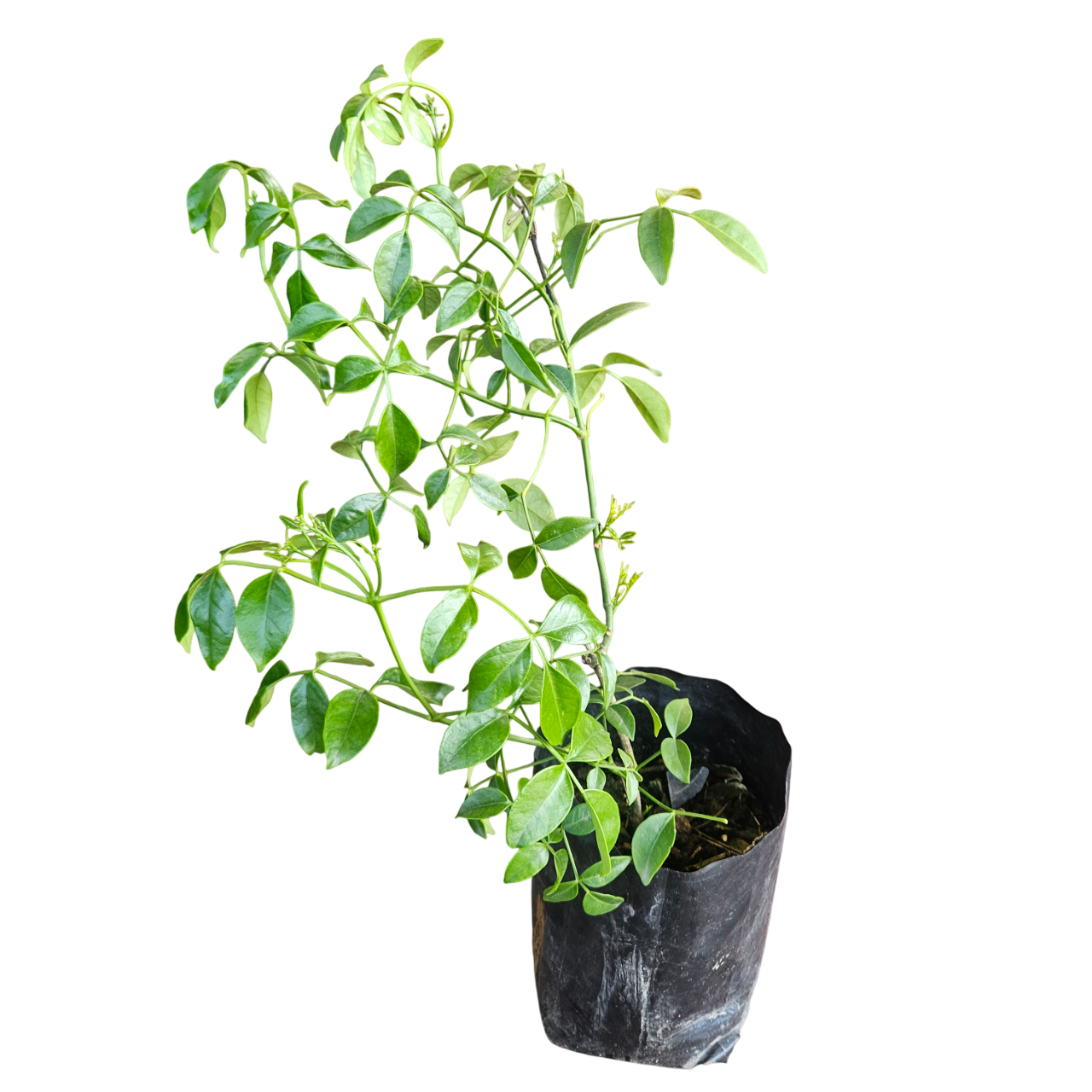
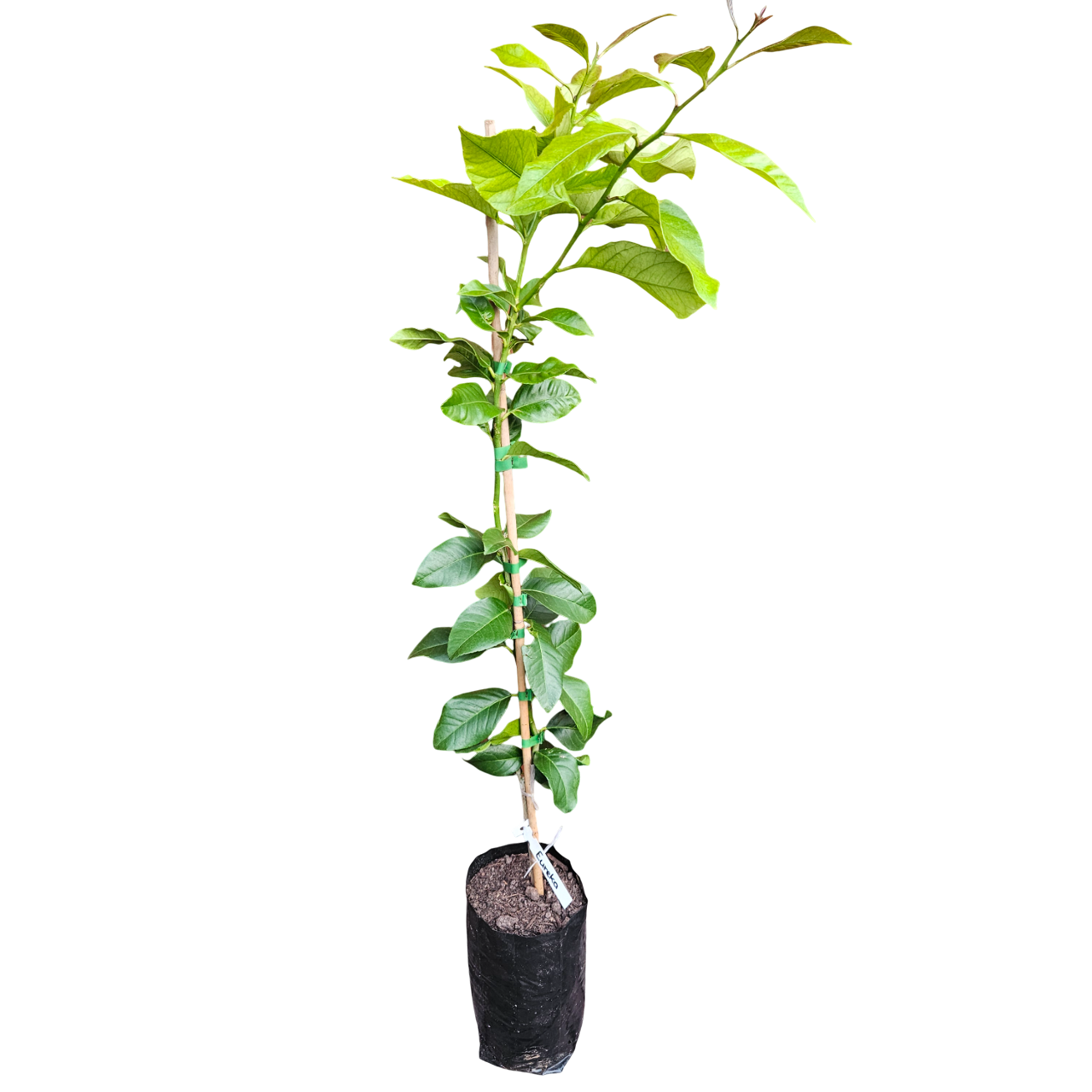


Imagine stepping into your garden and picking a fresh, tangy lemon any time of the year. That’s the joy of the Eureka Lemon Tree. This small to medium-sized, vigorous, nearly thornless evergreen tree has a spreading, open growth habit with handsome, glossy, dark green, aromatic foliage. New spring growth emerges with a beautiful bronze-purple flush, adding extra seasonal interest. Throughout the year—but especially from late winter through summer—it produces fragrant, waxy, white star-shaped flowers with purple-tinged buds, followed by medium-sized, oval to oblong lemons with bright yellow, slightly rough skin and the characteristic small nipple at the end. These juicy, highly acidic, virtually seedless fruits are the quintessential culinary lemon.
While this popular variety originated in California from Italian stock, it has become a beloved citrus tree across the globe and is wonderfully suited to the Western Cape’s Mediterranean climate. It thrives in full sun—at least 6–8 hours of direct light daily—and demands well-drained, slightly acidic, loamy soil enriched with compost. It’s sensitive to frost, especially when young, so give it a warm, sheltered spot (ideally against a north- or west-facing wall) in all but the mildest coastal gardens. Reaching 3–5m tall and wide in the ground, it’s perfect for orchards, mixed borders, or as a striking container specimen on a sunny patio.
Key Features:
- Virtually seedless, bright yellow lemons with high juice and acid content
- Nearly year-round harvest, especially abundant from late winter through summer
- Fragrant white flowers and aromatic glossy foliage
- Ideal as a specimen tree or in a large container on a sunny patio
Gardening Note: Plant in well-drained, compost-enriched soil in full sun, sheltered from strong winds and severe frost. Water deeply and regularly, allowing soil to dry slightly between waterings. Feed with a specialised citrus fertiliser (like 3:1:5) every few months during the growing season. Prune after harvesting to remove dead or tangled branches. Protect young trees from frost by covering them on cold winter nights.