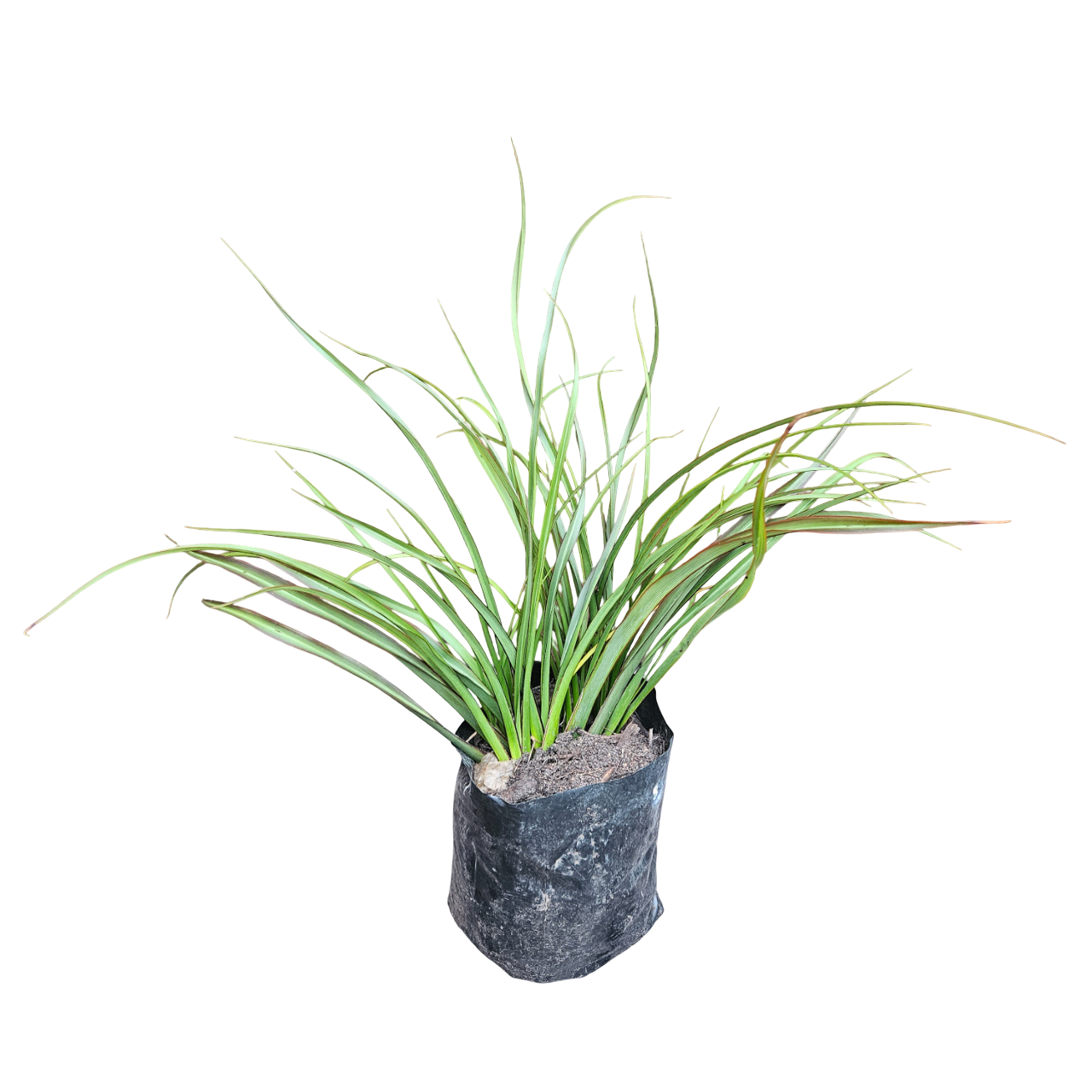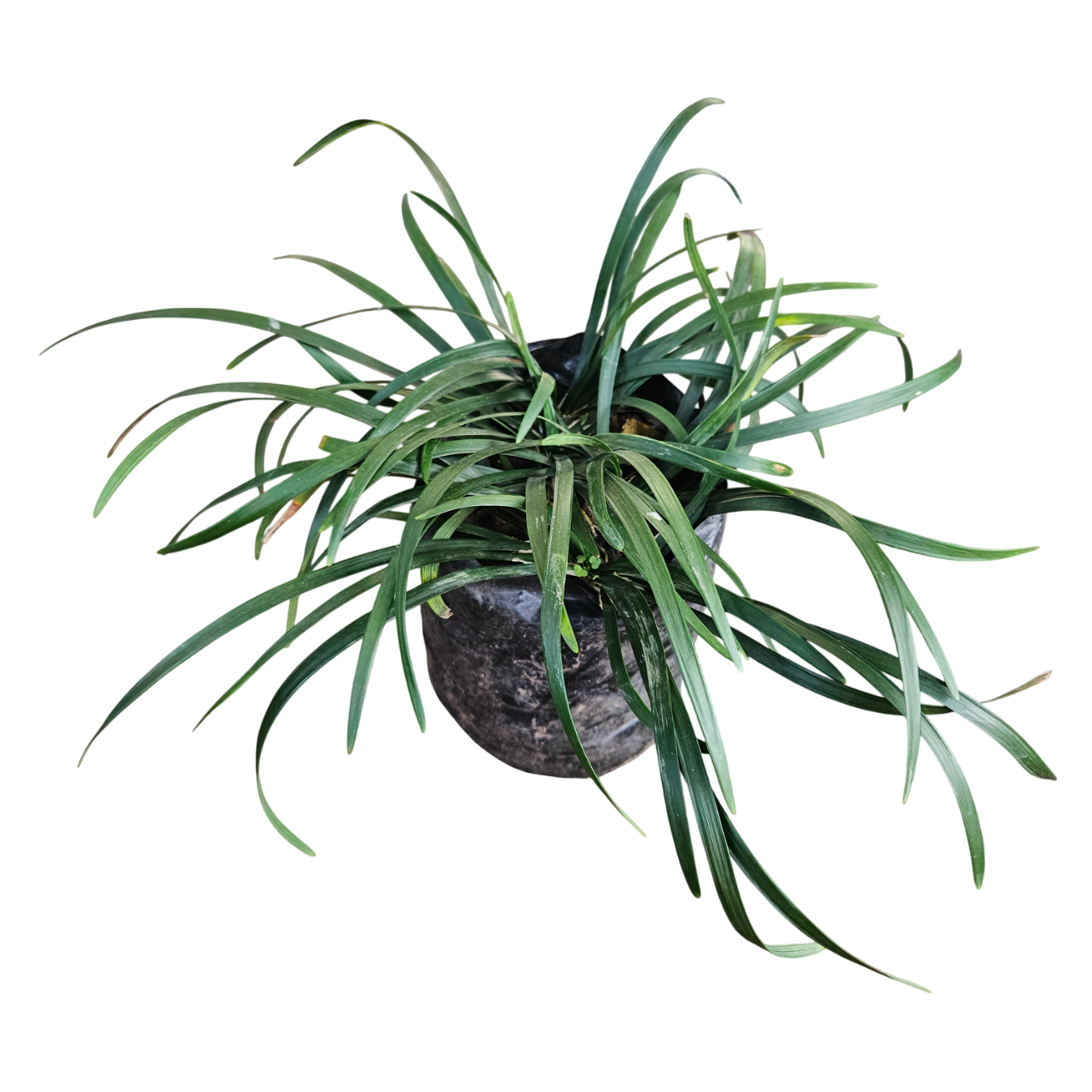
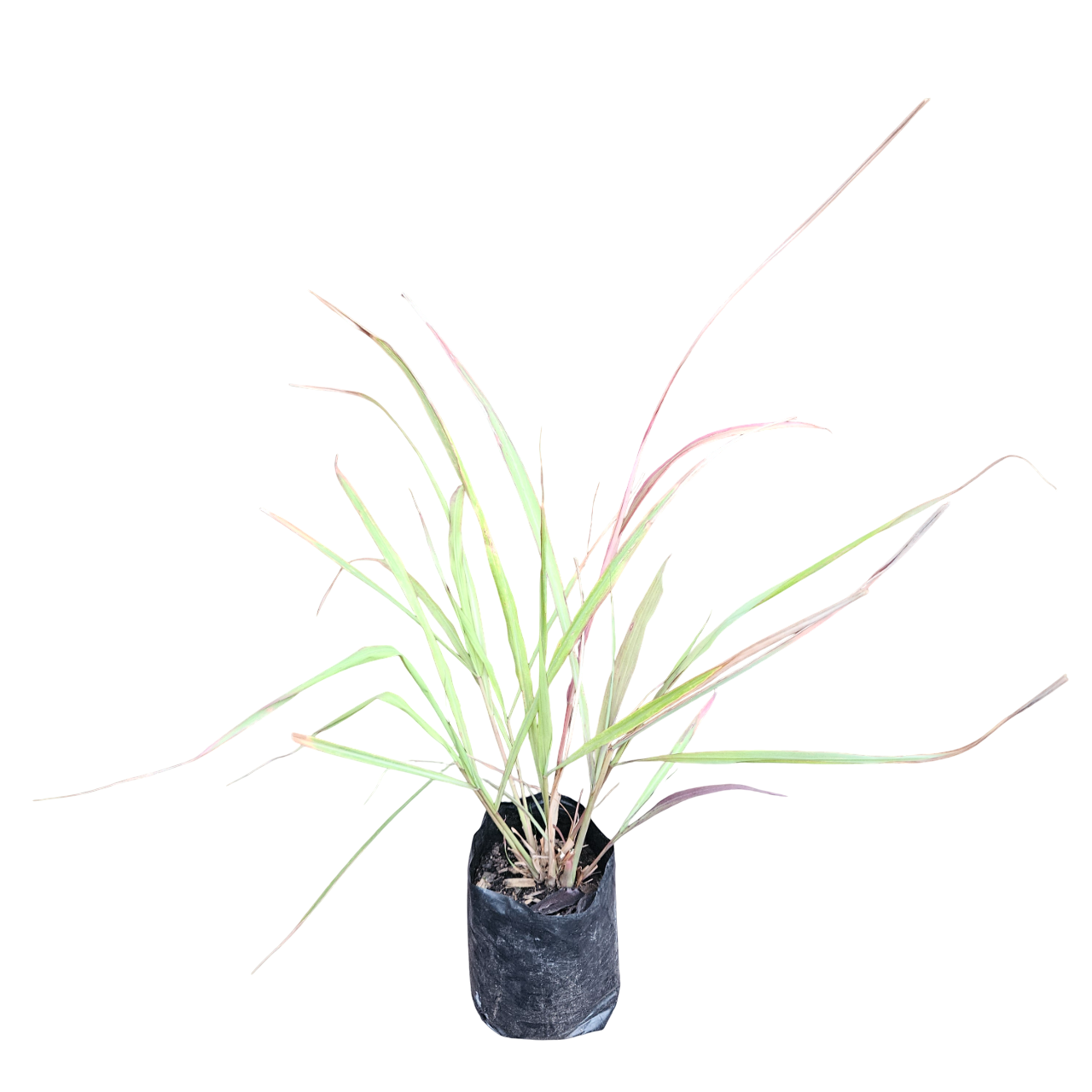

For a plant that perfumes the garden with every brush of the hand, Lemon Grass is an absolute treasure. Also known as Citroengras or Koorsgras in Afrikaans, this fast-growing, clump-forming evergreen perennial forms a dense, fountain-like clump of slender, arching, strap-like leaves in soft, pale green to bluish-green. When crushed or brushed, the entire plant releases an intense, refreshing, lemon-like fragrance that perfumes the air and deters insects. In ideal conditions, it may produce large, branched flower spikes, but in cultivation, flowering is rare.
Native to Maritime Southeast Asia, this tropical grass has proven wonderfully suited to South African gardens, particularly in warm, frost-free regions. It thrives in full sun—at least 6 hours of direct light for the best colour and most intense fragrance. It prefers fertile, well-drained, loamy soil that’s rich in nitrogen and kept consistently moist. In the Western Cape, it grows actively during warm summer months and slows down in winter. It’s sensitive to frost and must be protected in colder inland valleys. Reaching 1–1.5m tall and wide, it’s perfect for herb gardens, mixed borders, large containers, or as a fragrant architectural accent near seating areas.
Key Features:
- Long, arching, light green leaves release a powerful, fresh lemon fragrance when crushed
- Indispensable for flavouring teas, curries, soups, and marinades in Asian cuisine
- Quickly forms a lush, fountain-like clump for year-round texture and movement
- Ideal for culinary gardens, borders, containers, or as a fragrant accent
Gardening Note: Plant in well-drained, compost-enriched soil in full sun for the most vigorous growth and best fragrance. Water regularly, especially during dry spells; don’t let soil dry out completely. In colder inland areas, plant in a large container that can be moved to a sheltered, frost-free spot in winter. Cut back old leaves in early spring to rejuvenate. Harvest by cutting stalks at the base once the clump is well-established. Propagate by dividing large clumps in spring. Leaf edges are sharp—handle with care.