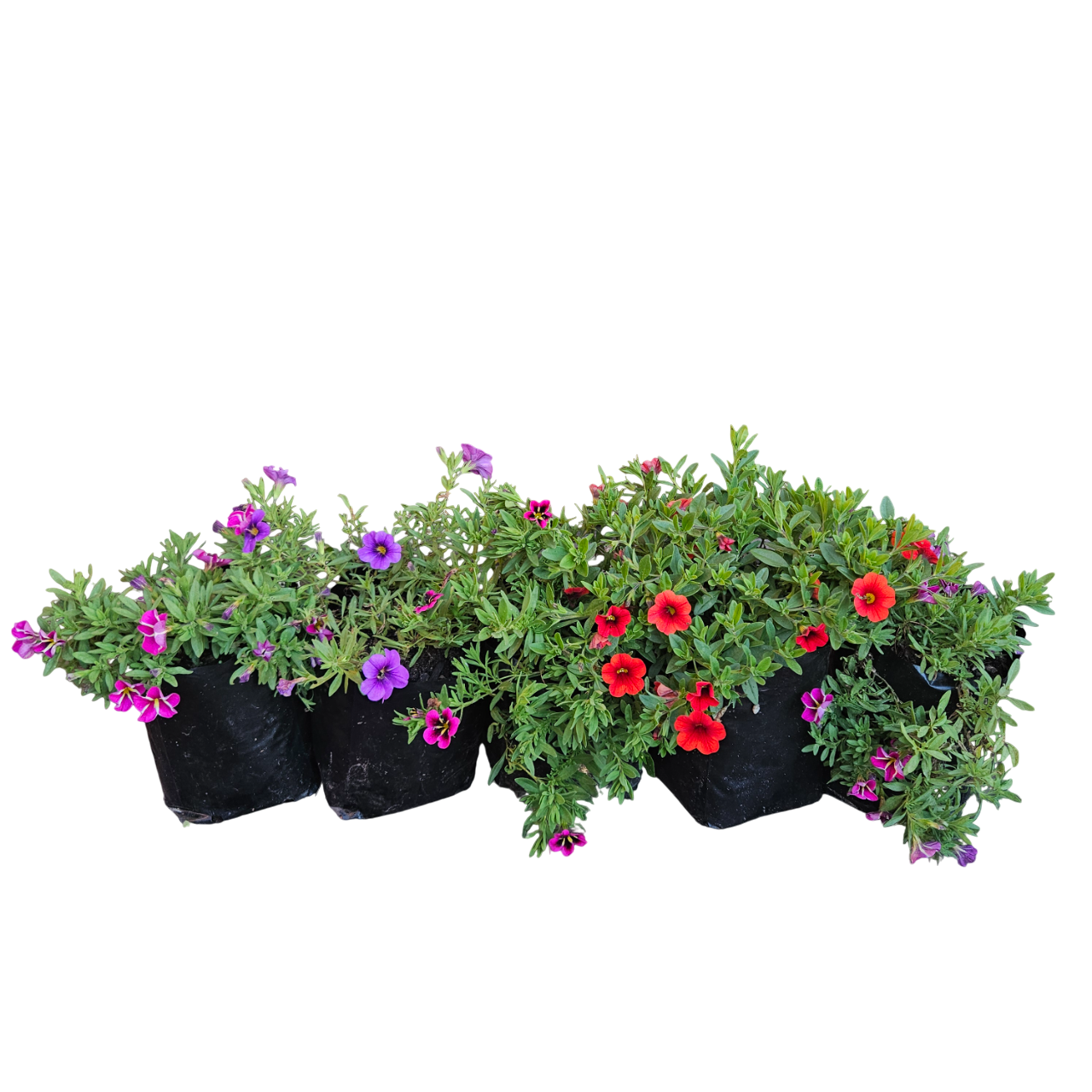

If you want a plant that spills over the edges of pots like a waterfall of colour, Million Bells is the one. Also known as Mini Petunia, this vigorous trailing annual features a dense, compact mound of small, oval, slightly sticky green leaves, from which emerge hundreds—sometimes up to 500 per plant—of small, trumpet-shaped, petunia-like flowers. Available in a breathtaking rainbow of colours including vibrant reds, oranges, pinks, purples, yellows, and striking bicolours, the blooms create a living cascade that flows gracefully over container edges from early spring through late autumn.
Native to South America, Million Bells has proven wonderfully suited to the Western Cape’s temperate climate as a summer annual. It thrives in full sun to partial shade—at least 4–6 hours of direct light for the most abundant display, though afternoon protection helps in hotter inland gardens. It prefers well-drained, fertile potting soil and needs regular watering, especially during dry summer months, but won’t tolerate standing water. It’s a heavy feeder and requires regular fertilisation to support non-stop blooming. Sensitive to frost, it’s best treated as a summer annual, planted after all danger of frost has passed. Reaching 15–30cm tall with a spread of 30–60cm or more, it’s the ultimate “spiller” for hanging baskets, window boxes, or mixed containers.
Key Features:
- Hundreds of small, petunia-like flowers in vibrant colours create a true waterfall of colour
- Self-cleaning—no deadheading needed for a tidy, blooming display
- Exceptionally long flowering season from early spring through late autumn
- A magnet for bees, butterflies, and hummingbirds
Gardening Note: Plant in a sunny to partially shaded position in well-drained, fertile potting mix—afternoon shade helps in hotter areas. Water regularly to keep soil evenly moist but not waterlogged. Apply liquid fertiliser every 2–3 weeks during the growing season to encourage continuous blooming. Trim lightly if stems become leggy. Sensitive to frost; plant after all danger of frost has passed in spring. Protect from heavy winter rains by placing containers under cover.