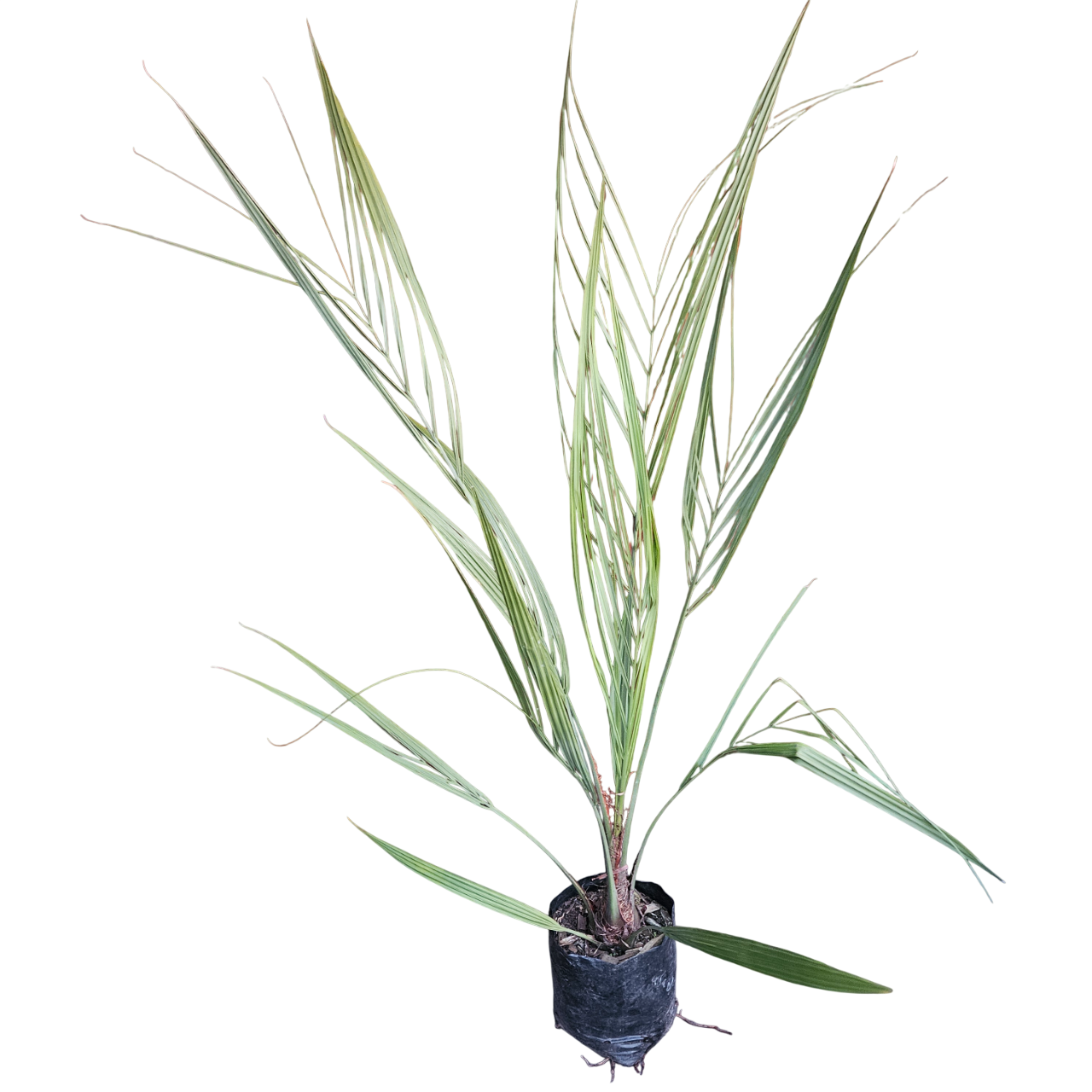
Stand beneath its graceful, arching fronds, and you’ll feel like you’ve discovered a palm that’s both beautiful and deliciously useful. Jelly Palm, also known as Pindo Palm or Wine Palm, is a slow-growing, single-stemmed evergreen palm with a stout, rough trunk patterned with old leaf bases. Its most striking feature is the magnificent crown of strongly recurved, feathery, blue-grey to silvery-green fronds that can reach up to 3 metres long, creating a soft, weeping, fountain-like effect that adds extraordinary texture and a cool, tropical feel to any garden. From late winter through spring (August to November), it produces impressive, pendulous flower spikes of small, creamy-yellow to reddish blossoms, highly attractive to bees. Then comes the real treasure: large, plump, orange-yellow fruits the size of dates, ripening in summer. Those fruits are famously used to make delicious jams, jellies, and even wine—hence the name.
Native to the grasslands and open woodlands of Brazil, Uruguay, and Argentina, this adaptable palm has proven wonderfully suited to the Western Cape’s temperate Mediterranean climate. It thrives in full sun—at least 6 hours of direct light for the most robust growth and heaviest fruit production—and tolerates a range of well-drained soils, including sandy, loamy, and even clay, as long as they don’t stay waterlogged. Once established, it’s remarkably drought-tolerant, making it a water-wise choice for Cape gardens. It excels in coastal conditions, handling strong winds and salt spray with surprising resilience, and is exceptionally cold-hardy, tolerating temperatures down to -10°C. Reaching 4–6 metres tall with a spread of 3–5 metres, it’s perfect as a dramatic focal point, for lining driveways, or for adding a lush, tropical accent to large gardens and coastal landscapes.
Key Features:
- Striking, arching, blue-grey to silvery-green fronds create a soft, weeping, tropical silhouette
- Produces large, sweet, orange-yellow fruits ideal for jams, jellies, and wine
- Exceptionally drought-tolerant, wind-tolerant, and frost-hardy once established
- Slow-growing and low-maintenance; perfect for coastal gardens and large containers
Gardening Note: Plant in full sun in well-drained soil. Water regularly until established; mature palms are highly drought-tolerant but appreciate occasional deep watering during dry summer spells for better fruit production. Remove spent fronds at the base to keep tidy. The trunk is rough with old leaf bases—wear gloves when handling. Protect young palms from severe frost only in the coldest inland valleys, though established trees are very hardy. Fruits can be messy when they drop, so avoid planting directly over paving or pathways.