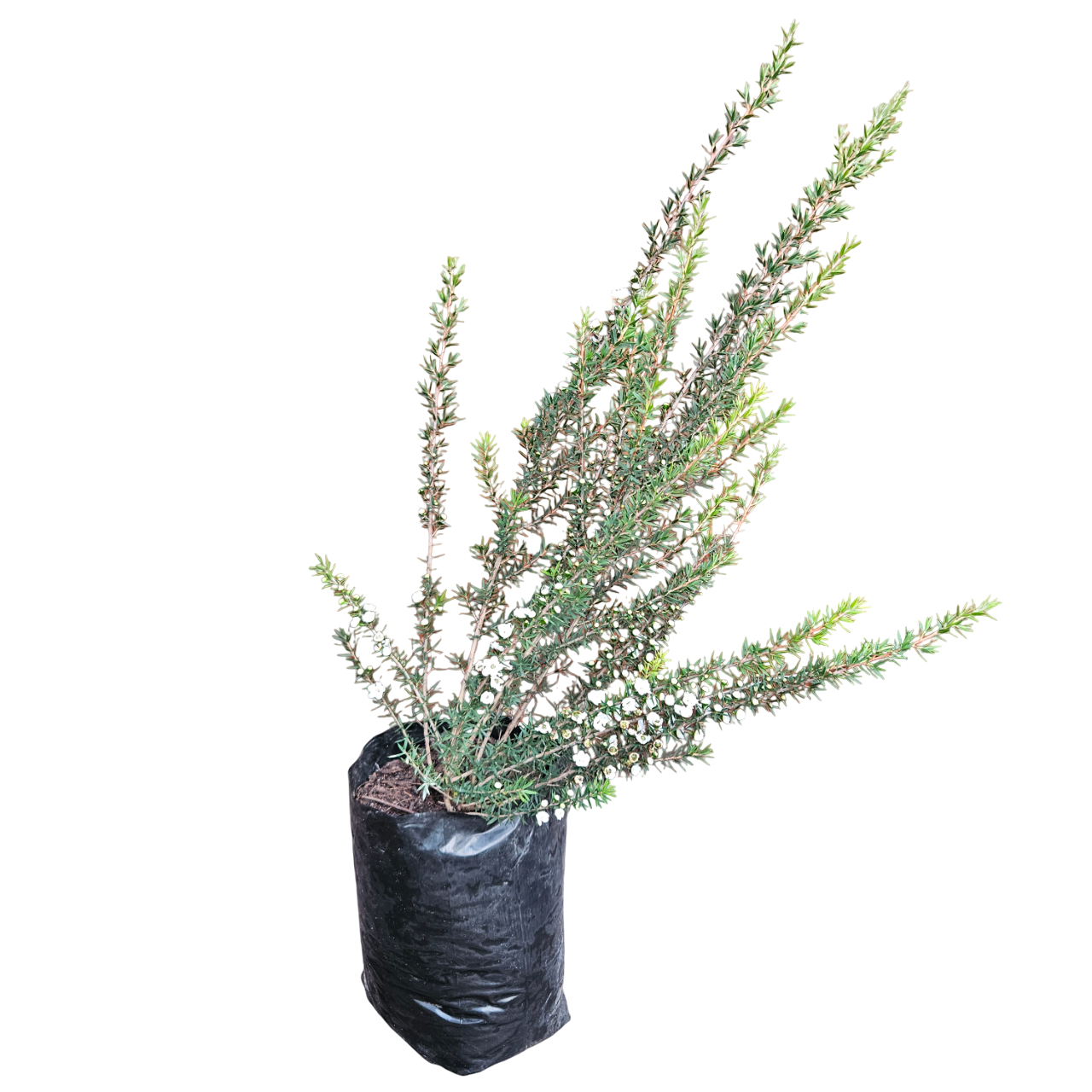


When this shrub bursts into bloom, those pure white or pink flowers completely hide the foliage—a breathtaking spring spectacle. Tea Tree, also known as Manuka or New Zealand Tea Tree, is a compact evergreen shrub with a dense, rounded habit of small, prickly, needle-like leaves in rich, dark green. Brush against it, and you’ll release a pleasant, aromatic scent. In spring and early summer, it produces an abundance of single, cup-shaped, pure white or pink flowers with distinctive greenish centres, each resembling a tiny wild rose. The showy blooms literally cover the entire bush, attracting bees, butterflies, and other pollinators in droves. The flaking bark adds attractive winter interest.
Native to New Zealand and southeastern Australia, Tea Tree has proven wonderfully suited to the Western Cape’s Mediterranean climate. It thrives in full sun—at least 6–8 hours of direct light for the most abundant display and a dense, compact shape. It demands well-drained, sandy or loamy soil and, once established, is remarkably drought-tolerant. It excels in coastal gardens, handling strong winds and salt spray with ease, and tolerates light to moderate frost once established. Reaching 1–2m tall and wide, it’s perfect for informal hedges, mixed borders, rockeries, large containers, or as a stunning flowering accent in coastal landscapes.
Key Features:
- Masses of single, cup-shaped white or pink flowers with greenish centres—a spectacular starry display in spring
- Small, prickly, needle-like dark green leaves release a pleasant, aromatic scent when brushed
- Exceptionally tolerant of coastal winds, salt spray, and sandy soils
- Nectar-rich spring flowers are irresistible to bees and butterflies; drought-tolerant once established
Gardening Note: Plant in full sun in well-drained, sandy or loamy soil. Avoid heavy, poorly-drained soils, which cause root rot. Water regularly until established; mature plants are highly drought-tolerant and need little additional water. To maintain a compact shape and encourage abundant flowering, prune lightly after flowering, cutting back about one-third of the growth. Easily propagated from semi-hardwood cuttings in summer. Hardy to light to moderate frost; in very severe inland valleys, a sheltered spot is recommended.