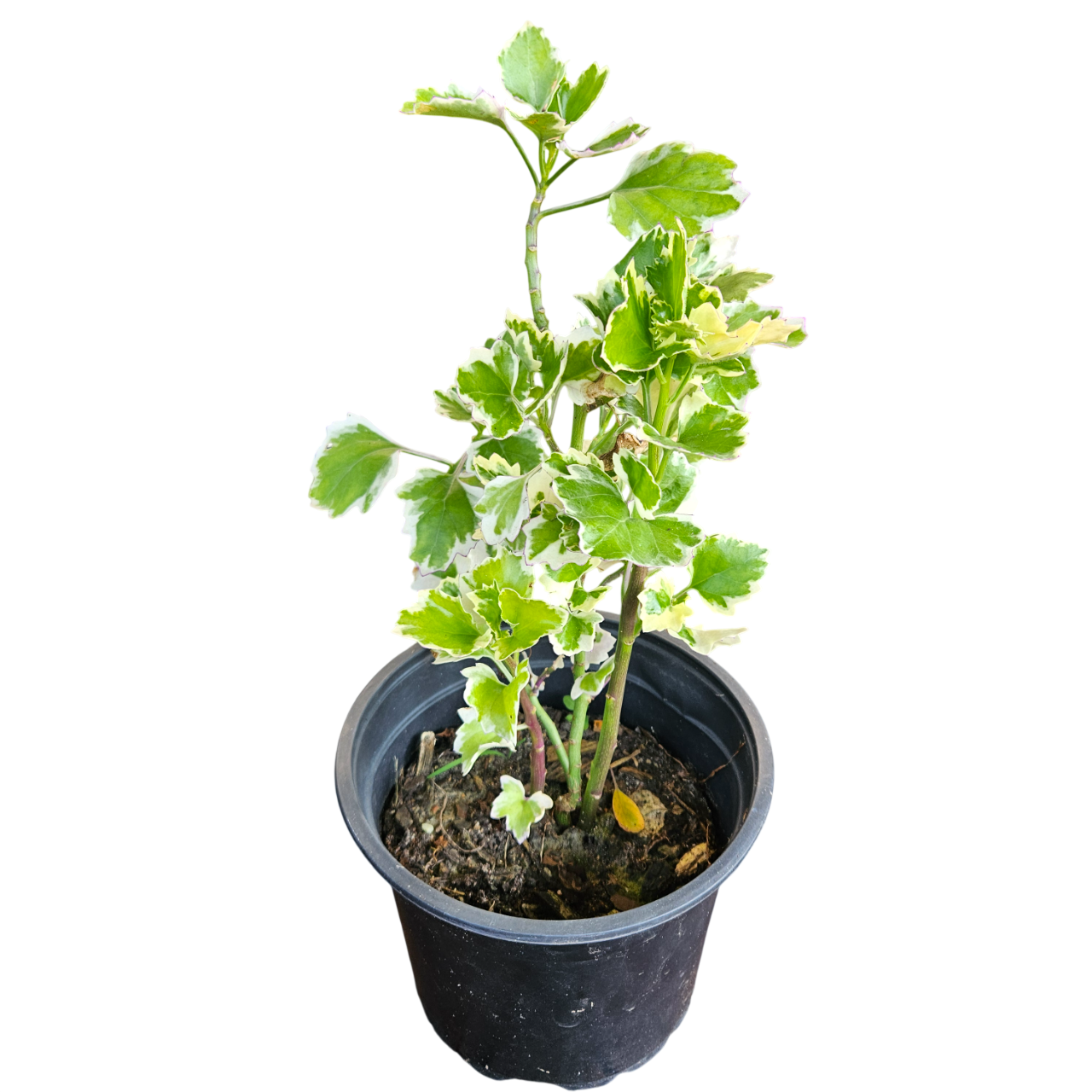


When those golden-yellow daisy clusters burst into bloom from March to July, they light up the late-season garden like no other. The Variegated Canary Creeper is a hardy, semi-succulent evergreen climber with attractive, large, glossy leaves in a subtle combination of pale yellow and rich green, creating a luminous effect even when not in bloom. From late summer through mid-winter, it produces huge heads of vibrant, golden-yellow, daisy-like flowers that are sweetly scented—a spectacular, cheerful display when many other plants are winding down.
Proudly native to South Africa (occurring naturally on forest margins from the Eastern Cape through KwaZulu-Natal, Mpumalanga, and Limpopo), this variegated form is perfectly at home in local gardens. It thrives in semi-shade or sun, preferring bright, filtered light to maintain vibrant variegation. It’s unfussy about soil, growing well in most well-drained, composted types. Once established, it’s moderately drought-tolerant but performs best with regular watering, especially during Cape Town’s dry summer months. It tolerates coastal conditions and salt spray but is sensitive to severe frost, needing a sheltered spot in colder inland valleys. With stems reaching up to 4 metres, it’s perfect for adorning fences, trellises, pergolas, cascading over retaining walls, or as fast-growing groundcover.
Key Features:
- Glossy, large leaves with beautiful, irregular creamy-yellow and green variegation for year-round contrast
- Huge clusters of vibrant, golden-yellow, daisy-like flowers from March to July—sweetly scented
- A proud South African native; nectar-rich blooms attract bees, butterflies, and other pollinators
- Fast-growing, scrambling stems perfect for covering fences, trellises, or as groundcover
Gardening Note: Plant in semi-shade to sun in well-drained, composted soil. Can be grown as a climber with support, allowed to scramble through shrubs, or pruned to form dense groundcover. Water regularly until established; once mature, it’s drought-tolerant but flowers best with occasional deep watering during dry spells. Prune lightly once a year to keep tidy. Sensitive to severe frost; in colder inland areas, plant in a warm, sheltered spot—cut away frost-damaged parts in spring, and the plant will quickly recover.