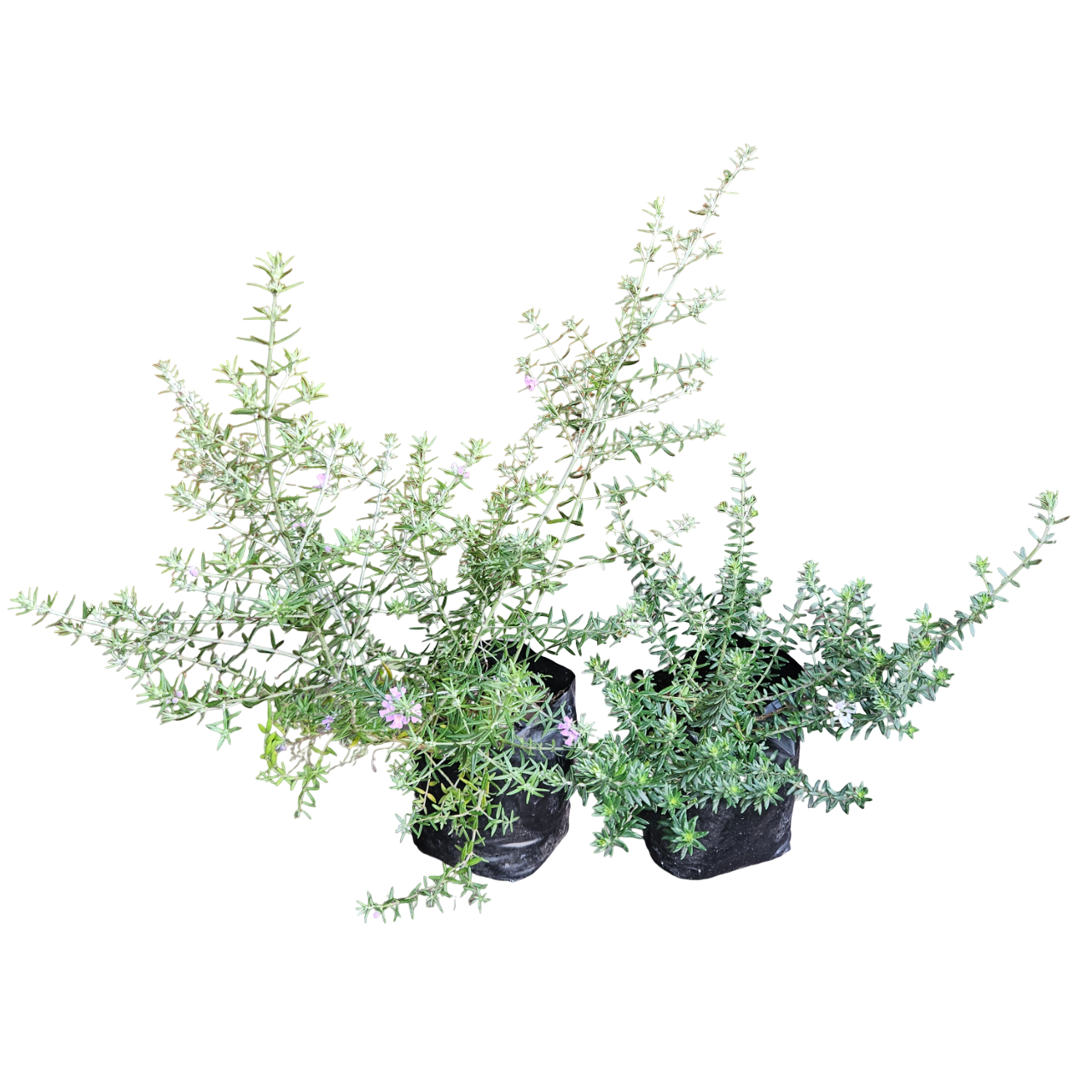
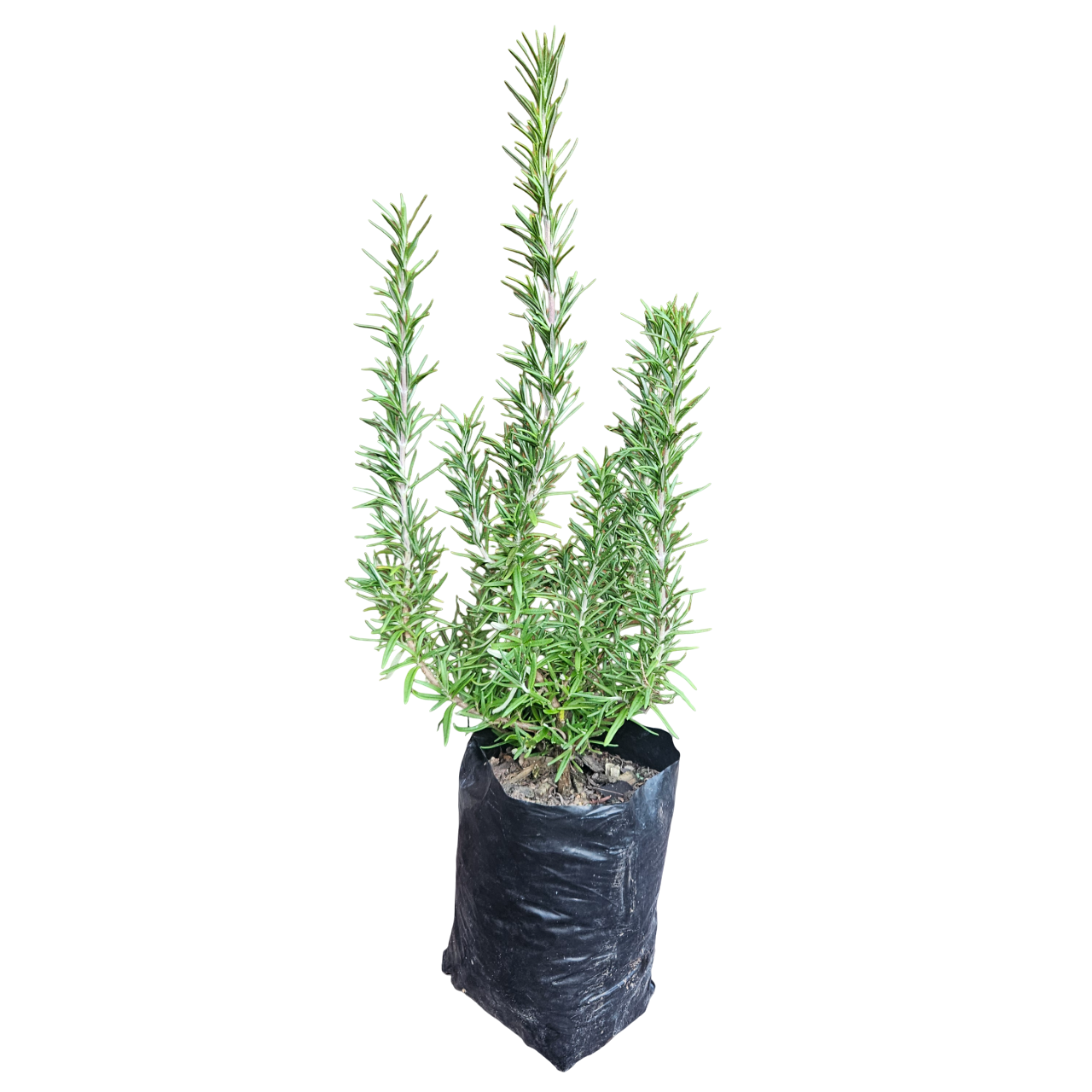


Step into a Mediterranean hillside without leaving the Western Cape—that’s the magic of Rosemary. This woody, evergreen shrub has upright, branching stems clothed in pairs of leathery, linear leaves. Dark green on top and covered in fine, white, woolly hairs beneath, the foliage takes on a soft, silvery-green glow. Brush against it, and you’ll release a powerful, refreshing, pine-like fragrance that has been cherished for centuries. From winter through spring (and often sporadically throughout the year), small, two-lipped, tubular flowers appear in pale blue, lavender, pink, or white, drawing bees and other pollinators in droves.
This Mediterranean native has made itself perfectly at home in the Western Cape’s winter-rainfall climate. Give it full sun—at least 6 hours of direct light—for the densest foliage, strongest fragrance, and most abundant flowers. It demands well-drained, even poor, sandy or rocky soil. Once established, it’s remarkably drought-tolerant, handles coastal winds and salt spray with ease, and is exceptionally frost-hardy, tolerating temperatures down to around -10°C. Upright varieties reach 1–2m tall, while prostrate or trailing forms spread up to 2m wide. Use it in herb gardens, borders, rockeries, slopes, containers, or as a fragrant, flowering low hedge.
Key Features:
- Leathery, silvery-green leaves release a powerful, refreshing, pine-like fragrance when brushed
- A kitchen staple—flavours roasted meats, vegetables, breads, and oils; also used in traditional medicine
- Small, tubular flowers in soft blue, lavender, pink, or white from winter through spring
- Drought-tolerant, coastal-tolerant, and frost-hardy once established
Gardening Note: Plant in full sun in very well-drained, sandy or loamy soil. Avoid heavy, waterlogged soils, which cause root rot. Water regularly until established; mature plants need little additional water. Prune lightly after flowering to maintain a compact shape and encourage bushy growth—avoid cutting into old, woody wood, as it may not resprout. Harvest sprigs as needed; regular harvesting keeps the plant productive and tidy.