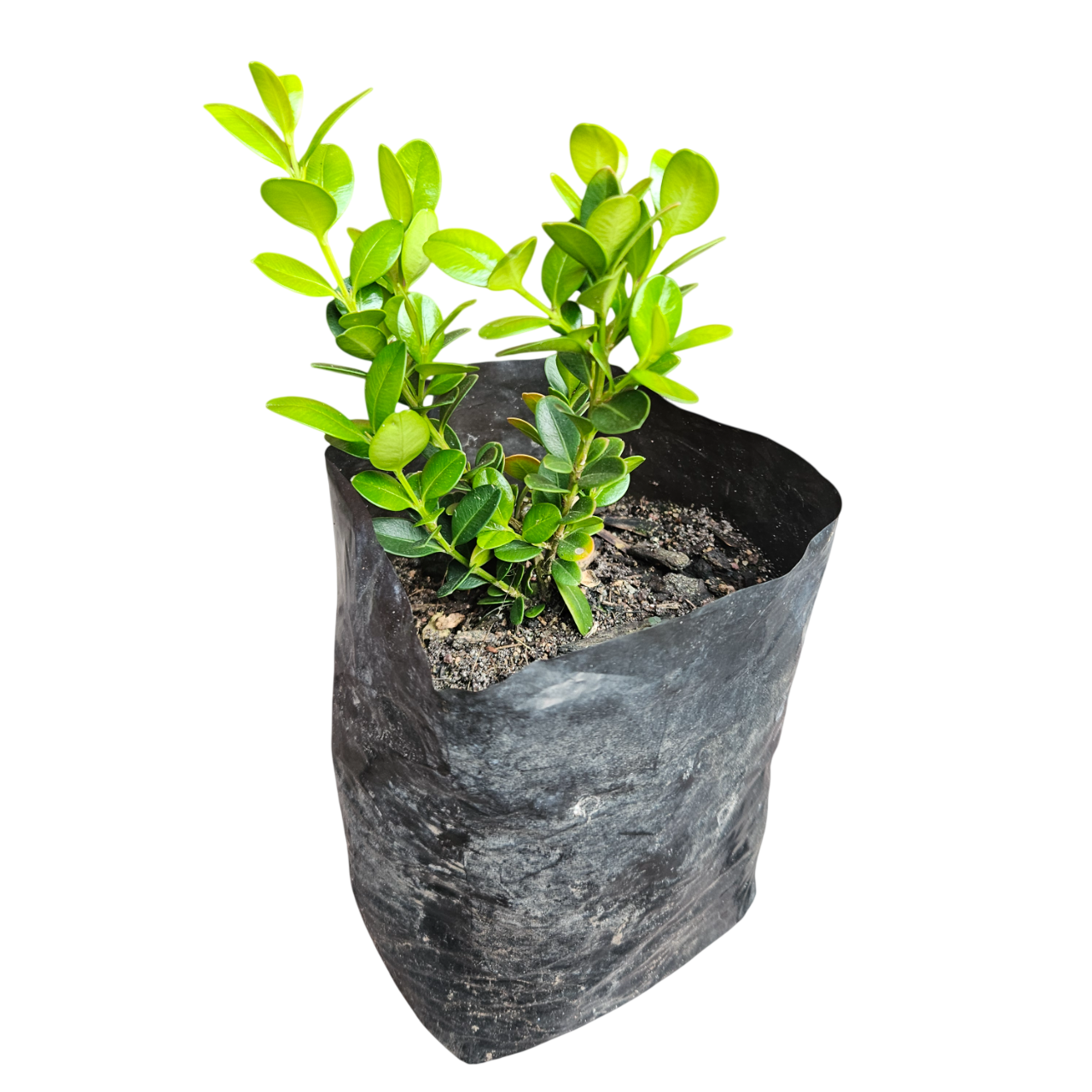
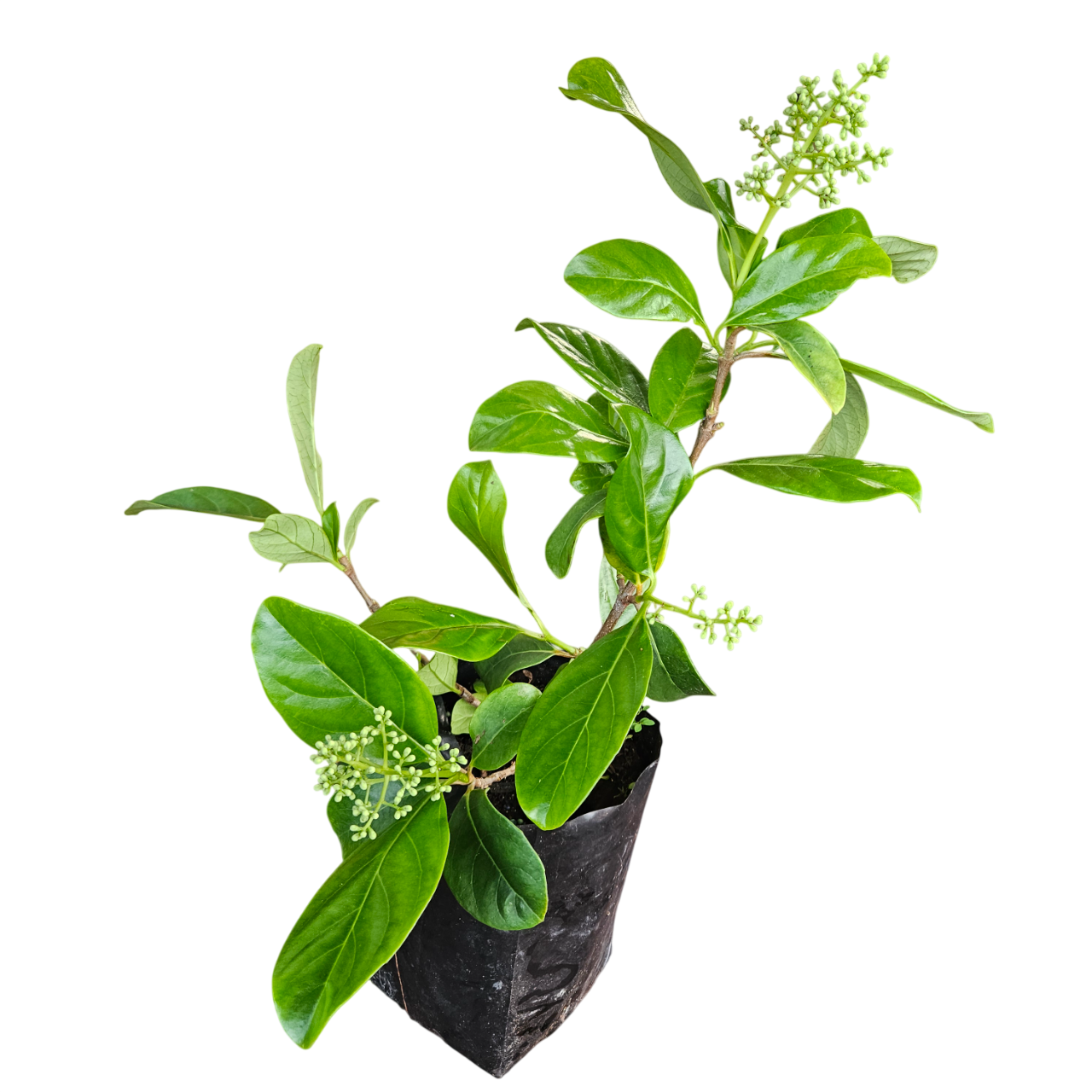
One sniff of those sweetly fragrant spring blossoms, and you’ll understand why this shrub is so beloved. Sweet Viburnum, also known simply as Viburnum sinensis, is a striking, upright evergreen shrub with large, stout, leathery, oval leaves of rich, lustrous dark green. In spring to early summer, it produces an abundance of large, terminal clusters of small, tubular white flowers with a delightful, sweet fragrance that fills the air and attracts bees and butterflies. Small, ornamental berries follow, ripening from red to black and attracting birds.
Native to Asia, Sweet Viburnum has proven wonderfully suited to the Western Cape’s temperate, coastal, and Mediterranean climates. It thrives in full sun to partial shade—bright light brings the densest growth and most abundant flowering. It’s unfussy about soil, growing well in most well-drained types, including sandy, loamy, and even clay soils, as long as they’re not waterlogged. Once established, it’s moderately drought-tolerant but looks best with regular watering, especially during Cape Town’s hot, dry summers. It handles coastal and windy conditions with moderate tolerance and is frost-hardy, withstanding light to moderate frost. Reaching 4–6 metres tall (easily maintained at 2–3 metres with pruning), it’s perfect for privacy hedges, screening, windbreaks, mixed borders, or as a fragrant feature shrub in a large container.
Key Features:
- Large, leathery, dark green leaves create a dense, polished, year-round canopy for excellent privacy
- Abundant clusters of small, white, tubular flowers release a delightful, sweet fragrance in spring
- Small berries ripen from red to black, attracting fruit-eating birds
- Fast-growing, dense habit and tolerance of regular pruning make it ideal for hedges and screens
Gardening Note: Plant in full sun to partial shade in well-drained soil. Water regularly until established; mature plants are moderately drought-tolerant but look best with occasional deep watering during dry spells. To maintain a dense, compact hedge, prune regularly after flowering to shape and encourage bushy growth. Apply organic mulch around the base to retain moisture and suppress weeds. Generally pest and disease-free but may occasionally be susceptible to aphids.