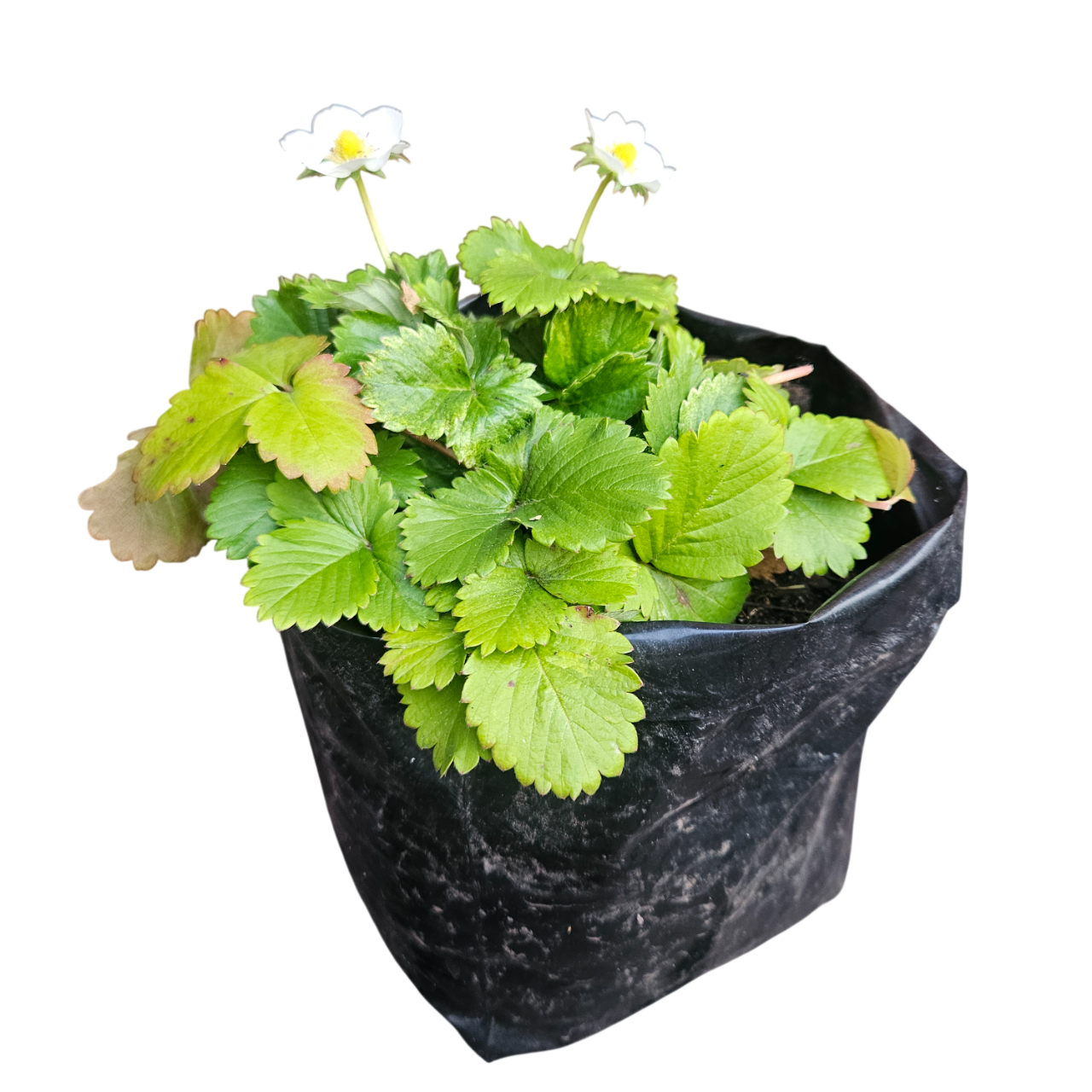
There’s nothing quite like plucking a sun-warmed strawberry straight from your own garden. The Strawberry is a low-growing, herbaceous perennial that forms a neat, compact clump of trifoliate, bright green, softly hairy leaves with serrated edges. From winter through spring, delicate, five-petalled flowers appear in white, soft pink, or sometimes bright pink—a magnet for bees and other pollinators. Those blossoms give way to the familiar, glossy, ruby-red fruit, releasing an intoxicating, sweet fragrance when perfectly sun-kissed.
While the modern garden strawberry is a hybrid of two wild species from the Americas, it has become a global favourite well-suited to South African growing conditions. In the Western Cape, it thrives in full sun—at least 6–8 hours of direct light daily for the sweetest, most abundant fruit. It prefers fertile, well-drained, slightly acidic soil (pH 5.5–6.5) enriched with compost. It needs consistent moisture, especially during flowering and fruiting, but won’t tolerate waterlogged conditions. It’s sensitive to severe frost, though it tolerates light frost with protection. Reaching 20–30cm tall and 30–40cm wide (with runners spreading further), it’s perfect for garden beds, raised planters, containers, window boxes, and hanging baskets.
Key Features:
- Sweet, juicy, sun-warmed fruit with depth of flavour that store-bought berries can’t match
- Depending on variety, plants can produce fruit from spring through autumn for months of harvest
- Delicate white or pink blossoms are a vital nectar source for bees
- Compact size thrives in containers, patios, balconies, and hanging baskets
Gardening Note: In the Western Cape, plant in late autumn (April/May) for a spring harvest. Water regularly to keep soil evenly moist, especially during flowering and fruiting. Avoid overhead watering to reduce fungal disease risk. Mulch with straw or pine needles to keep fruit clean and retain moisture. After fruiting, cut back old foliage and remove most runners to direct energy into next year’s crop. In very cold inland areas, mulch heavily in winter or grow in movable containers.