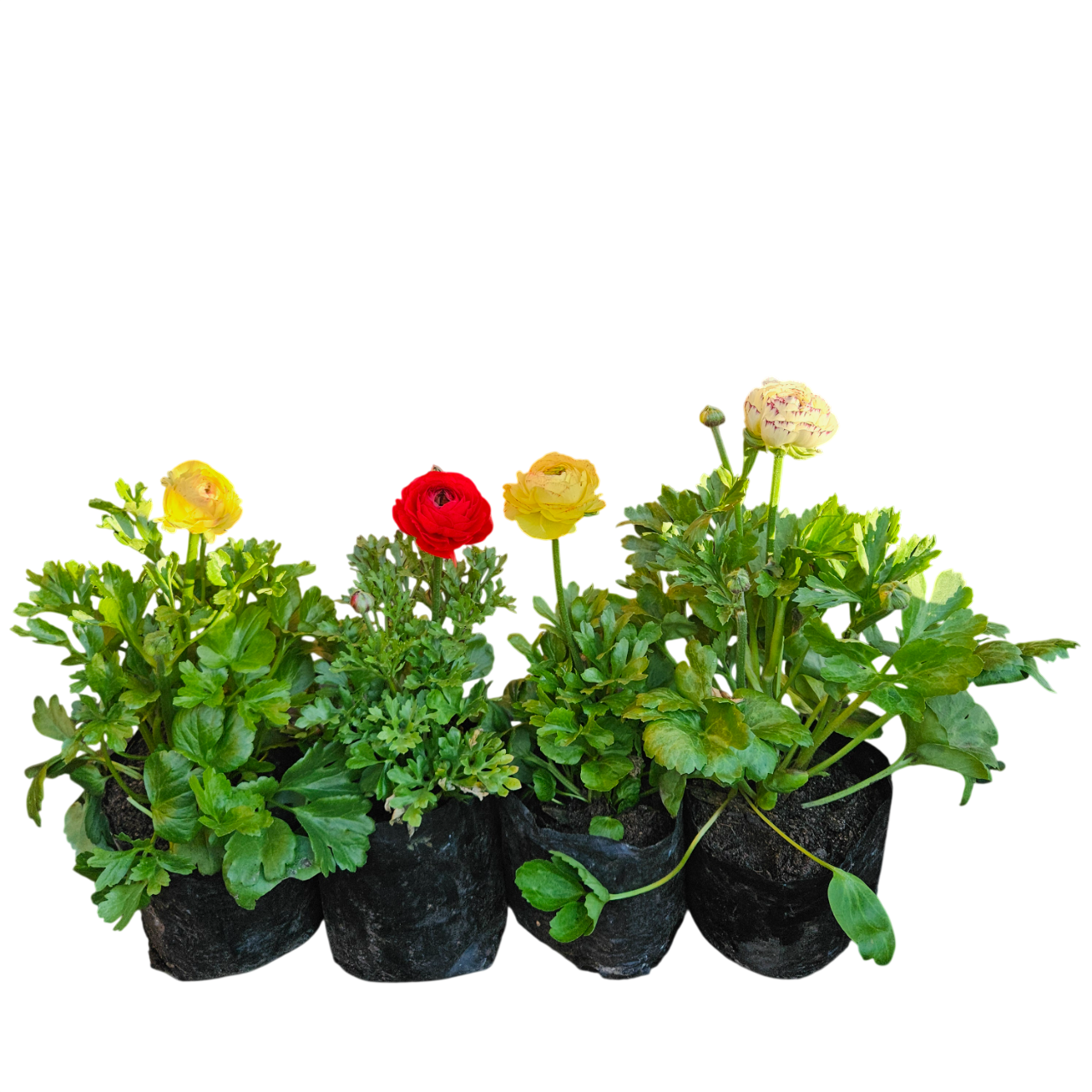


Unfurl a single petal, then another, and another—soon you’re holding a flower that rivals the finest rose. The Persian Buttercup, also known as Ranunculus or Ranonkel, is a tuberous-rooted perennial with a low mound of attractive, fern-like, bright green leaves. From this delicate foliage, strong, upright stems bear an abundance of exquisite blooms, each composed of numerous thin, papery petals arranged in perfect, concentric layers. Those stunning flowers, reaching 5–10cm across, come in vibrant reds, hot pinks, soft oranges, sunny yellows, pure whites, and creamy apricots.
Native to the eastern Mediterranean, southwestern Asia, and southeastern Europe, this adaptable plant thrives as a cool-season perennial in the Western Cape’s Mediterranean climate. Plant tubers in autumn for a spectacular spring display. It prefers full sun to partial shade—bright light for the most abundant blooms, though afternoon protection helps in hotter inland gardens. It demands well-drained, humus-rich soil, as the tuberous roots rot easily in waterlogged conditions. It’s sensitive to extreme heat and severe frost, so give it a sheltered spot in colder valleys, but it thrives in mild coastal areas. Reaching 30–45cm tall, it’s perfect for containers, borders, or as a stunning cut flower that lasts up to two weeks in a vase.
Key Features:
- Fully double, peony-shaped blooms with layers of silky, papery petals in a dazzling array of colours
- At its best during the Western Cape’s spring, thriving in cool, moist autumn and winter conditions
- World-renowned cut flower—strong stems, long-lasting blooms up to 14 days in a vase
- Compact and container-friendly; ideal for pots, window boxes, or front door displays
Gardening Note: In the Western Cape, plant tubers (claws facing down) or sow seeds from March to May. Choose a sunny to partially shaded position in well-drained, humus-rich soil. Water regularly to keep soil evenly moist but not waterlogged. Plants die back naturally after flowering as temperatures rise in late spring. Tubers can be lifted and stored in a cool, dry place once foliage yellows, or treat as a cool-season annual with new tubers planted each autumn.