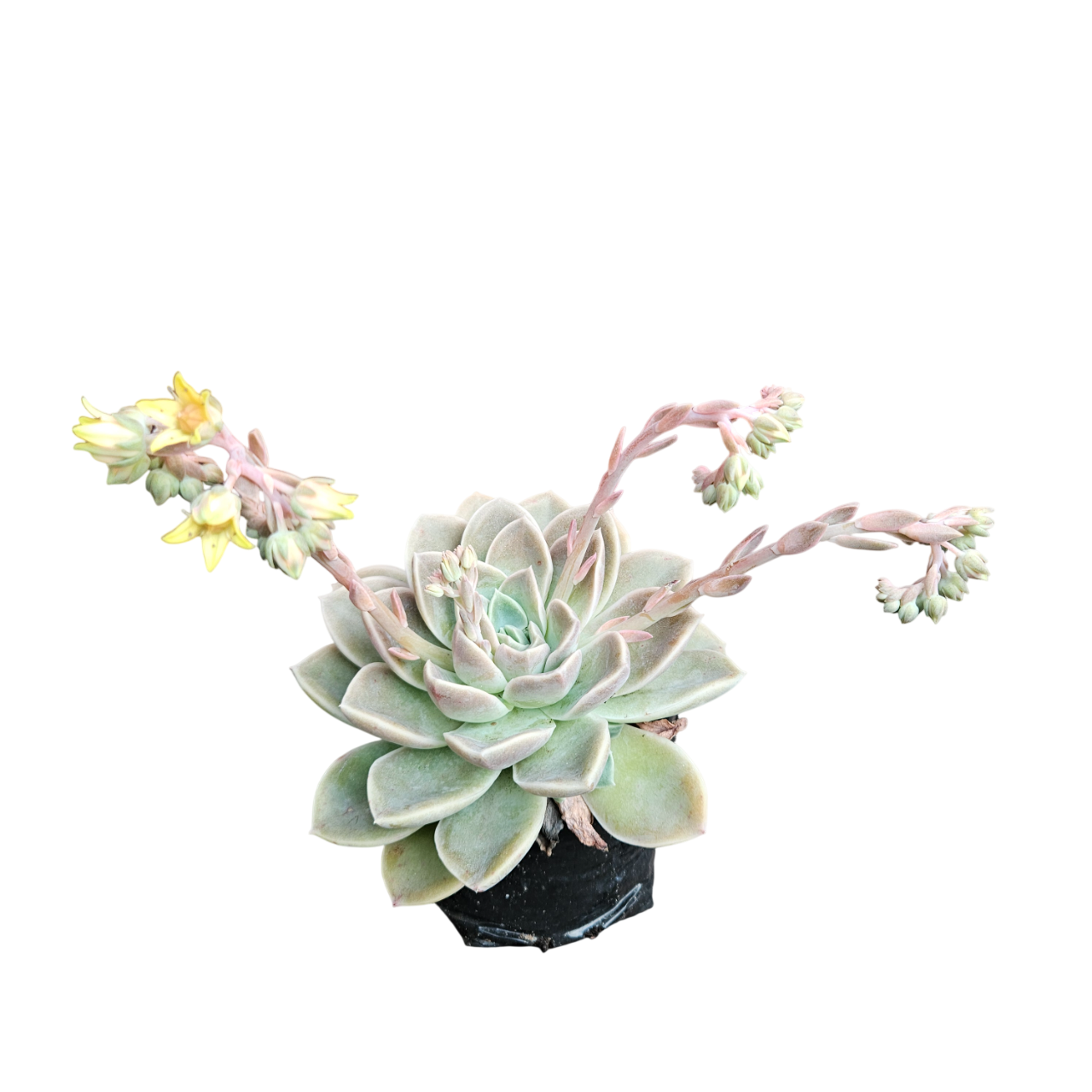
Some succulents are lovely. This one looks like a cluster of living gemstones. Graptoveria ‘Caerulescens’, also known as Woestynroos, is a stunning, evergreen rosette-forming succulent with dense, compact rosettes of fleshy, spoon-shaped leaves in the most beautiful shade of powdery blue-grey to soft glaucous green. Those leaves often develop delicate hints of lavender or pink at the margins when gently stressed by sun or drought. The rosettes multiply readily, forming a low-growing cluster of living architecture. In late spring to early summer, slender, arching flower spikes appear, bearing small, starry blooms in soft shades of yellow, coral, or pale pink.
As a hybrid succulent, Graptoveria ‘Caerulescens’ is perfectly suited to the Western Cape’s Mediterranean climate. It thrives in full sun to partial shade—at least 4–6 hours of direct light for the best blue and pastel hues. In hotter inland gardens, morning sun with afternoon shade is ideal, as harsh direct sun can scorch the delicate powdery farina on the leaves. It demands very well-drained, gritty or sandy soil and, once established, is remarkably drought-tolerant. It handles coastal winds easily but is sensitive to severe frost, so give it a sheltered spot or container culture in colder valleys. With rosettes reaching about 15–20cm tall and spreading slowly, it’s perfect for containers, rockeries, succulent gardens, or living walls.
Key Features:
- Perfectly formed rosettes of plump, powdery blue-grey leaves
- Leaf tips blush soft pink to apricot when sun-stressed
- Water-wise and drought-tolerant once established
- Readily produces “pups” to form a dense clump over time
Gardening Note: Plant in well-drained, sandy or cactus potting mix in full sun to bright, filtered light. Water regularly until established, then allow soil to dry completely between waterings—leaves will wrinkle slightly when thirsty. Protect from severe frost. Remove dry leaves from the base to keep tidy. Easily propagated by removing and replanting small offsets.