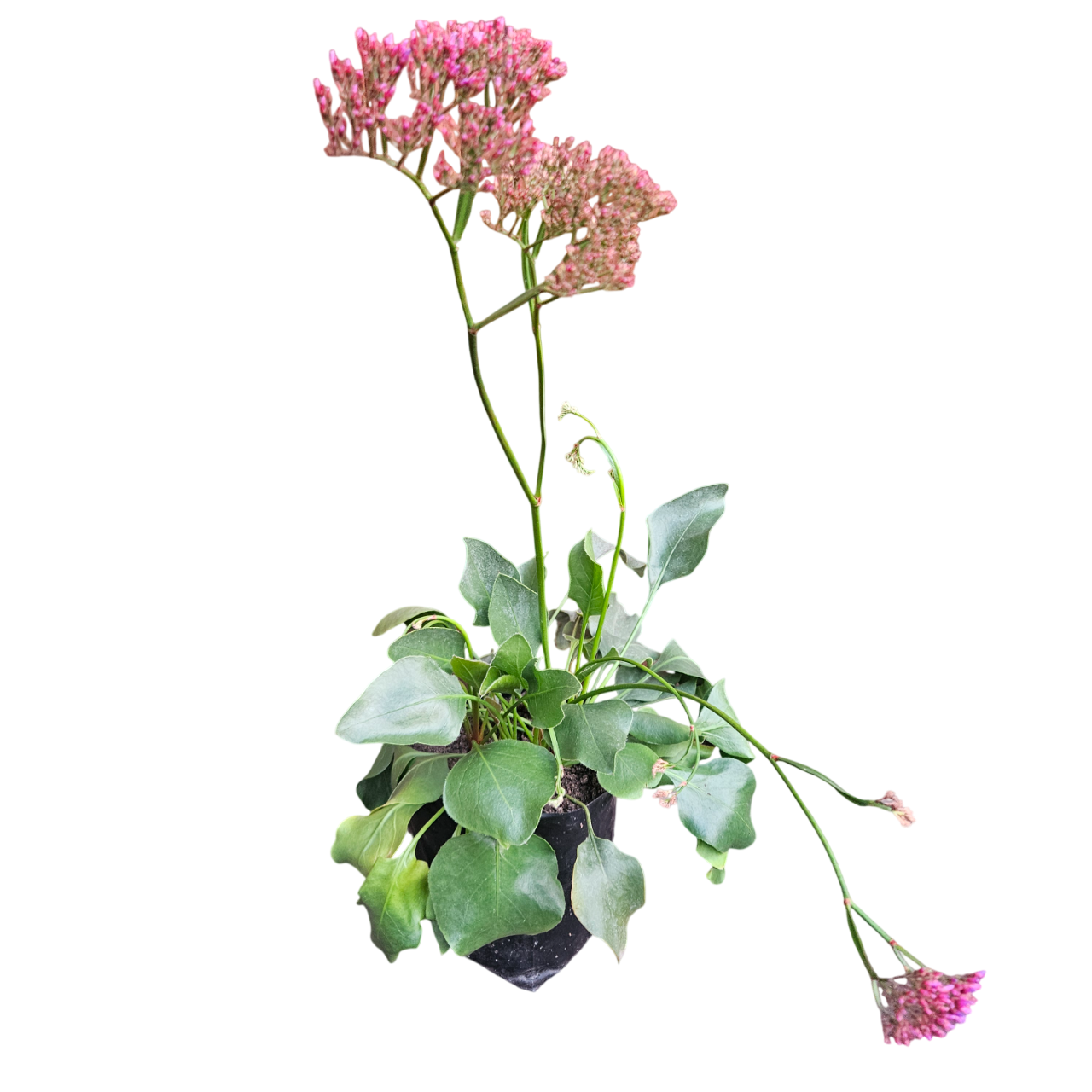

Those papery purple blooms look almost too delicate to be so tough—but don’t let their soft appearance fool you. Sea Lavender, also known as Statice or Papierblom, is a clump-forming evergreen perennial that forms a low, rounded rosette of large, broadly oval, dark green leaves held close to the ground. From late winter through summer, sturdy, branching, leafless stalks rise well above the foliage, bearing large, flat-topped clusters of tiny, papery flowers in deep violet to purple, each with a delicate, creamy-white centre. Those blooms last for months on the plant and are superb for fresh or dried arrangements.
Native to the rocky coasts of the Canary Islands, Sea Lavender has proven wonderfully suited to the Western Cape’s temperate climate. It thrives in full sun—at least 6 hours of direct light for the most abundant flowers and a compact, healthy shape. It demands well-drained soil, including sandy, loamy, and even brackish or alkaline dune sand, making it perfect for coastal gardens. Once established, it’s remarkably drought-tolerant, needing no summer water in many gardens. It excels in coastal conditions, handling strong winds and salt spray with ease, and tolerates moderate frost. Reaching 50–90cm tall when in flower and 50–90cm wide, it’s ideal for coastal gardens, rockeries, mass plantings, or as a bold accent in containers.
Key Features:
- Large, flat-topped clusters of deep violet flowers with creamy-white centres from late winter through summer
- Papery blooms last for months on the plant; ideal for fresh or dried arrangements
- Exceptionally tolerant of coastal winds, salt spray, and sandy, brackish soils
- Drought-tolerant once established; thrives on neglect in poor, well-drained soils
Gardening Note: Plant in full sun in well-drained soil—will not tolerate waterlogged conditions. Water regularly until established; mature plants are highly drought-tolerant. In coastal Cape Town gardens, established plants need no summer watering and only occasional heavy drenching in winter. Prune lightly after flowering to maintain a compact shape. Plants can become woody with age; divide clumps every few years in late autumn or early winter to rejuvenate. Generally pest and disease-free.