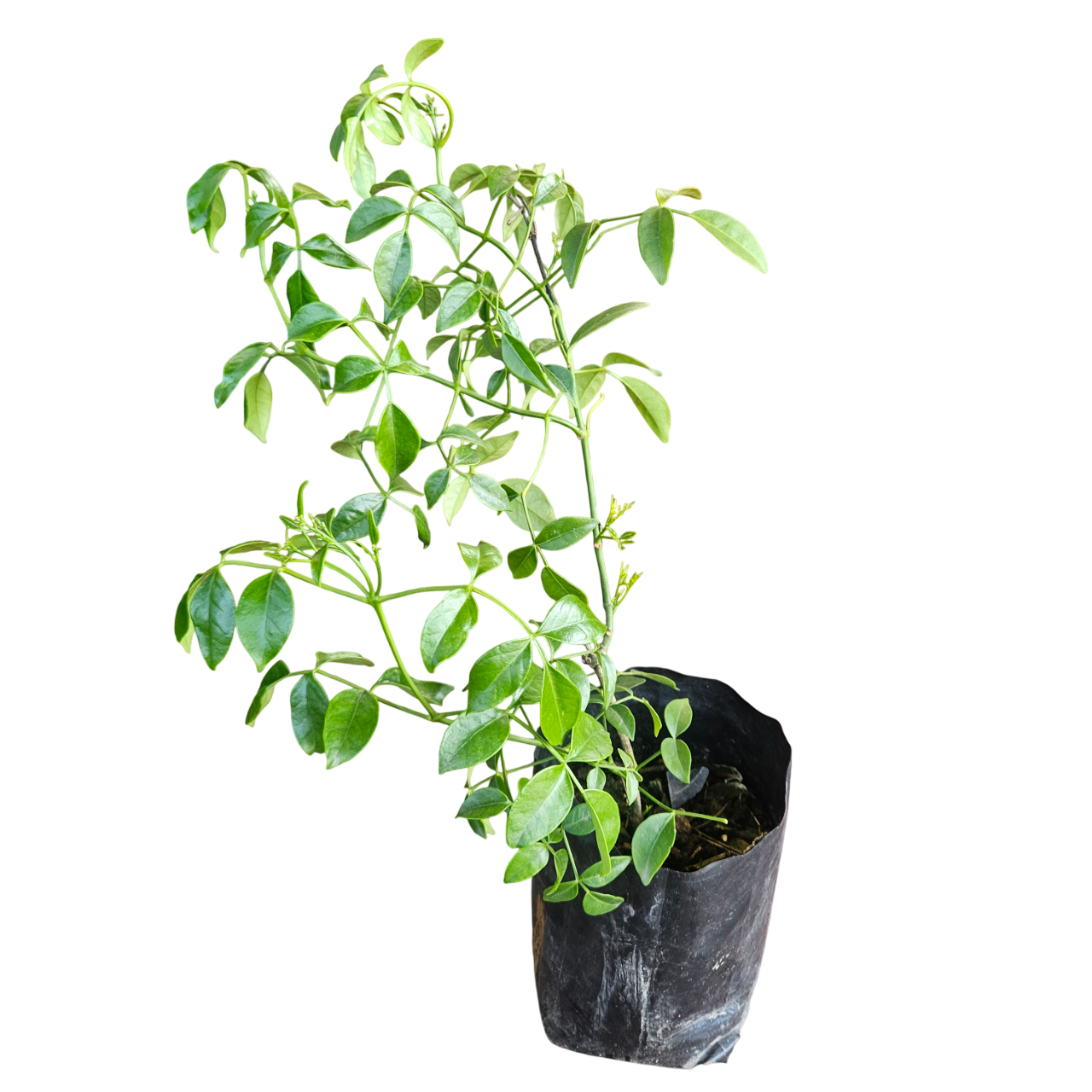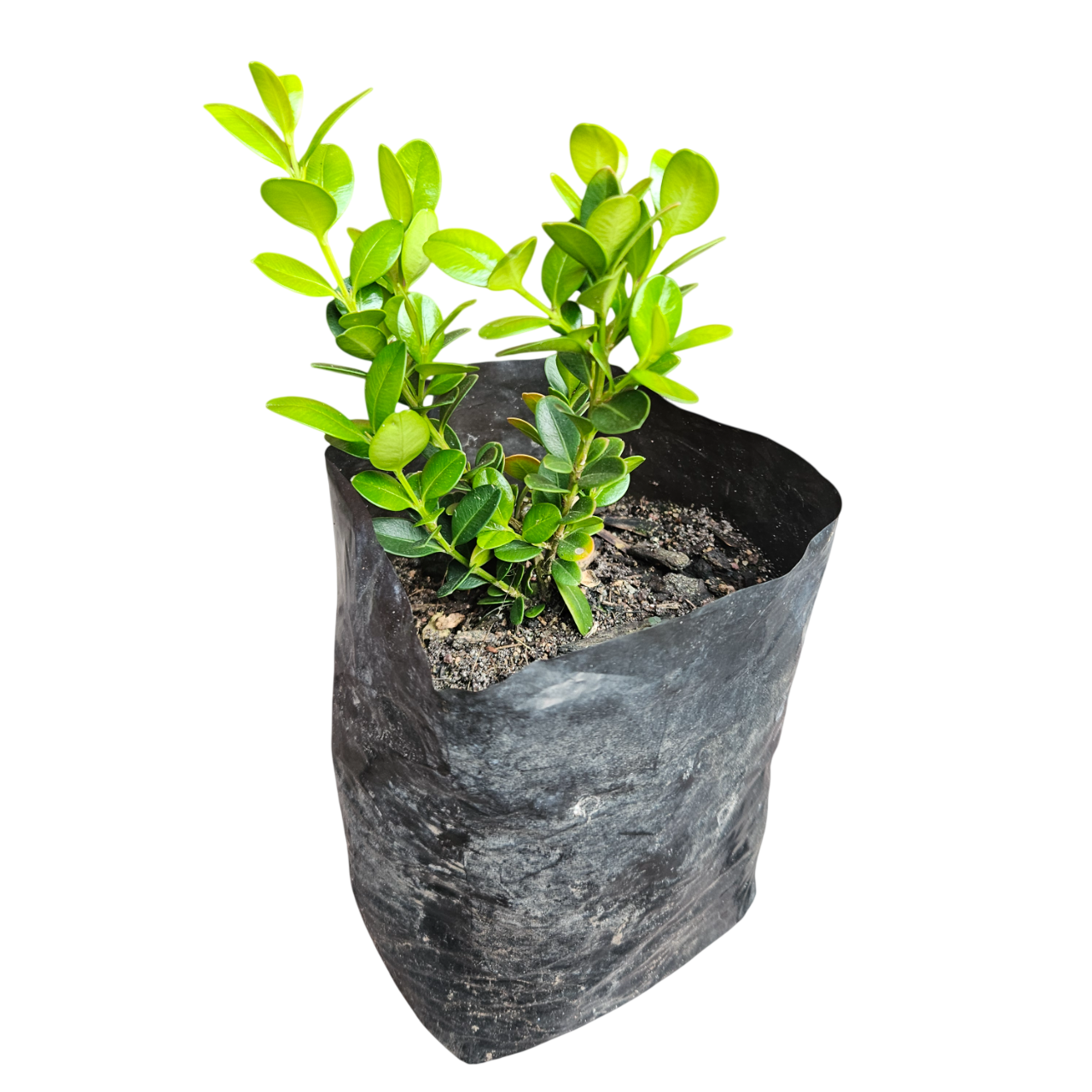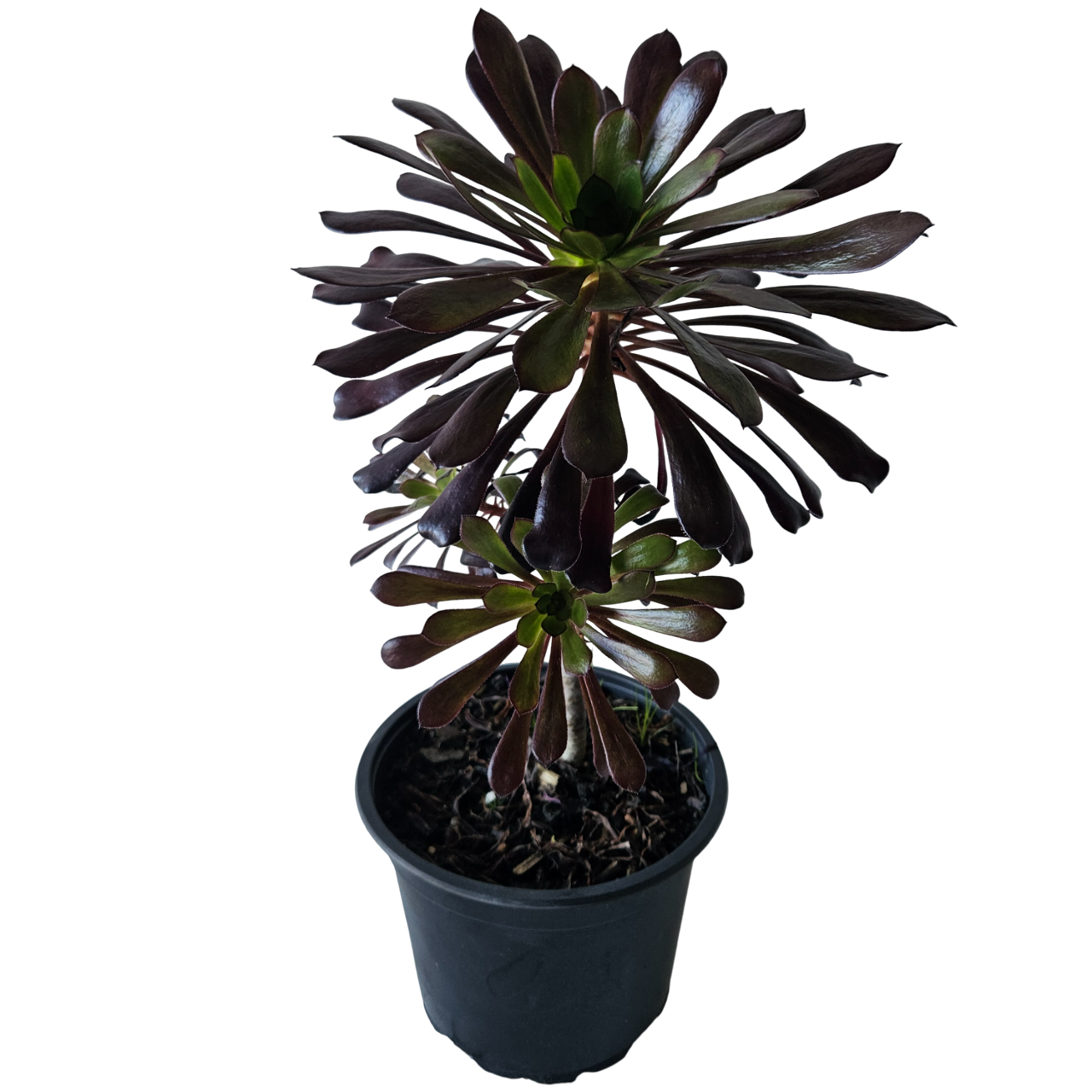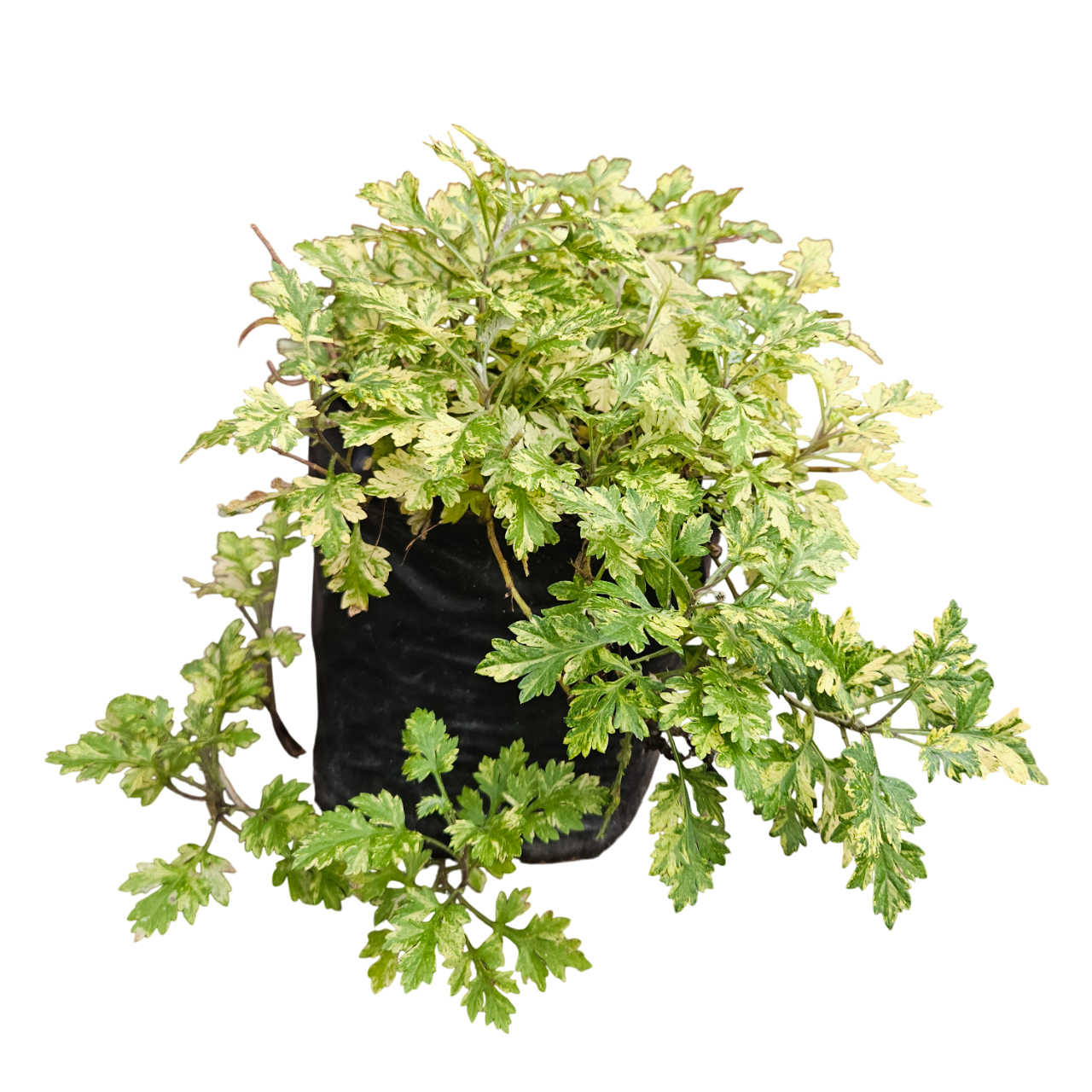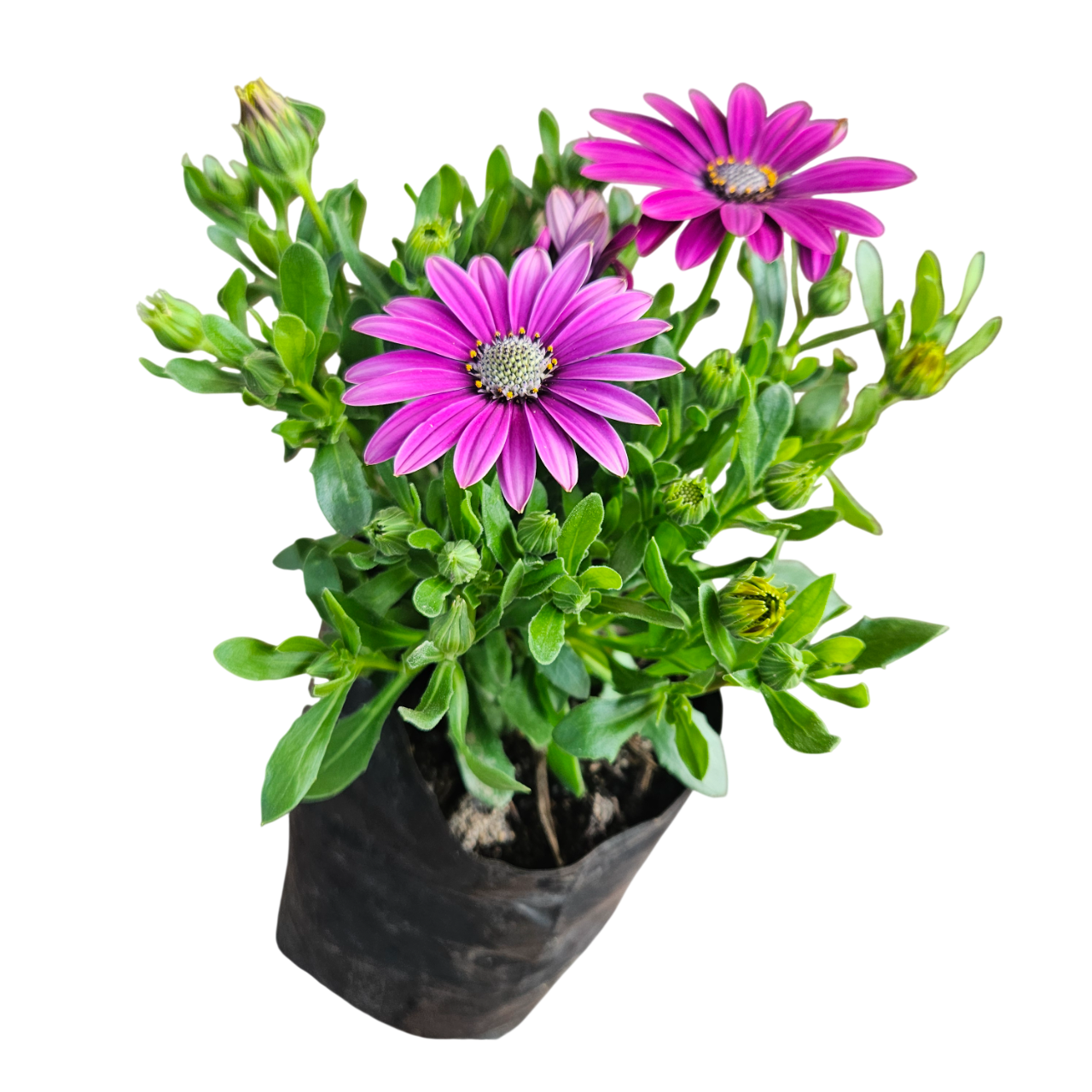
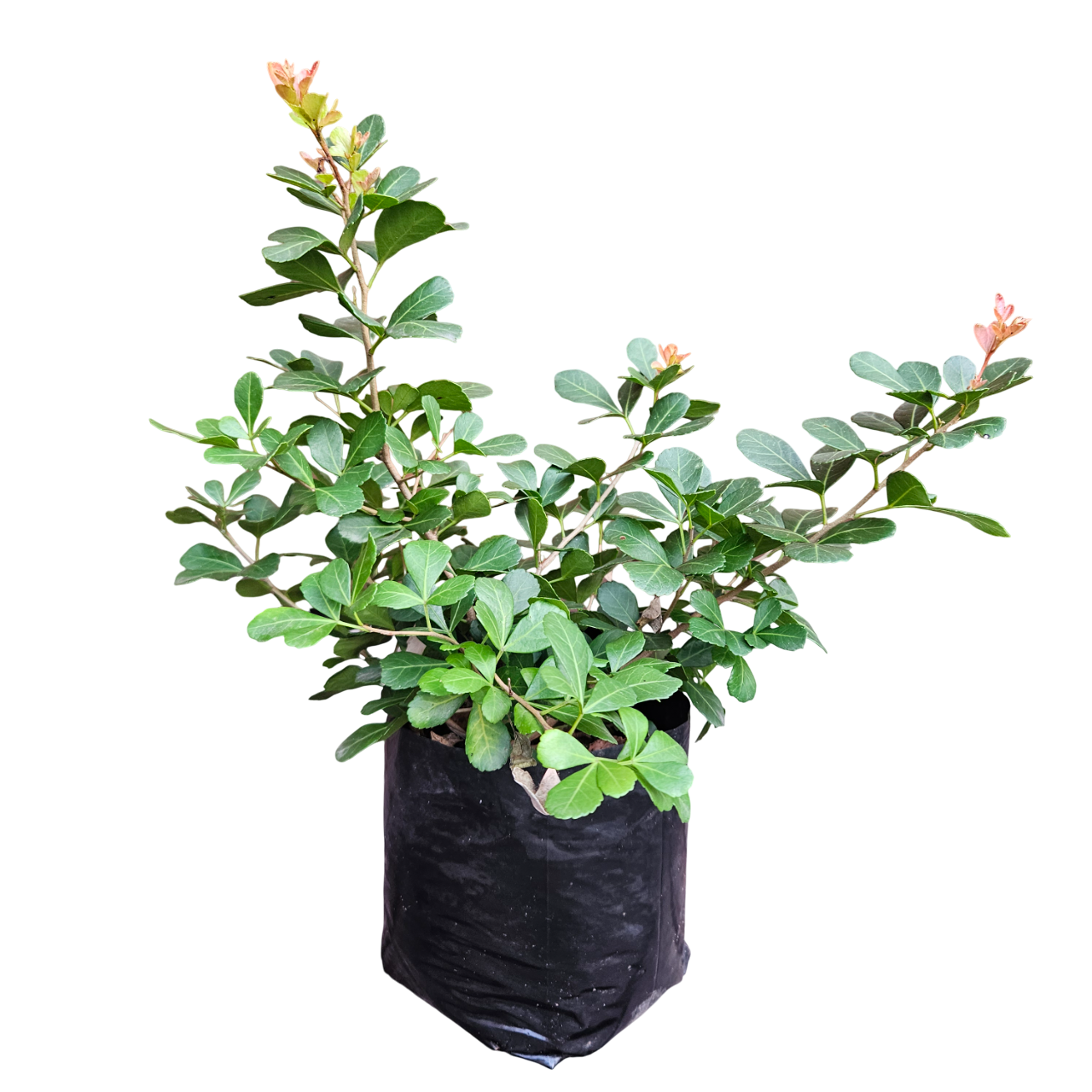
If you garden near the coast, this tough indigenous shrub is about to become your new best friend. Dune Crowberry, or Duinekraaibessie, is a dense, multi-branched evergreen shrub with a naturally rounded, bushy form. Its small, glossy, trifoliate leaves (each divided into three leaflets) are a handsome dark green above and lighter below. Look closely at the top third of each leathery leaflet margin—it’s distinctively scalloped, which gives the plant its scientific name. In autumn (March to April), clusters of small, creamy-white flowers appear at the branchlet tips, followed by small, round berries that ripen to a beautiful wine-red to pale black. Birds absolutely love them.
Native to South Africa’s southern coastline (from the Cape Peninsula all the way to KwaZulu-Natal), this plant is perfectly at home in Western Cape gardens. It thrives in full sun to semi-shade and is exceptionally well-adapted to sandy, well-drained soils—a true champion of coastal gardens. Once established, it’s remarkably drought-tolerant, handles strong winds and salt spray with ease, and is hardy to light frost. Reaching about 3–4m tall with a similar spread, it’s perfect for windbreaks, screening, hedges, sand binding on slopes, or even bonsai.
Key Features:
- Small, colourful berries that birds love; foliage supports butterfly breeding
- A proudly South African shrub that’s ultra water-wise once established
- Exceptionally tolerant of wind, salt spray, drought, and poor sandy soil
- Excellent for hedges, screens, windbreaks, or binding soil on banks
Gardening Note: Plant in well-drained, sandy soil in full sun to semi-shade. Water regularly until established; mature plants are highly drought-tolerant. Prune as needed to shape, maintain size, or create a formal hedge—it responds very well to trimming. Easy to grow from cuttings, and its dense growth makes an effective windbreaker when planted in groups.