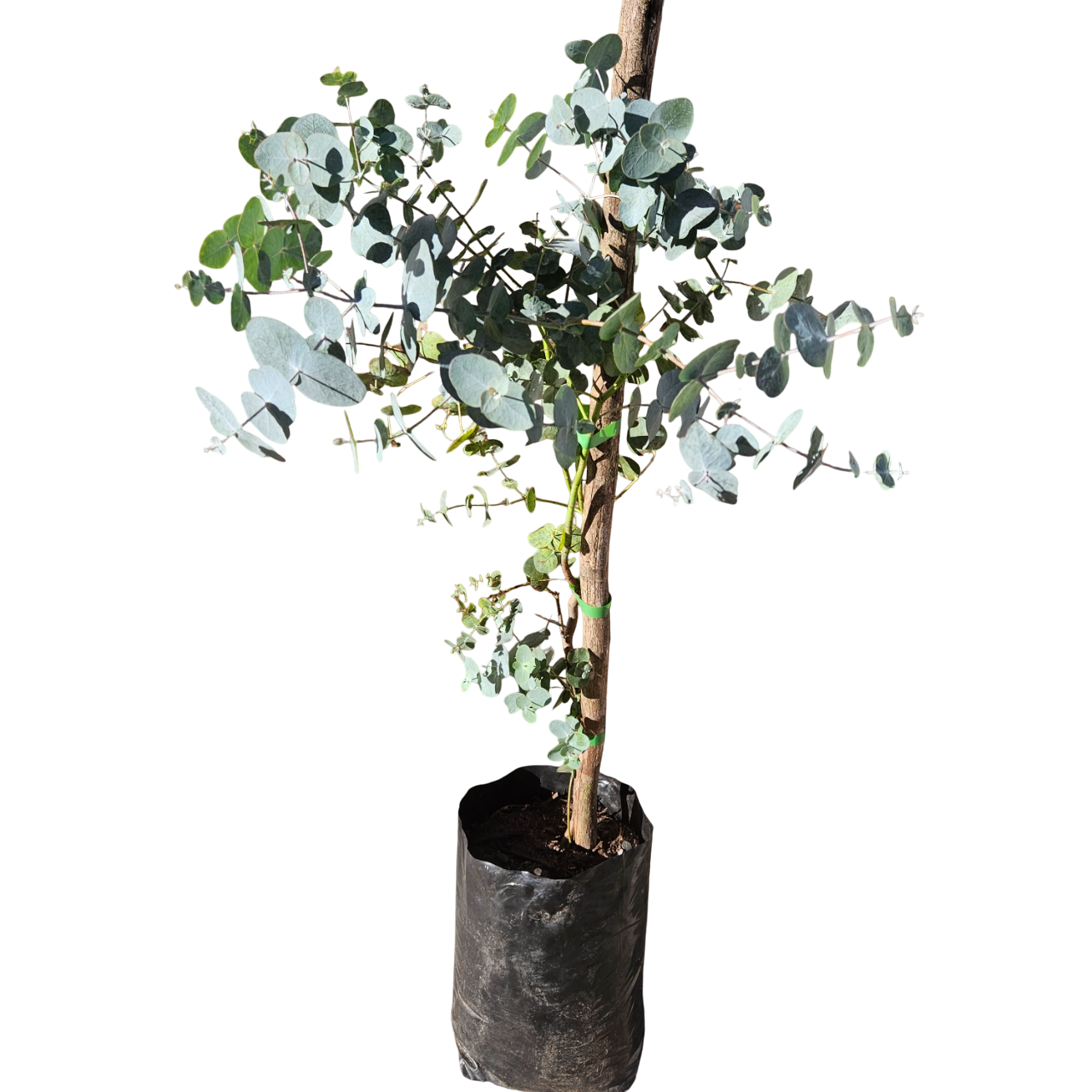

Run your fingers over those round, silvery leaves, and you’ll understand the magic of the Pennygum. Also known as the Silver Dollar Tree or Florist Gum, this fast-growing evergreen tree features a distinctive upright habit clad in rounded to oval leaves of a soft, powdery ash-grey to silvery-blue. Those coin-shaped juvenile leaves are the plant’s crowning glory. As the tree matures, the leaves become more elongated and lance-shaped, but regular pruning can maintain it in its juvenile state, ensuring a continued supply of those iconic silver dollars. The fibrous, reddish-brown bark adds textural contrast, and the entire plant releases a fresh, medicinal eucalyptus scent when brushed.
Native to the tablelands of New South Wales and Victoria in Australia, Pennygum has proven wonderfully suited to the Western Cape’s Mediterranean climate. It thrives in full sun—at least 6 hours of direct light for the strongest growth and most intense silvery colour. It’s remarkably unfussy about soil, growing well in most well-drained types, including sandy, loamy, and even poor or rocky ground. Once established, it’s highly drought-tolerant. It handles coastal and windy conditions with ease, making it excellent for windbreaks. It’s hardy to light to moderate frost once established. Reaching 8–15 metres tall in cultivation (up to 20 metres in ideal conditions) with a spread of 4–8 metres, it’s perfect for large properties, estates, or as a dramatic accent in water-wise gardens.
Key Features:
- Rounded, coin-shaped juvenile leaves in soft, powdery, silvery-blue for unique textural contrast
- Leaves release a strong, fresh, medicinal eucalyptus scent when brushed
- Fast-growing and upright—provides rapid height, screening, and wind protection
- Highly drought-tolerant once established; ideal for windbreaks and large, dry gardens
Gardening Note: Plant in full sun in well-drained soil—full sun is essential for strong growth and the best silvery colour. Water regularly until established; mature trees are highly drought-tolerant. This tree can develop a wide, deep root system that may damage foundations, plumbing, and paving if planted too close to structures—best suited to large, open spaces. To maintain juvenile foliage, prune regularly or coppice. Generally pest-free and disease-resistant.