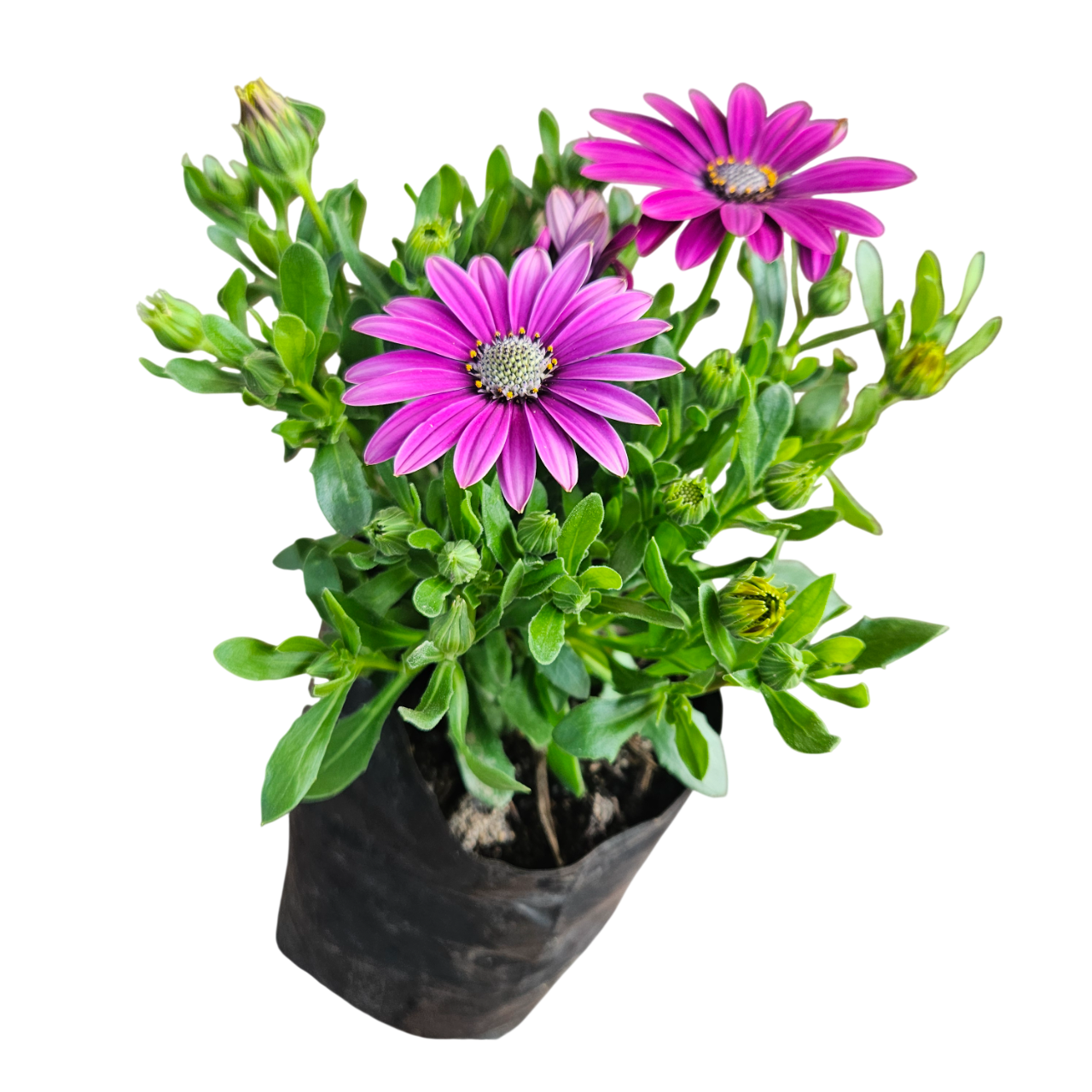
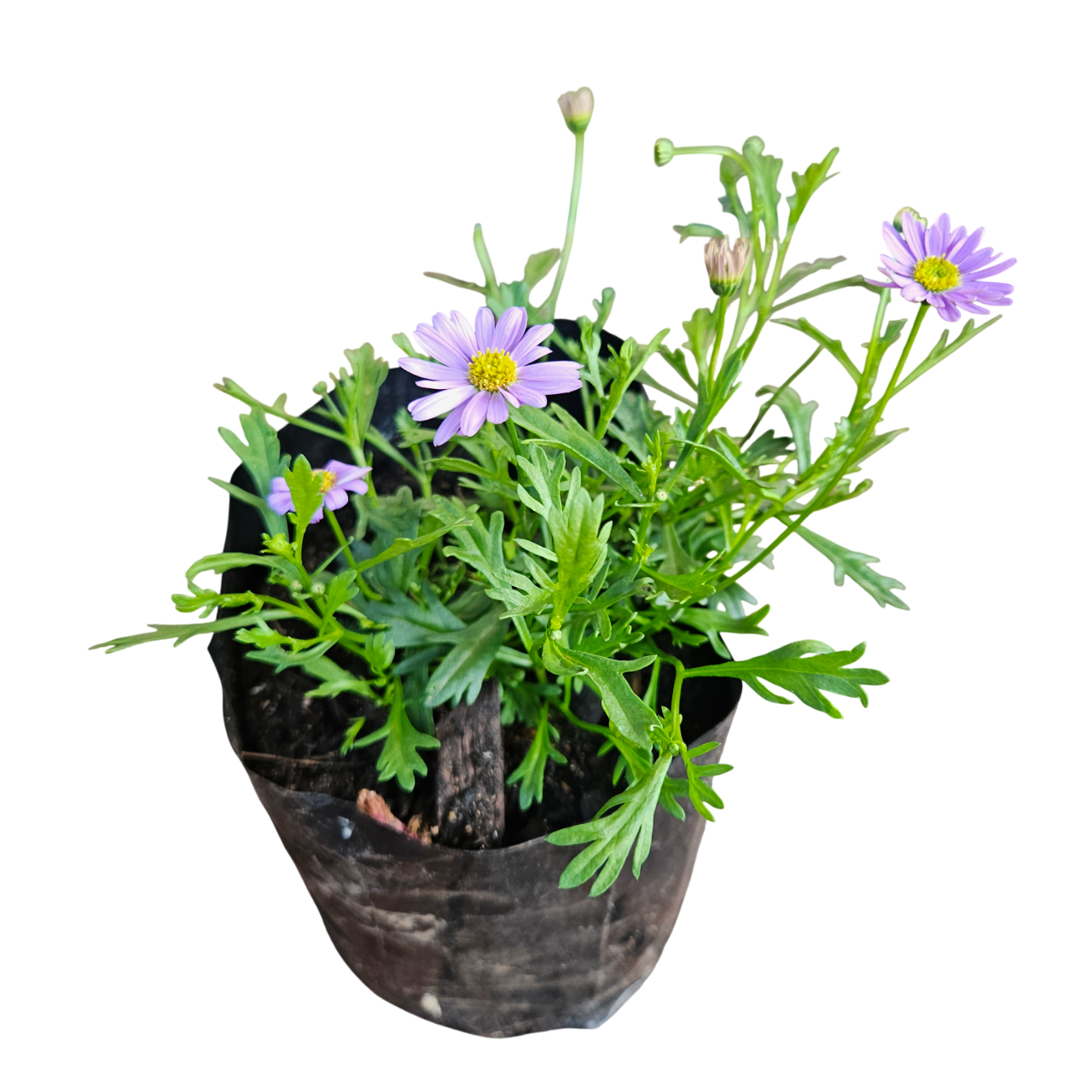
Those soft blue daisies with their golden centres look like a scattering of tiny stars across your garden. The Swan River Daisy is a delightful, fast-growing annual with a neat, mounded or slightly spreading clump of soft, grey-green, finely divided leaves that are deeply lobed and almost fern-like. From spring through summer and well into autumn, it produces an abundance of solitary flower heads, each 2–4 cm across, with narrow ray florets in soft blue, violet, purple, pink, or white surrounding a prominent golden-yellow to bronze-brown central disc. The display is so profuse that the flowers often hide the foliage entirely.
Native to the sandy soils and coastal regions of southwestern Australia (around the Swan River in Perth), this adaptable plant has proven wonderfully suited to the Western Cape’s temperate climate. It thrives in full sun—at least 6 hours of direct light for the most abundant flowers and a compact, tidy shape. It’s unfussy about soil, growing well in most well-drained types, including sandy, loamy, and even poor or chalky soils, and tolerates coastal conditions with ease. Once established, it’s moderately drought-tolerant but looks best with regular watering. Sensitive to severe frost, it’s best treated as a spring-to-autumn annual, planted after all danger of cold has passed. Reaching 20–50 cm tall and wide, it’s perfect for borders, mass plantings, rockeries, containers, window boxes, or as a charming cascading accent in hanging baskets.
Key Features:
- Masses of dainty, daisy-like flowers in soft blue, violet, pink, or white with golden-yellow centres
- Soft, grey-green, finely divided leaves create an airy, fern-like backdrop
- One of the longest-blooming annuals—spring through autumn, non-stop
- Neat, mounding habit ideal for borders, mass plantings, rockeries, or hanging baskets
Gardening Note: Plant in full sun in well-drained soil. Water regularly until established; mature plants are moderately drought-tolerant but bloom best with consistent moisture. Pinch out growing tips when plants are small to encourage a bushy shape. Deadhead spent flowers regularly throughout the season. Sensitive to severe frost; sow seeds or plant seedlings after all danger of frost has passed in spring. Generally pest and disease-free.