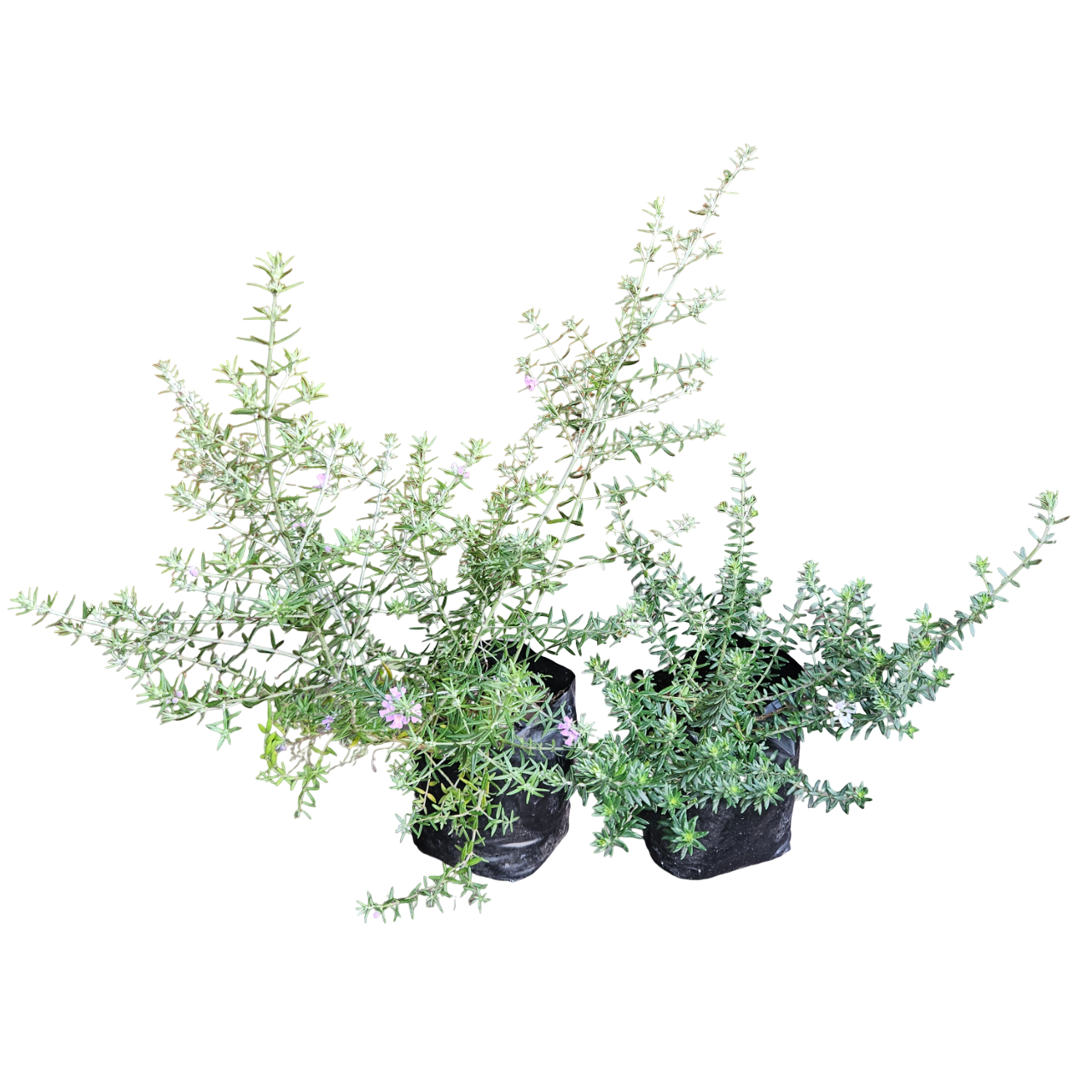
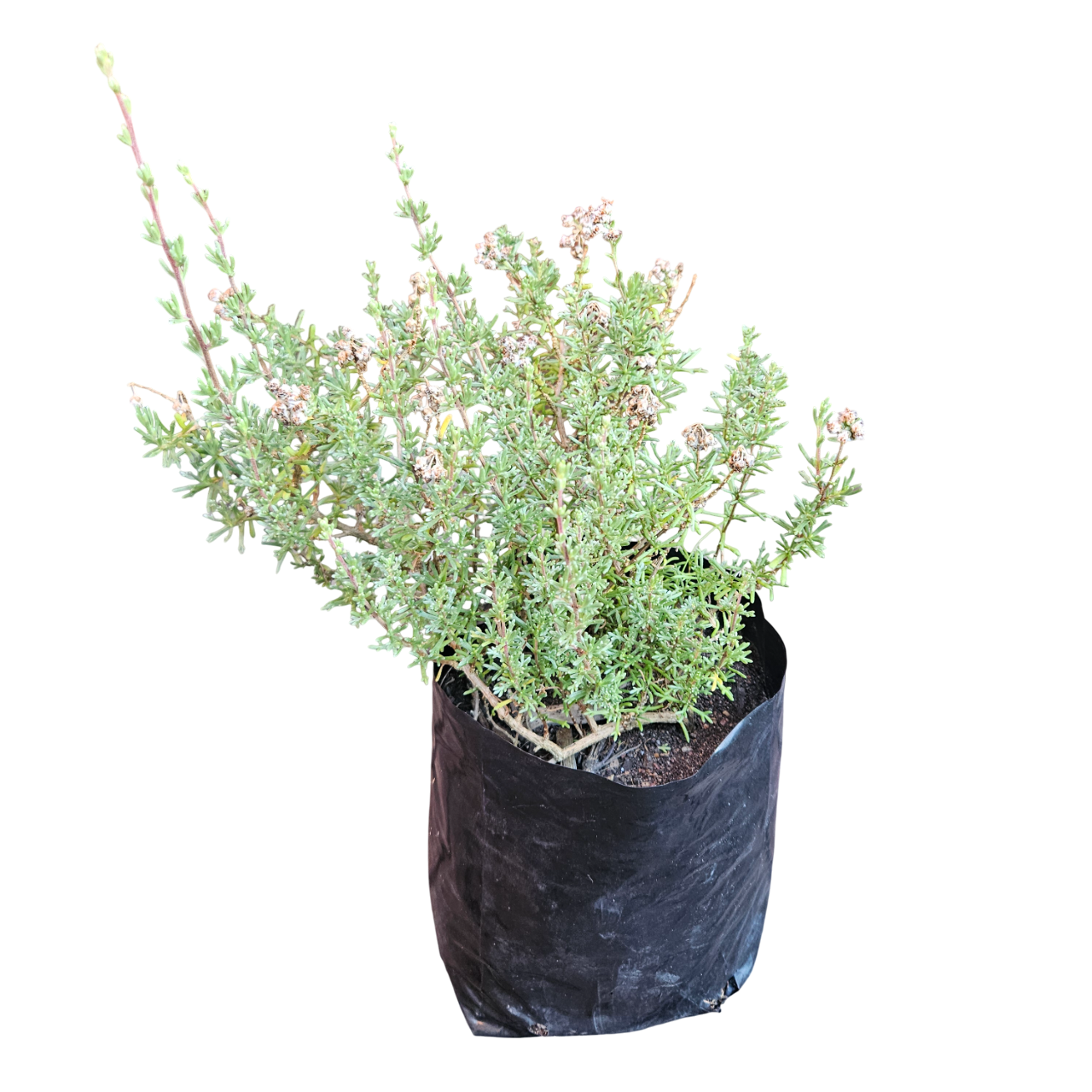
In winter and spring, this unassuming silver shrub transforms into a fluffy cloud of snowy white blooms—no wonder it’s called Kapokbossie. Wild Rosemary, also known as Wilde Roosmaryn, is a hardy evergreen shrub that forms a neat, twiggy, rounded to conical bush. Its small, linear, fleshy leaves are a beautiful silvery-grey to blue-green, covered in soft, felted hairs that give the plant a matt, luminous appearance and a wonderful tactile quality. From winter through spring (July to November), it produces an abundance of small flower heads, each surrounded by 3 to 5 conspicuous, snowy-white, papery ray petals that practically cover the entire bush, resembling a fresh dusting of snow or cotton wool.
Proudly endemic to South Africa (including the Western and Eastern Cape and Namaqualand), Wild Rosemary is perfectly at home in local gardens. It thrives in full sun and prefers well-drained, sandy or loamy soils, including the poor, rocky, and often saline soils near the coast. It’s exceptionally drought-tolerant once established, excels in coastal conditions handling strong winds and salt spray, and tolerates light to moderate frost. Reaching 0.5 to 1 metre tall (though it can spread up to 4 metres wide in ideal conditions), it’s perfect for fynbos gardens, coastal landscapes, rockeries, or informal hedges.
Key Features:
- Bush is transformed in winter and spring by a profusion of fluffy, snowy-white flower heads—Kapokbossie means “little cotton bush”
- Small, linear, silvery-grey leaves covered in soft, felted hairs release a pleasant, medicinal fragrance when brushed
- A proud Cape Floristic Region native; nectar-rich flowers are a vital winter food source for bees and butterflies
- Leaves have been used in traditional medicine; essential oil is used in perfumes and cosmetics
Gardening Note: Plant in full sun in well-drained soil—thrives in sandy, rocky, or poor soils. Excellent for coastal gardens, tolerating salt spray and wind. Water regularly until established; mature plants are highly drought-tolerant. Prune lightly after flowering to maintain a compact, bushy shape. Generally pest and disease-free.