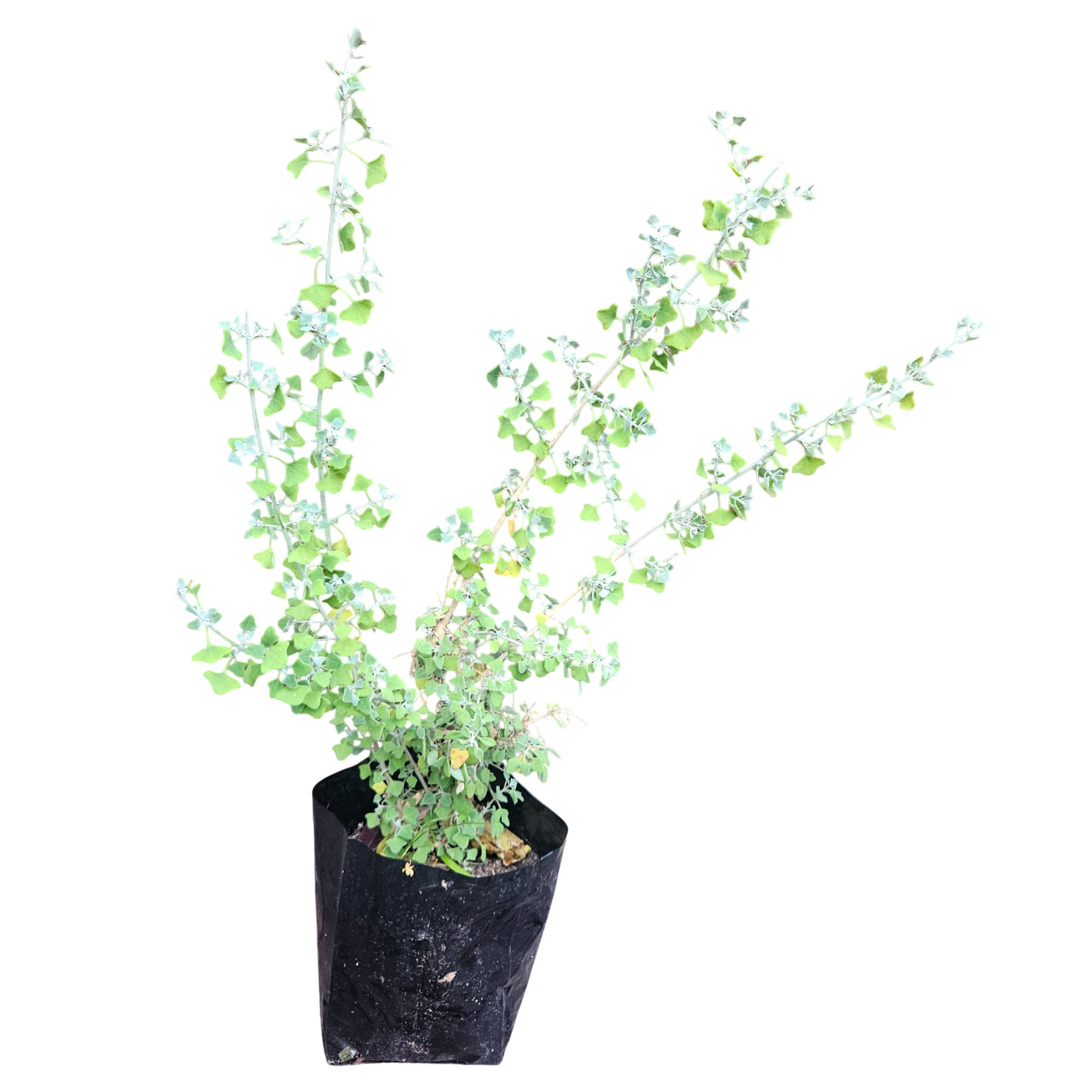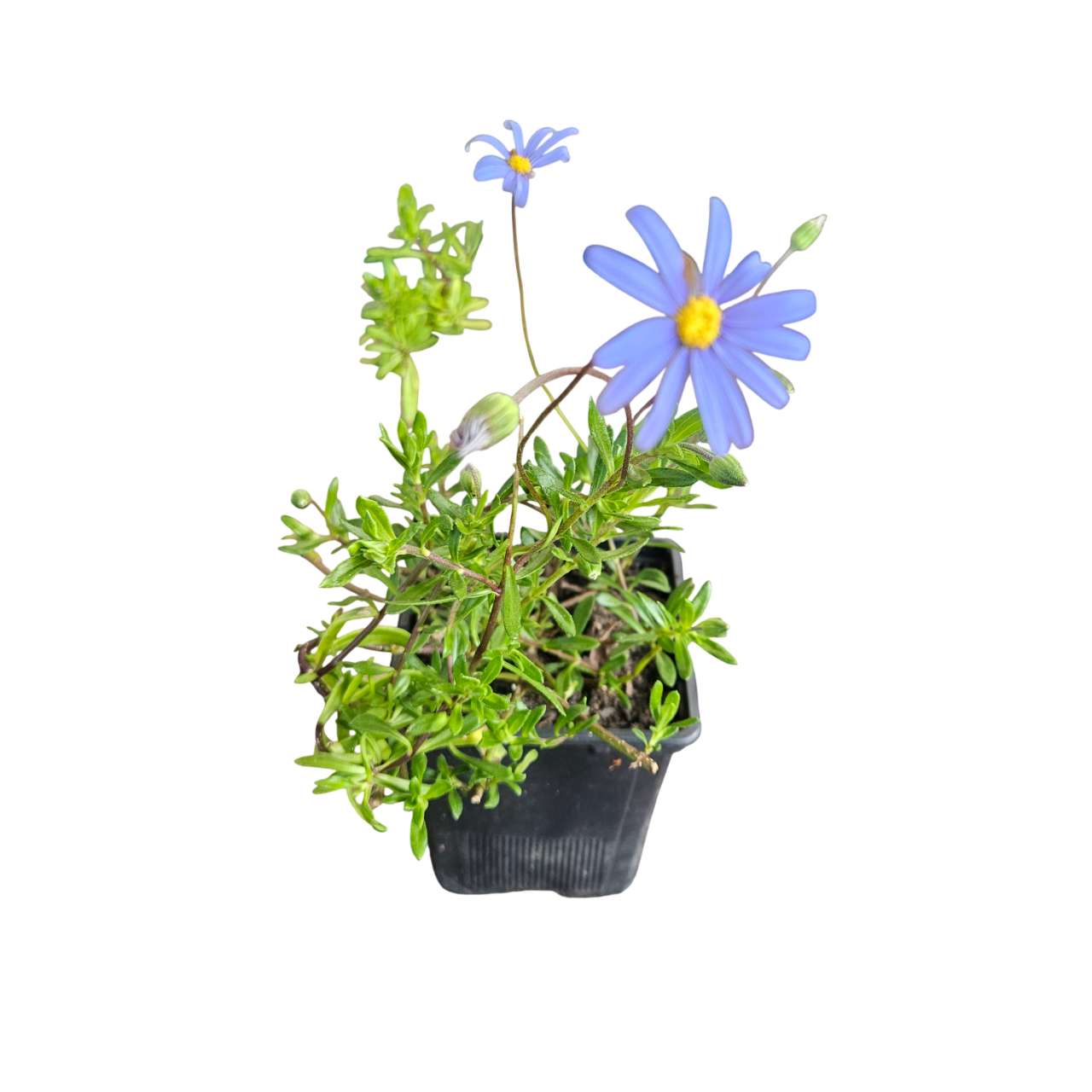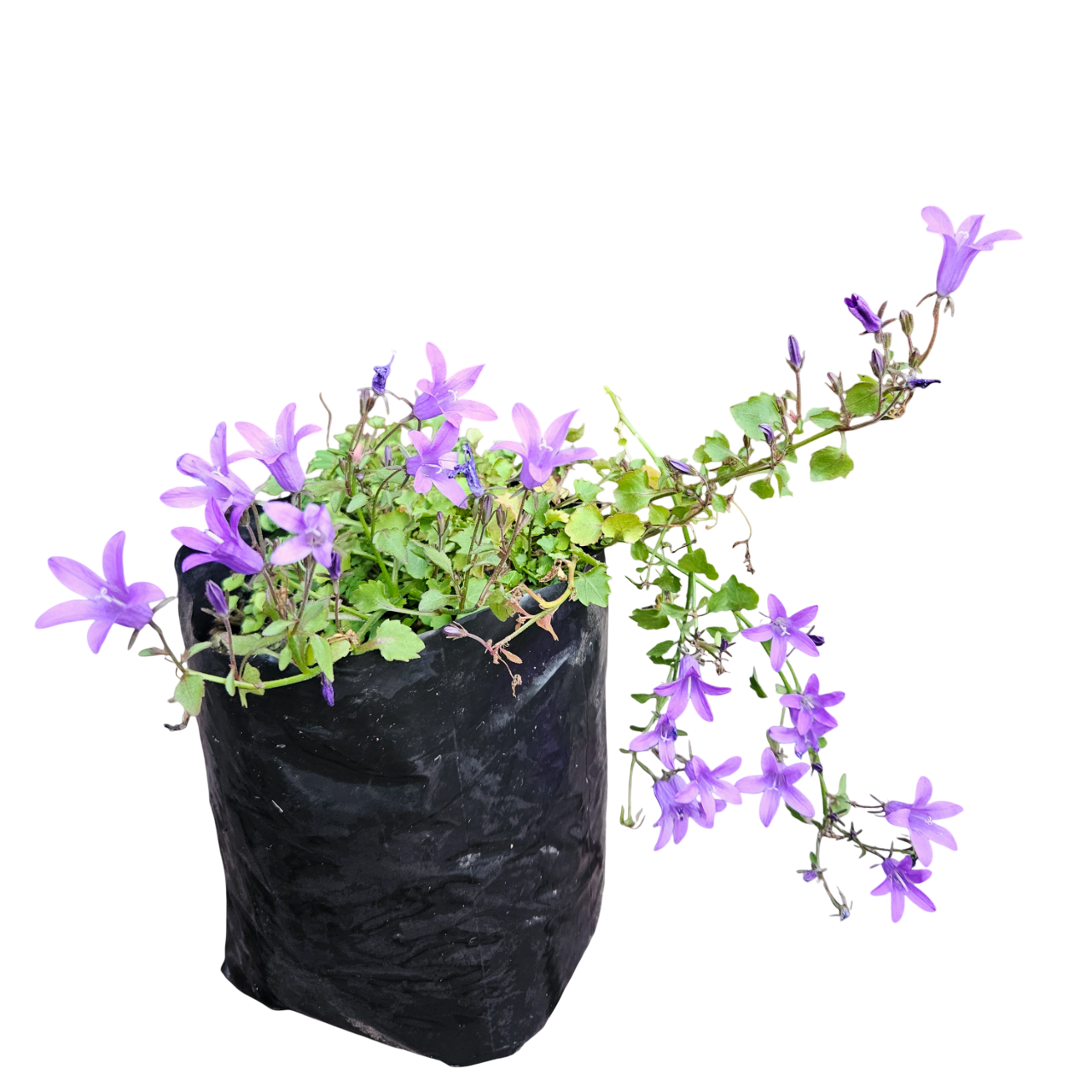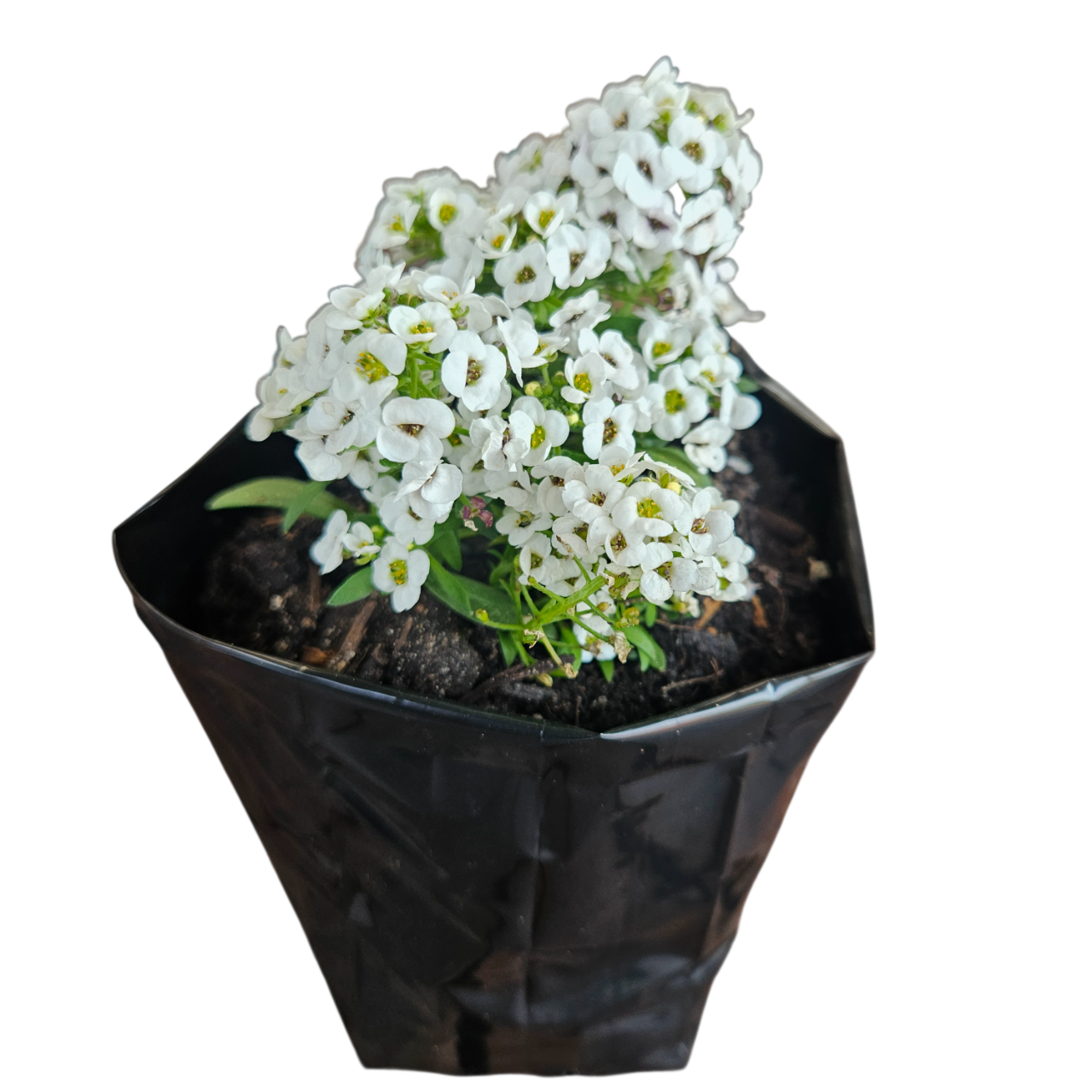
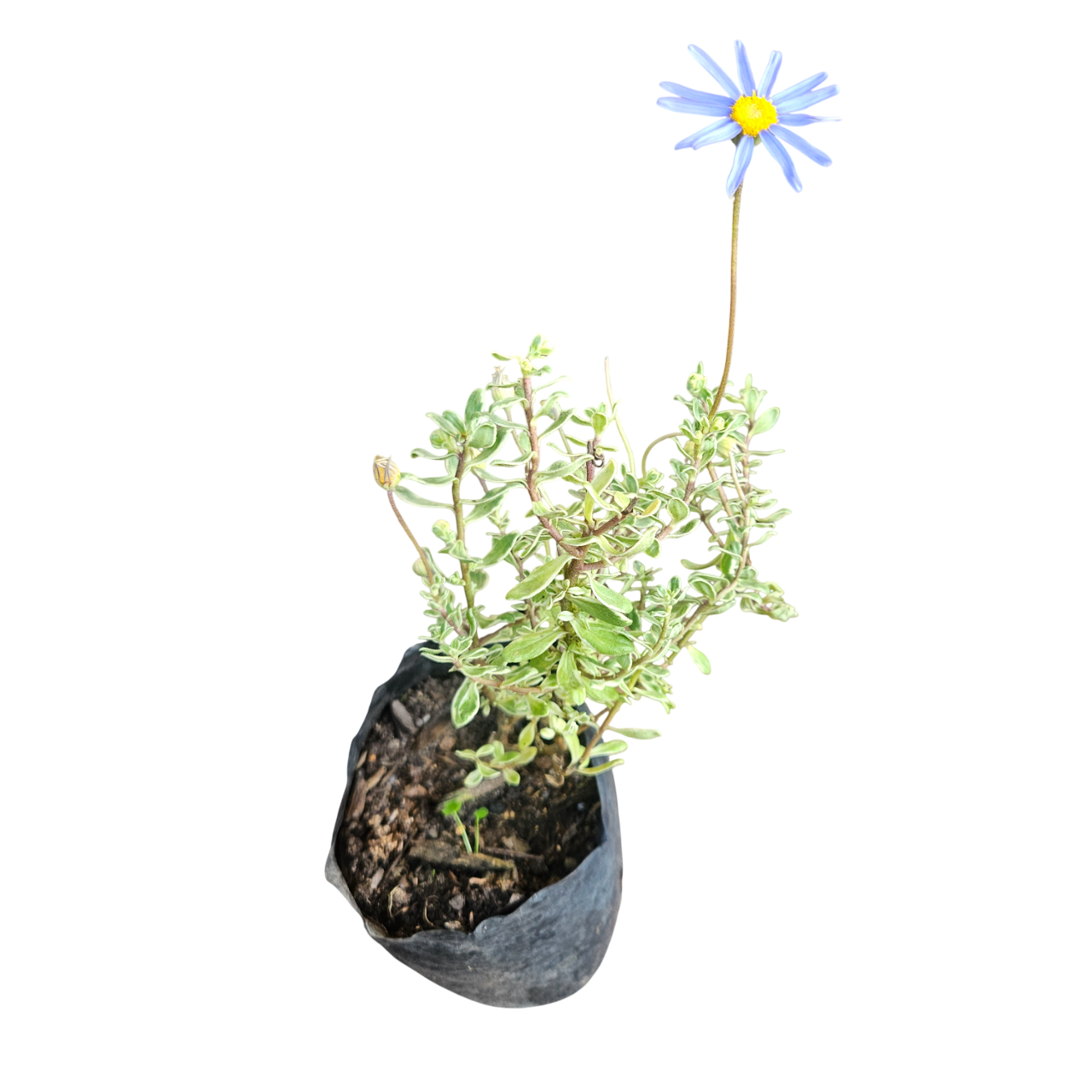
Even without its cheerful blue blooms, this shrub’s creamy-white variegated foliage would still steal the show. The Variegated Blue Felicia Bush, also known as Variegated Blue Marguerite or Variegated Blue Daisy, is a compact, evergreen sub-shrub that forms a neat, rounded mound of small, oval leaves—rich green with beautiful splashes and margins of creamy-white. From spring through summer and well into autumn, it produces an abundance of solitary, daisy-like flower heads in striking sky-blue to deep violet-blue, each with a cheerful, bright golden-yellow centre, held on slender stems above the foliage.
Proudly native to South Africa (growing naturally in the sandy dune regions and rocky slopes of the Cape Province), the Variegated Blue Felicia Bush is perfectly at home in local gardens. It thrives in full sun to light shade—bright light brings the most abundant flowers and compact, bushy shape. It demands well-drained, sandy or loamy soil and, once established, is remarkably drought-tolerant. It excels in coastal and windy conditions, handling salt spray and exposed positions with ease, and tolerates light frost. Reaching 20–50 cm tall and 30–60 cm wide, it’s perfect for borders, edging pathways, mass plantings, rockeries, containers, or as a cheerful, pollinator-friendly accent.
Key Features:
- Small, oval leaves with bright creamy-white margins and green centres for luminous, year-round contrast
- Masses of daisy-like, sky-blue flowers with sunny yellow centres from spring through autumn
- A proud Cape native—perfectly adapted to coastal, windy, and water-wise gardens
- Nectar-rich blooms attract bees, butterflies, and other pollinators
Gardening Note: Plant in full sun to light shade in well-drained soil—full sun promotes the best flower colour and most compact growth. Water regularly until established; mature plants are drought-tolerant and need little additional water. Prune lightly after the main flowering flush to encourage continuous blooming and maintain a tidy shape. Tolerant of light frost; in severe inland valleys, a sheltered spot or container culture is recommended.