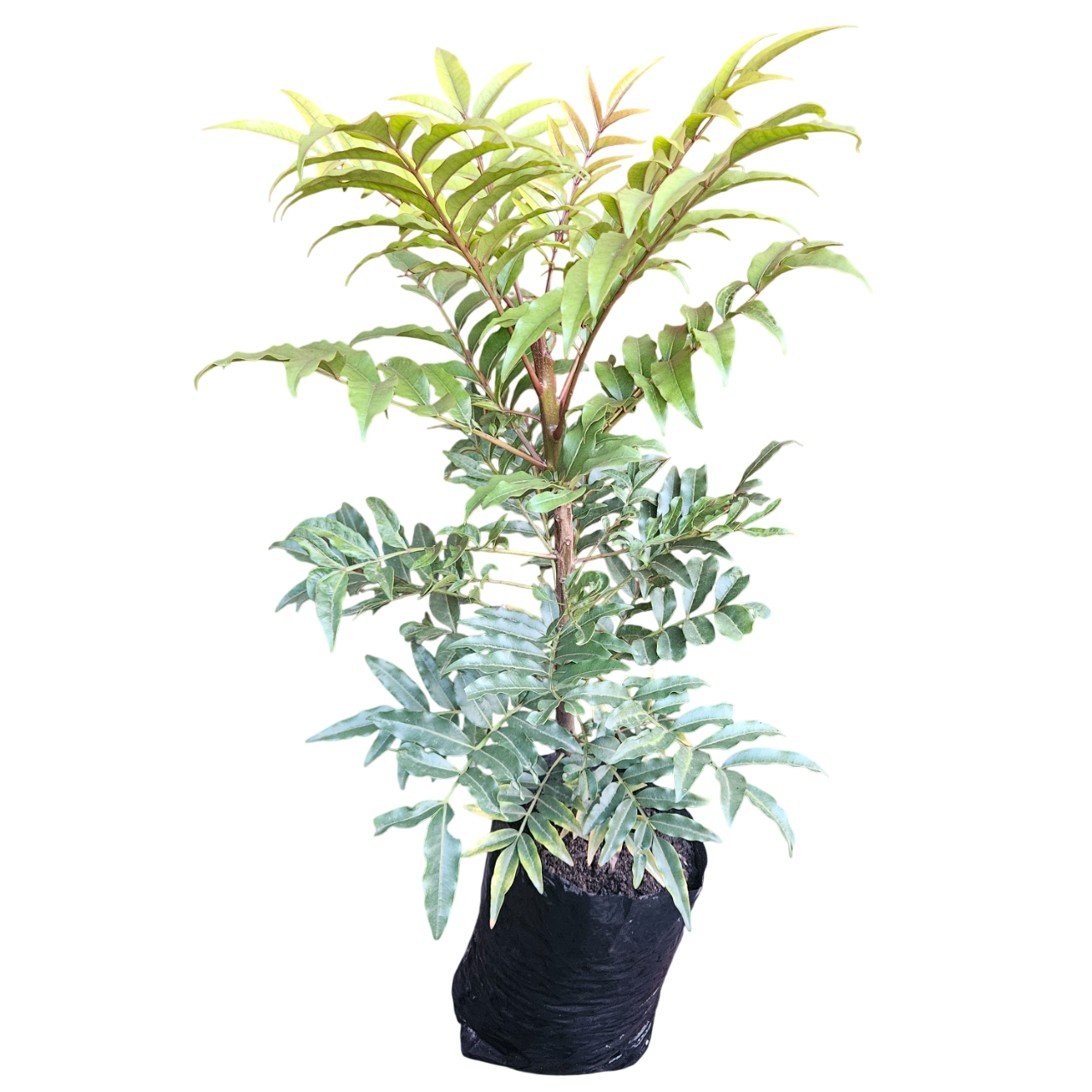
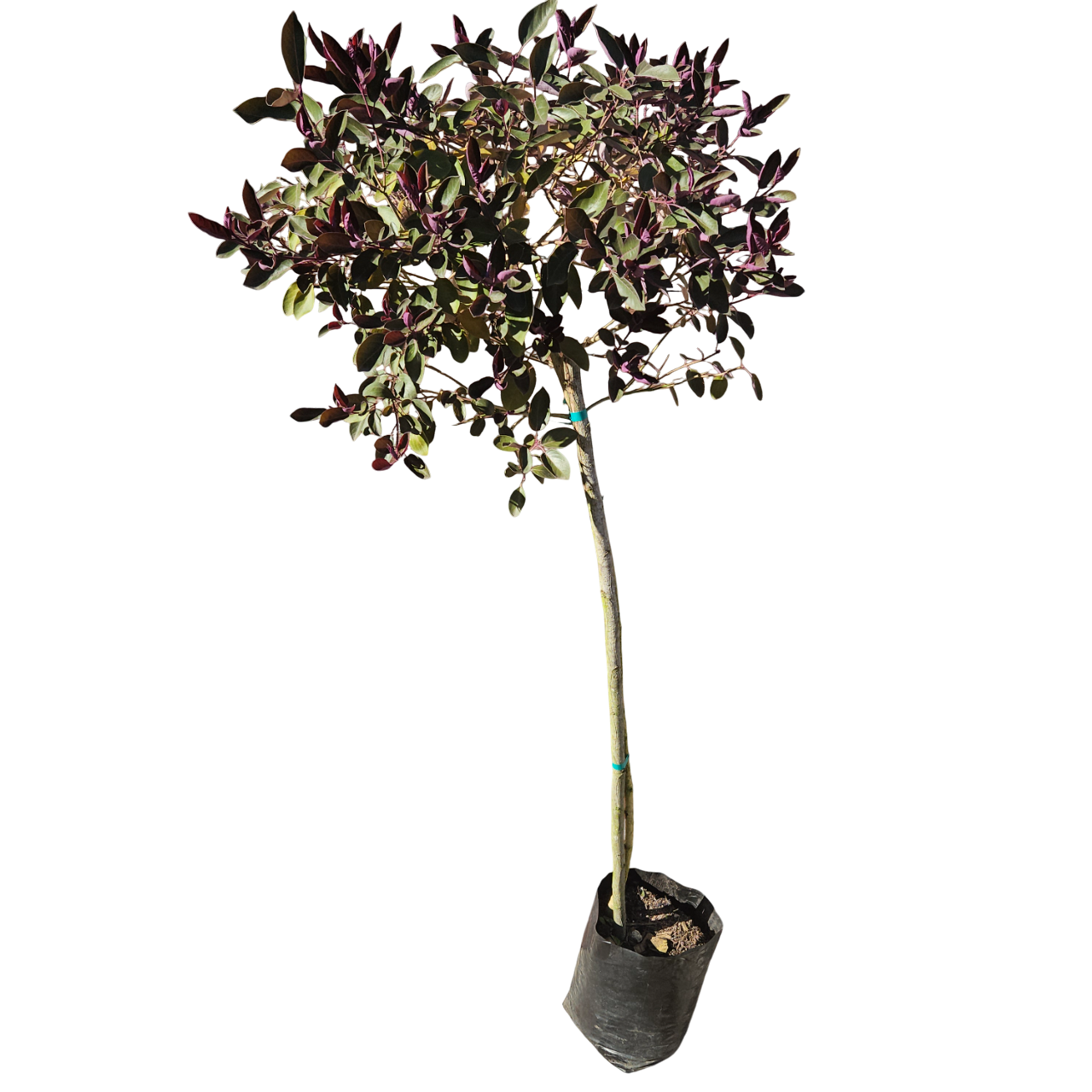
Take the shimmering purple and green foliage of the Purple Vitex, put it on a single stem, and you get a “lollipop” tree that’s pure elegance. The Purple Vitex Standard Tree features a clean, upright stem topped with a rounded, lollipop-shaped canopy of slender, branching stems clothed in aromatic, trifoliate leaves. New leaves emerge in brilliant, eye-catching purple, maturing to soft grey-green above while retaining a beautiful, velvety lavender-purple underside—a shimmering, bicoloured effect that moves in the breeze. From summer through autumn, the rounded head produces an abundance of upright, cone-shaped panicles of small, tubular flowers in soft lavender to bluish-purple, highly fragrant and adding a gentle, cloud-like accent.
Native to coastal regions of the Indo-Pacific (including Australia and Southeast Asia), this adaptable plant thrives in the Western Cape’s temperate climate. It needs full sun to light shade—bright light brings the most vibrant foliage colour, abundant flowers, and a dense, compact canopy. It’s unfussy about soil, growing well in most well-drained types, including sandy, loamy, and chalky soils, and tolerates salt and coastal conditions. Once established, it’s drought-tolerant and handles strong, salty winds with ease in a sheltered spot. Hardy to light frost, but in colder inland valleys, the standard form is best grown in a movable container. With a canopy reaching 80–120cm wide atop an 80–120cm stem, it’s perfect for framing doorways, flanking pathways, or adding vertical accent to patios and small gardens.
Key Features:
- Artfully trained standard form with a rounded canopy of shimmering purple and green foliage
- Grey-green leaves with vibrant lavender-purple undersides; new growth emerges brilliant purple
- Abundant clusters of fragrant, soft lavender-blue flowers from summer to autumn
- Drought-tolerant once established; ideal for large pots, urns, patios, and small gardens
Gardening Note: Plant in full sun to light shade in well-drained soil. A sturdy stake is essential to keep the standard form straight and upright. Water regularly until established; mature plants are drought-tolerant but appreciate occasional deep watering during dry spells. Prune in late winter or early spring before new growth emerges, keeping the canopy rounded and compact—it flowers on new wood, so this encourages a profuse summer display. Remove any shoots that emerge from the main stem below the canopy. Hardy to light frost; in colder inland areas, grow in a movable container to shelter during winter.