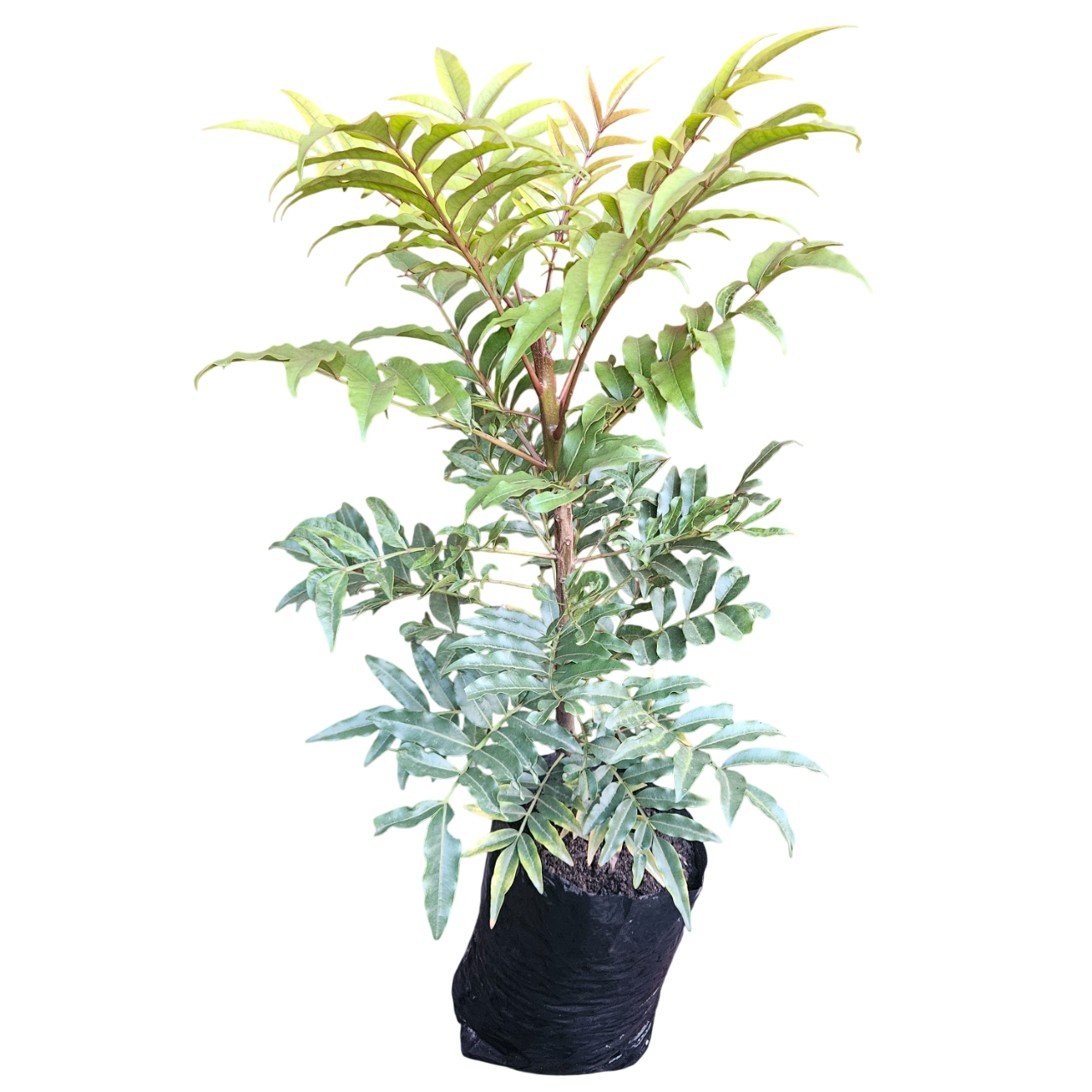
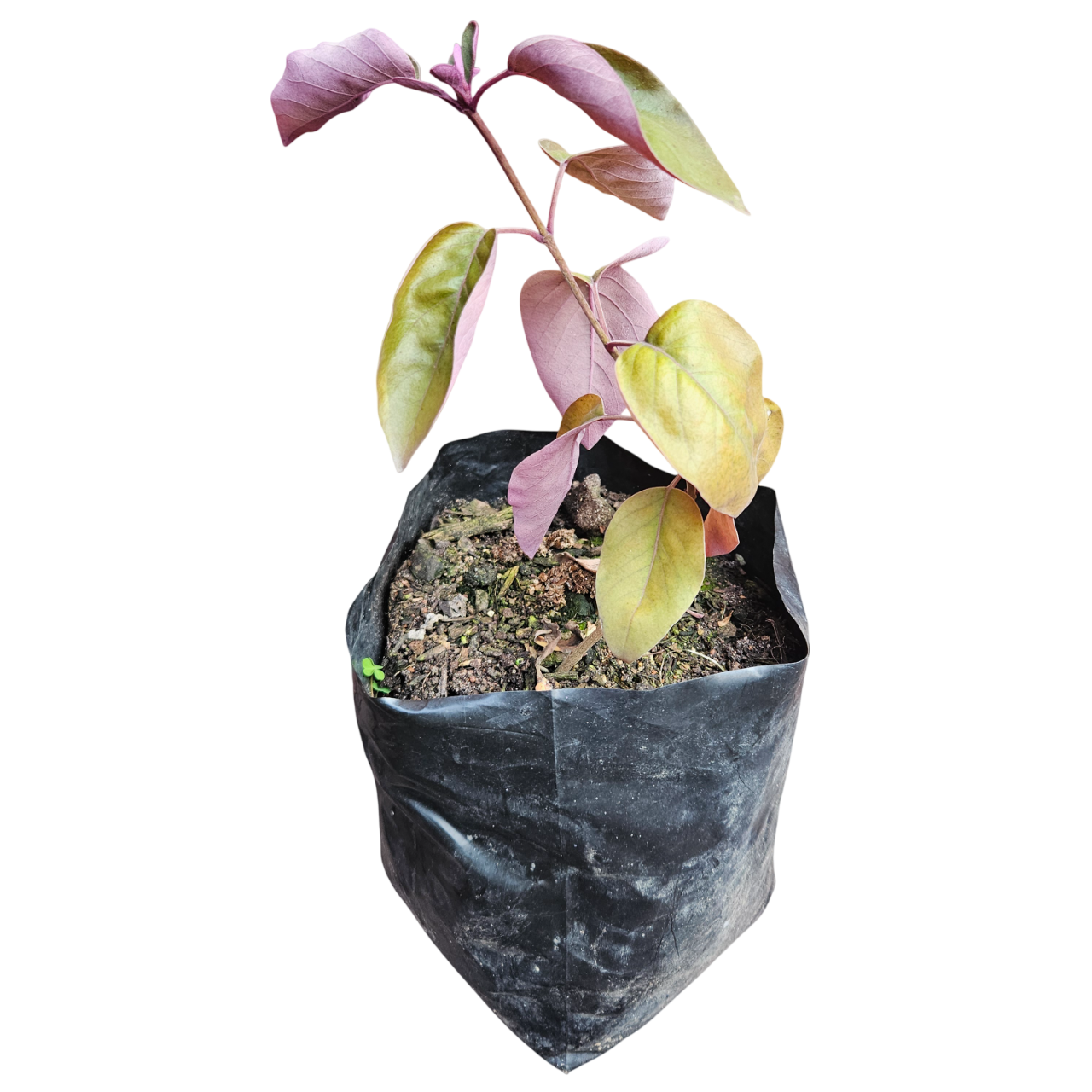

Watch the wind ruffle those leaves, and you’ll see a shimmering flash of lavender-purple beneath a soft grey-green surface. Purple Vitex, also known as Arabian Lilac or East Indian Wild Pepper, is a vigorous, evergreen shrub with an upright, bushy form of slender branches clothed in aromatic, trifoliate leaves. New leaves emerge in brilliant, eye-catching purple, maturing to soft grey-green above while retaining a beautiful, velvety lavender-purple underside. From summer through autumn, upright, cone-shaped panicles of small, tubular flowers in soft lavender to bluish-purple appear, highly fragrant and adding a gentle, cloud-like accent.
Native to coastal regions of the Indo-Pacific (including Australia and Southeast Asia), Purple Vitex has proven wonderfully suited to the Western Cape’s temperate climate. It thrives in full sun to light shade—a sunny spot brings the most vibrant foliage colour and abundant flowers. It’s remarkably unfussy about soil, growing well in most well-drained types, including sandy, loamy, and chalky soils, and is tolerant of salt and coastal conditions. Once established, it’s drought-tolerant and handles strong, salty winds with ease. It’s hardy to light frost. Reaching 3–5m tall and 3–4m wide (easily pruned smaller), it’s perfect for informal hedging, screening, coastal gardens, or as a striking feature shrub in a mixed border or large container.
Key Features:
- Grey-green leaves with vibrant lavender-purple undersides for shimmering, bicolour display; new growth emerges brilliant purple
- Abundant clusters of soft lavender-blue flowers from summer to autumn with gentle fragrance
- Exceptionally tolerant of coastal winds, salt spray, and sandy soils
- Drought-tolerant once established; ideal for informal hedges, screening, or training as a small standard
Gardening Note: Plant in full sun to light shade in well-drained soil—full sun brings the most vibrant foliage colour and abundant flowering. Water regularly until established; mature plants are drought-tolerant but appreciate occasional deep watering during dry spells. Prune in late winter or early spring before new growth emerges; it flowers on new wood, so this encourages a more profuse summer display. Easily propagated from semi-ripe cuttings in late summer. Generally pest-free and disease-resistant.