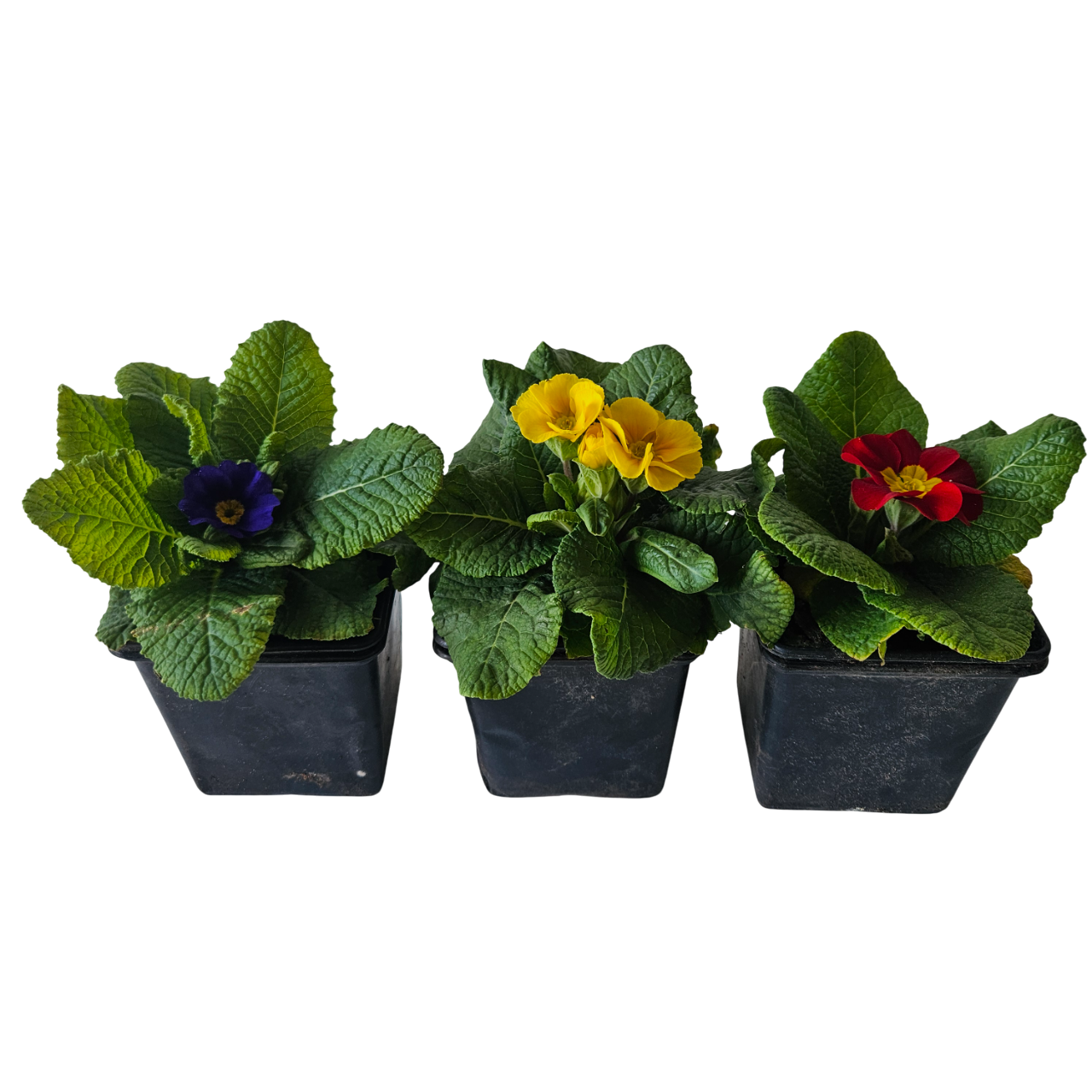


Legend has it that eating a primrose blossom might let you see a fairy. Whether that’s true or not, these cheerful blooms are pure garden magic. The Primrose, also known as English Primrose or Common Primrose, is a compact, clump-forming, herbaceous perennial with a low, neat rosette of tongue-shaped, bright green leaves that have a distinctly wrinkled, textured appearance. From late winter through spring, it produces an abundance of solitary, five-petalled, funnel-shaped flowers on short stems held just above the foliage, in a dazzling rainbow of colours—yellow, white, pink, red, purple, blue, and orange—often with a contrasting yellow or darker centre.
Native to Western Europe (including Britain) and North Africa, the Primrose has proven wonderfully suited to South African gardens with cooler winters. In the Western Cape, it thrives with morning sun and afternoon shade—excessive heat will prematurely end its flowering season. It prefers rich, well-drained, moisture-retentive soil high in organic matter and requires regular watering to keep soil consistently moist, as it has shallow roots and dislikes drying out. It tolerates light frost. Reaching only 12–15cm tall and 15cm wide, it’s perfect for mass plantings as spring groundcover, shady borders, rockeries, or as a cheerful accent in containers and window boxes.
Key Features:
- Masses of brightly coloured flowers in a rainbow of hues from late winter through spring
- Low rosettes of crinkled, bright green leaves for neat, textured appeal
- Associated with first love, purity, and fairy magic—steeped in folklore
- Edible blooms make pretty garnishes for salads; attract early-season pollinators
Gardening Note: Plant in morning sun and afternoon shade in rich, well-drained soil kept consistently moist. In the Western Cape, plant in late autumn or winter for a spectacular spring display. Water regularly, especially during dry spells. Deadhead spent flowers regularly and apply liquid fertiliser for flowering plants once a fortnight during the growing season. Sensitive to extreme heat; as temperatures rise in late spring, plants will finish blooming. Watch for slugs and snails, which love the tender foliage.