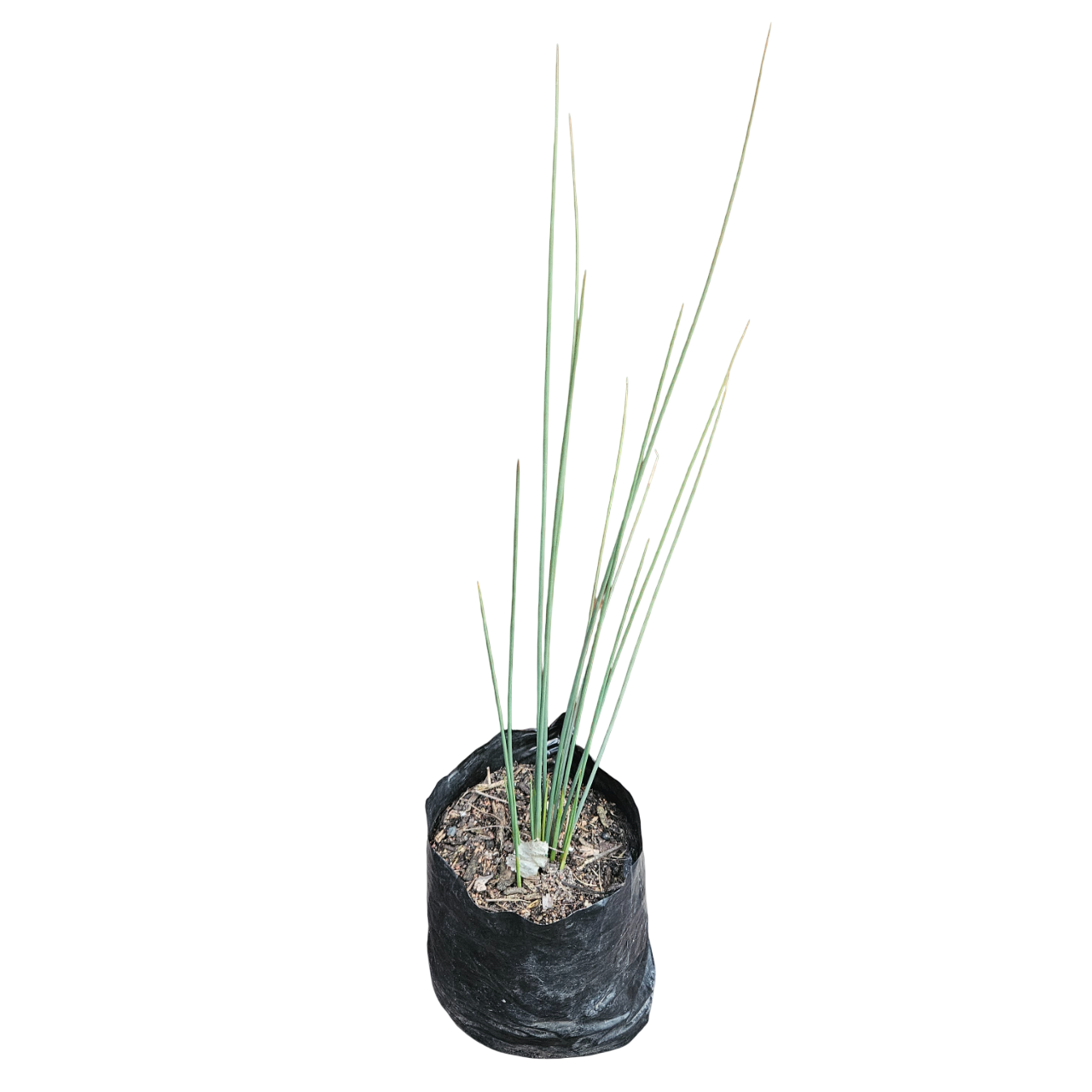
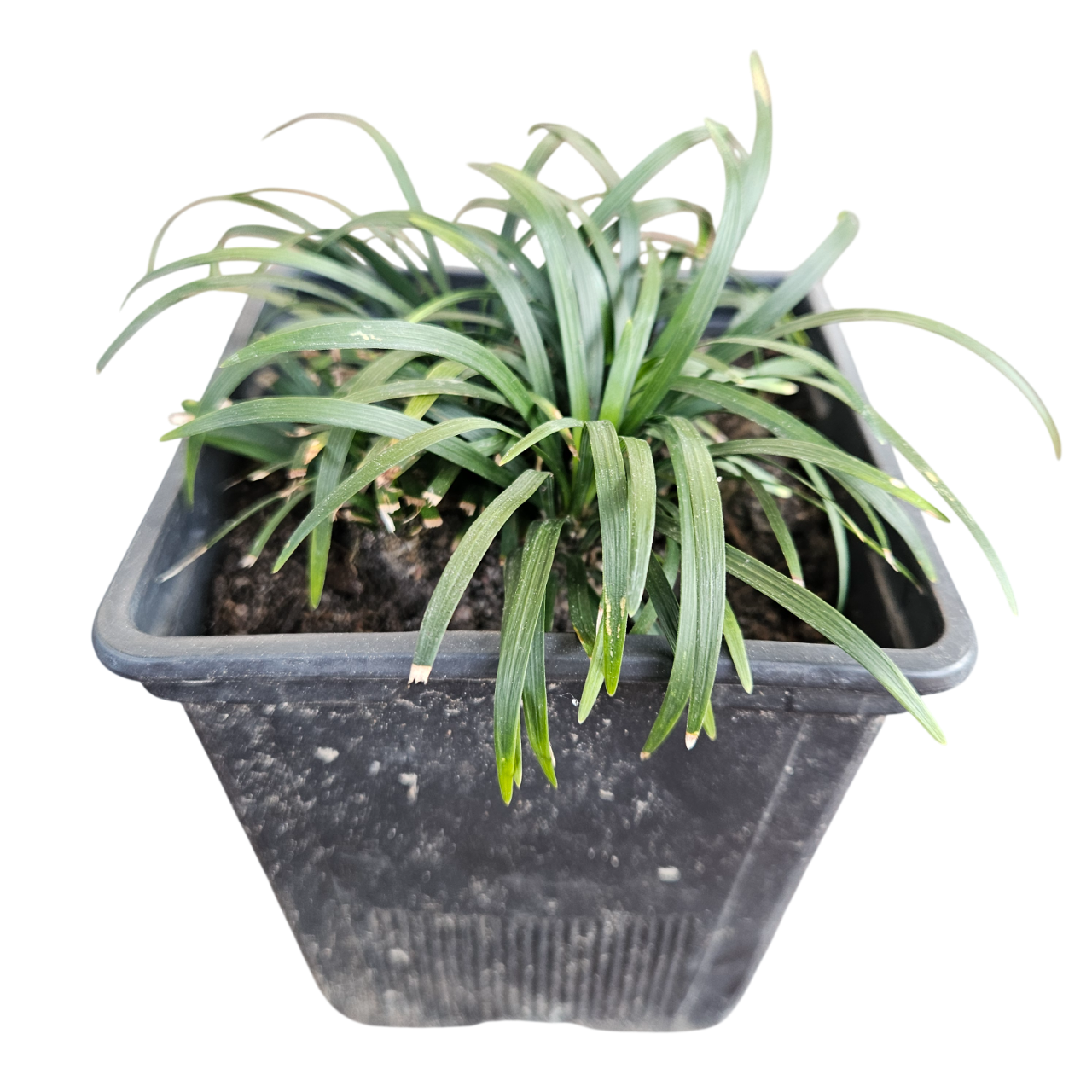


Don’t let the name fool you—Mondo Grass isn’t a grass at all. Also known as Dwarf Lilyturf or Snake’s Beard, this clump-forming evergreen perennial is actually a member of the asparagus family. It forms neat, rounded tufts of narrow, leathery, strap-shaped leaves that arch gracefully from the base, slowly spreading by short rhizomes to create a rich, verdant carpet over time. In summer, small, bell-shaped flowers in pale lilac to white appear on short spikes, often hidden among the leaves. But the real surprise comes in autumn: stunning, bright sky-blue to metallic-blue berries that add a delicate, jewel-like accent to the deep green foliage.
Originally from the forests and shady slopes of East Asia, Mondo Grass has settled beautifully into South African gardens. It’s a champion of low-light areas, thriving in part shade to full shade—perfect for those tricky spots under trees or on the south side of buildings. It tolerates some filtered sun but needs protection from hot, harsh afternoon rays. It prefers well-drained, fertile soil but adapts to most types, including sandy, loamy, and even clay, as long as they don’t stay waterlogged. Once established, it’s remarkably drought-tolerant and cold-hardy, handling light to moderate frost with ease. With standard species reaching 20–40cm tall (dwarf ‘Kyoto’ just 10–15cm), it’s ideal as a no-mow lawn alternative, underplanting trees, edging pathways, or filling gaps between stepping stones.
Key Features:
- Dense clumps of narrow, dark green, grass-like leaves for soft, year-round texture
- Thrives in full shade—perfect for difficult low-light areas under trees
- Small lilac-white flowers in summer, followed by stunning sky-blue berries in autumn
- Ideal as a lawn alternative, for underplanting trees, or container planting
Gardening Note: Plant in part shade to full shade in well-drained, fertile soil. Avoid hot, harsh afternoon rays. Water regularly until established; mature plants are drought-tolerant but look best with occasional watering during dry spells. Cut leaves back to the ground in late winter or early spring to keep tidy. Divide overcrowded clumps every few years in spring or autumn. Hardy to mild frost and tolerates coastal conditions.