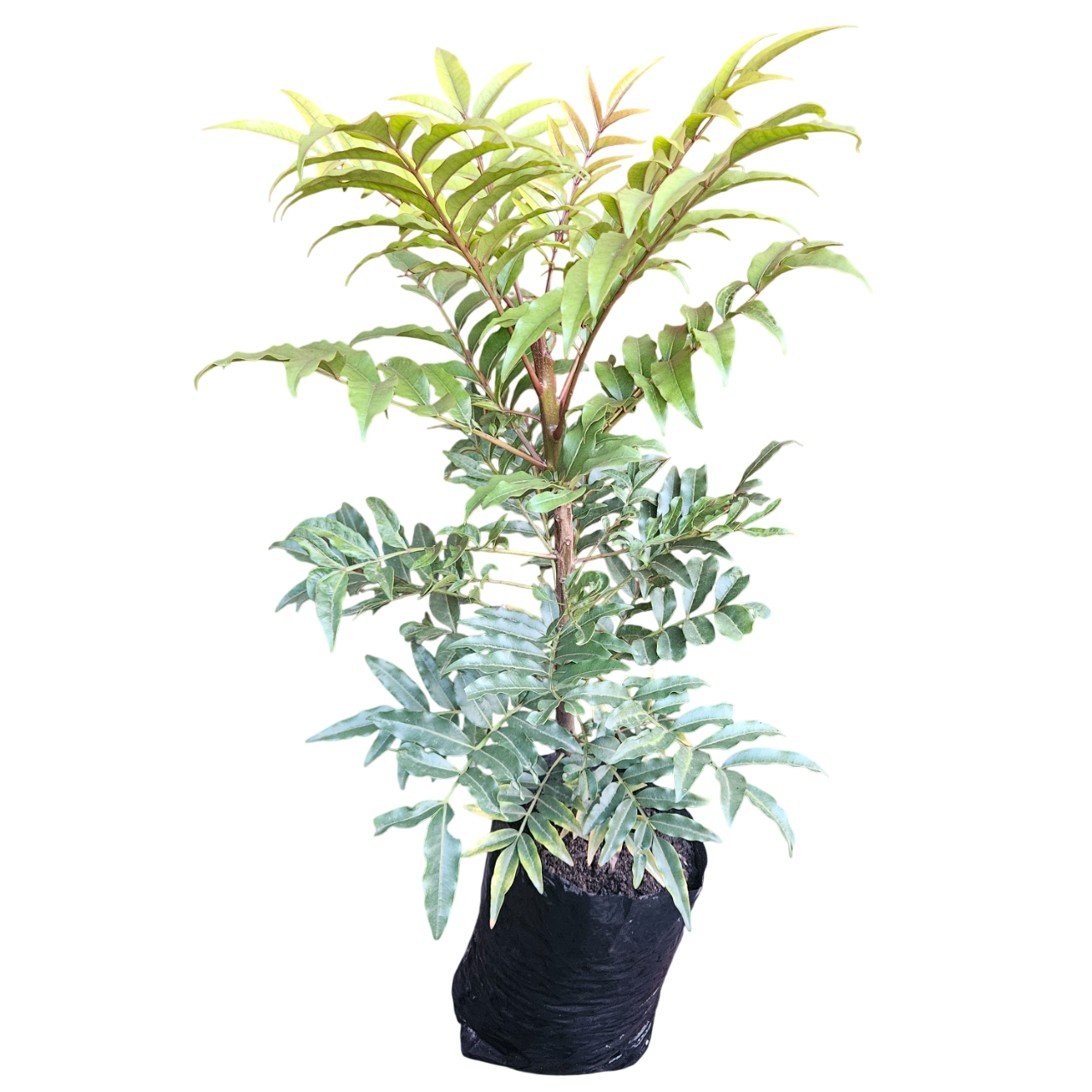
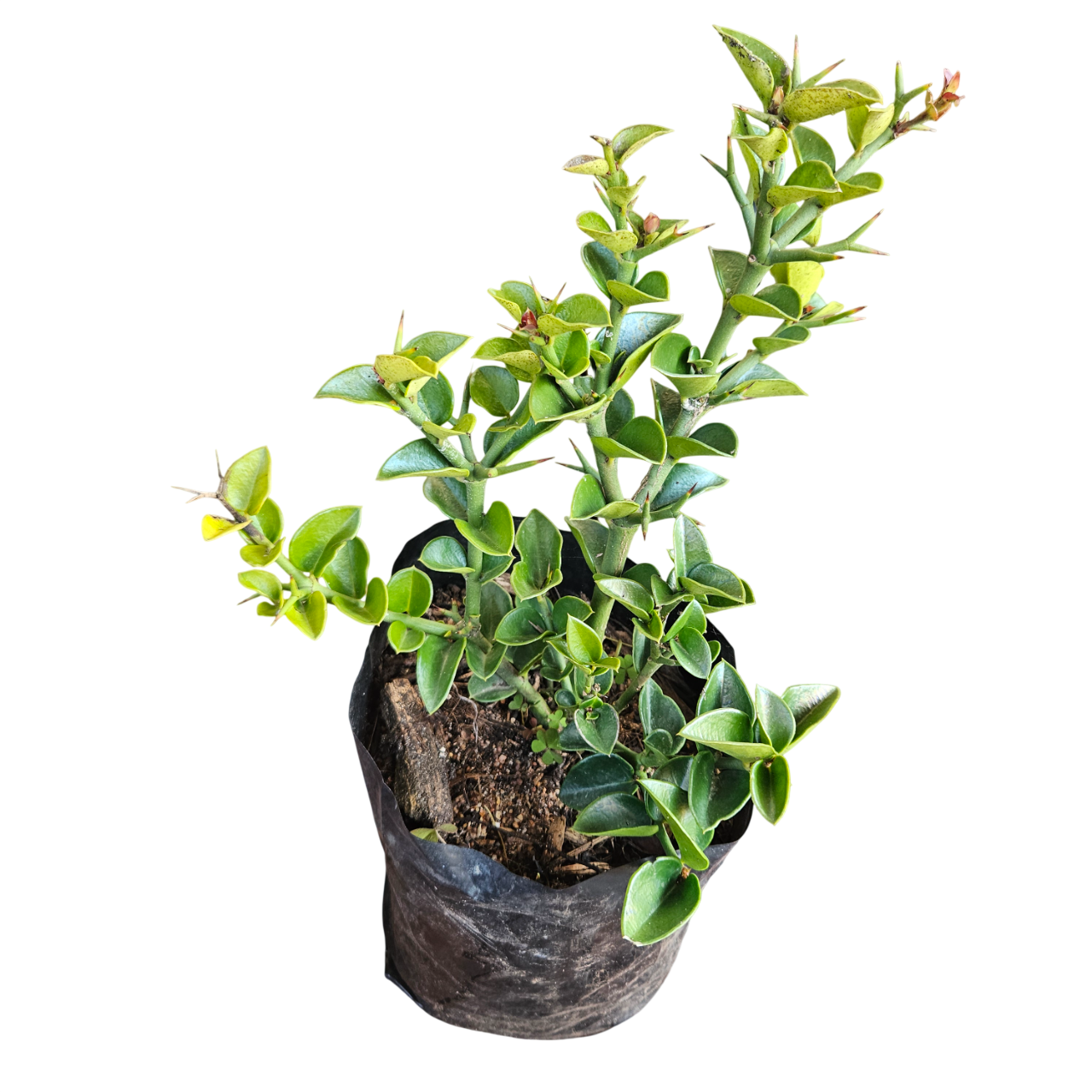

Imagine a shrub that offers glossy greenery, fragrant flowers, and tasty fruit all in one package. That’s the Natal Plum. Also known as Grootnoem-noem or Amatungulu, this dense, fast-growing evergreen shrub features a rounded crown of leathery, oval leaves in a rich, lustrous dark green. From spring through summer, it produces an abundance of stunning, star-shaped, pure white flowers up to 5 cm across, releasing a sweet, jasmine-like fragrance that intensifies at night. Then come the fruits: plump, oval, bright crimson to deep red berries that ripen mainly in summer and autumn, often appearing while the plant is still in bloom.
Proudly native to South Africa (from the Eastern Cape northwards to KwaZulu-Natal and Mozambique), the Natal Plum is perfectly at home in local gardens. It thrives in full sun to light shade and is remarkably unfussy about soil, growing in well-drained sand, loam, or even clay. Once established, it’s highly drought-tolerant. It excels in coastal conditions, handling strong winds and salt spray with ease. It’s sensitive to severe frost, so it needs a sheltered spot in colder inland valleys but thrives in mild coastal areas. Reaching 2–4 m tall with an equal spread (easily maintained smaller size), it’s perfect for formal or impenetrable hedges, screening, large containers, or as a glossy specimen in coastal gardens.
Key Features:
- Glossy, dark green foliage, fragrant white flowers, and bright red edible fruits for year-round interest
- Sweet, jasmine-scented blooms from spring through summer attract bees and butterflies
- Bright red, plum-like fruits rich in Vitamin C—eat fresh or make into jams and pies
- Exceptionally tolerant of salt spray and wind; sharp thorns make an ideal impenetrable hedge
Gardening Note: Plant in full sun to light shade in well-drained soil enriched with compost. Water regularly until established; mature plants are highly drought-tolerant. Prune in late winter or early spring to maintain shape—responds well to clipping. For a security hedge, space plants about 1 metre apart. Sensitive to severe frost; in colder areas, plant in a warm, sheltered spot or grow in a movable container.