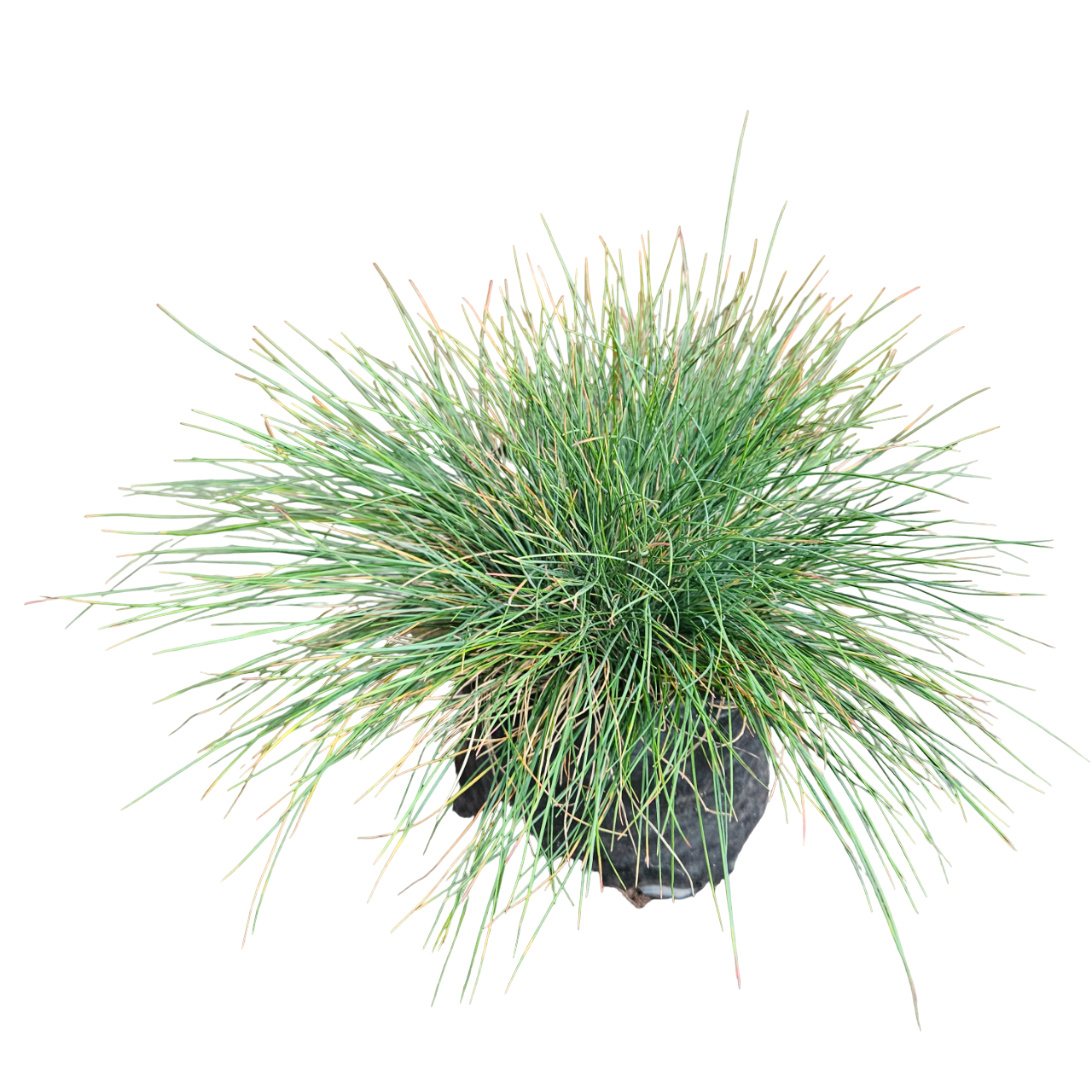
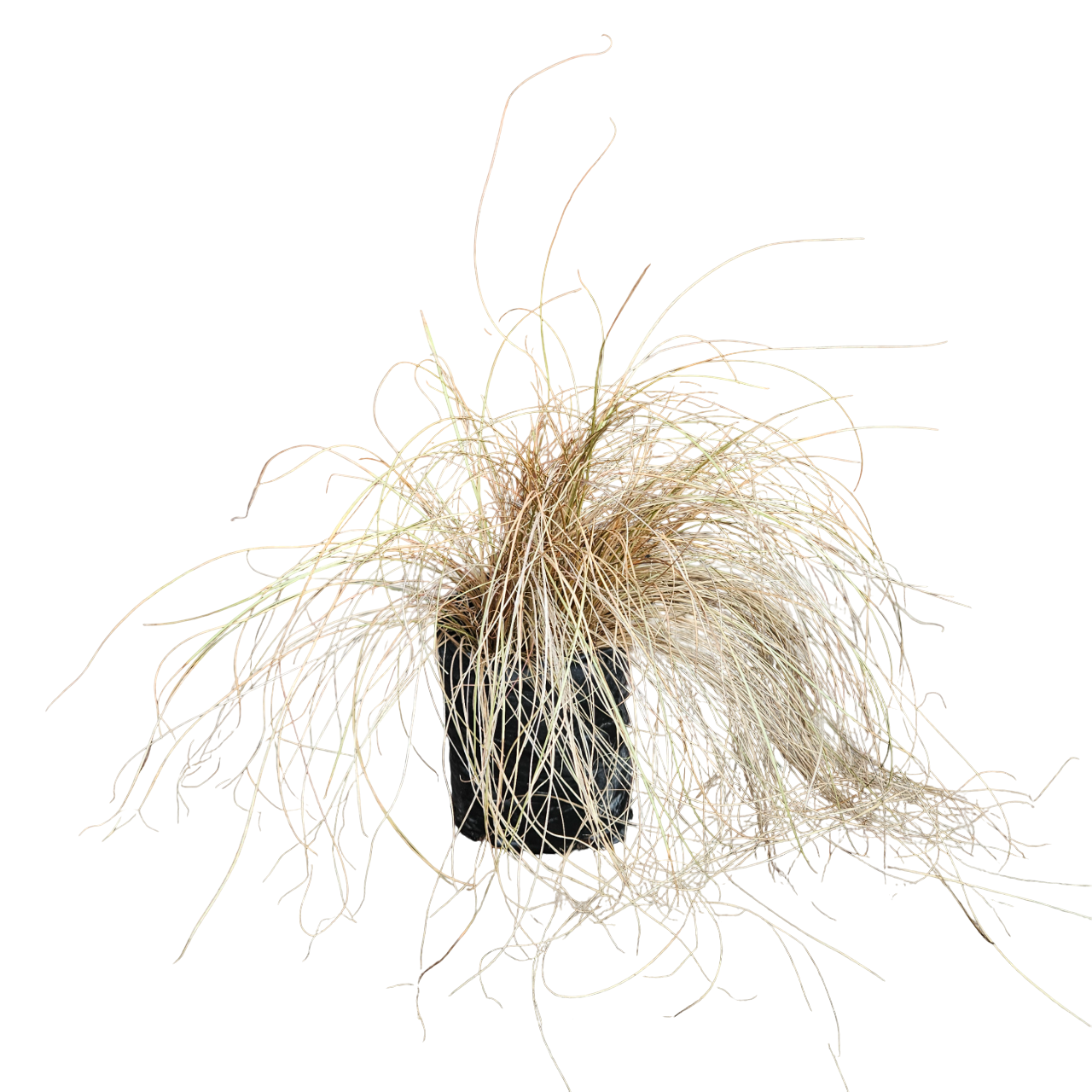

Run your fingers through this plant’s fine, coppery blades, and you’ll feel why it’s called Hair Sedge. Also known as Bronze Perfection or simply Bronze Sedge, this clump-forming evergreen perennial forms a dense, mounded clump of very fine, arching leaves in a rich, uniform bronze to coppery-brown hue. Those graceful, weeping leaves create a soft, flowing effect, swaying gently in the breeze and adding lightness and movement to any planting. In summer, small, inconspicuous, chocolate-brown flower spikes sit just above the foliage, adding subtle textural interest.
This adaptable sedge hails from New Zealand and has proven wonderfully suited to South African gardens. It thrives in full sun to partial shade—a sunny spot brings out the richest, most intense bronze colour. It’s remarkably unfussy about soil, growing well in most well-drained types, including sandy, loamy, and chalky soils, and is extremely tolerant of dryness, salt winds, and sandy, drought-prone spots. Once established, it’s drought-tolerant and low-maintenance. It excels in coastal gardens, handling salt-laden winds with ease, and is hardy to moderate frost, tolerating temperatures down to around -10°C. Reaching 20–60cm tall and 30–60cm wide, it’s perfect for mass plantings, rockeries, borders, containers, or as a striking textural accent in modern gardens.
Key Features:
- Fine, hair-like leaves in rich, uniform bronze to coppery-brown for soft, flowing texture
- Dense clump of arching, weeping leaves creates a graceful, cascading effect
- Thrives in coastal conditions, handles salt-laden winds and sandy soils with ease
- Drought-tolerant and frost-hardy once established; ideal for low-maintenance gardens
Gardening Note: Plant in full sun to partial shade in well-drained soil—full sun encourages the most intense bronze colour. Water regularly until established; mature plants are drought-tolerant but appreciate occasional watering during dry spells. Comb through the clump in late winter or early spring to remove dead or tatty foliage, or cut back heavily if it looks untidy. Avoid waterlogged soils, especially in winter. Generally pest-free and disease-resistant.