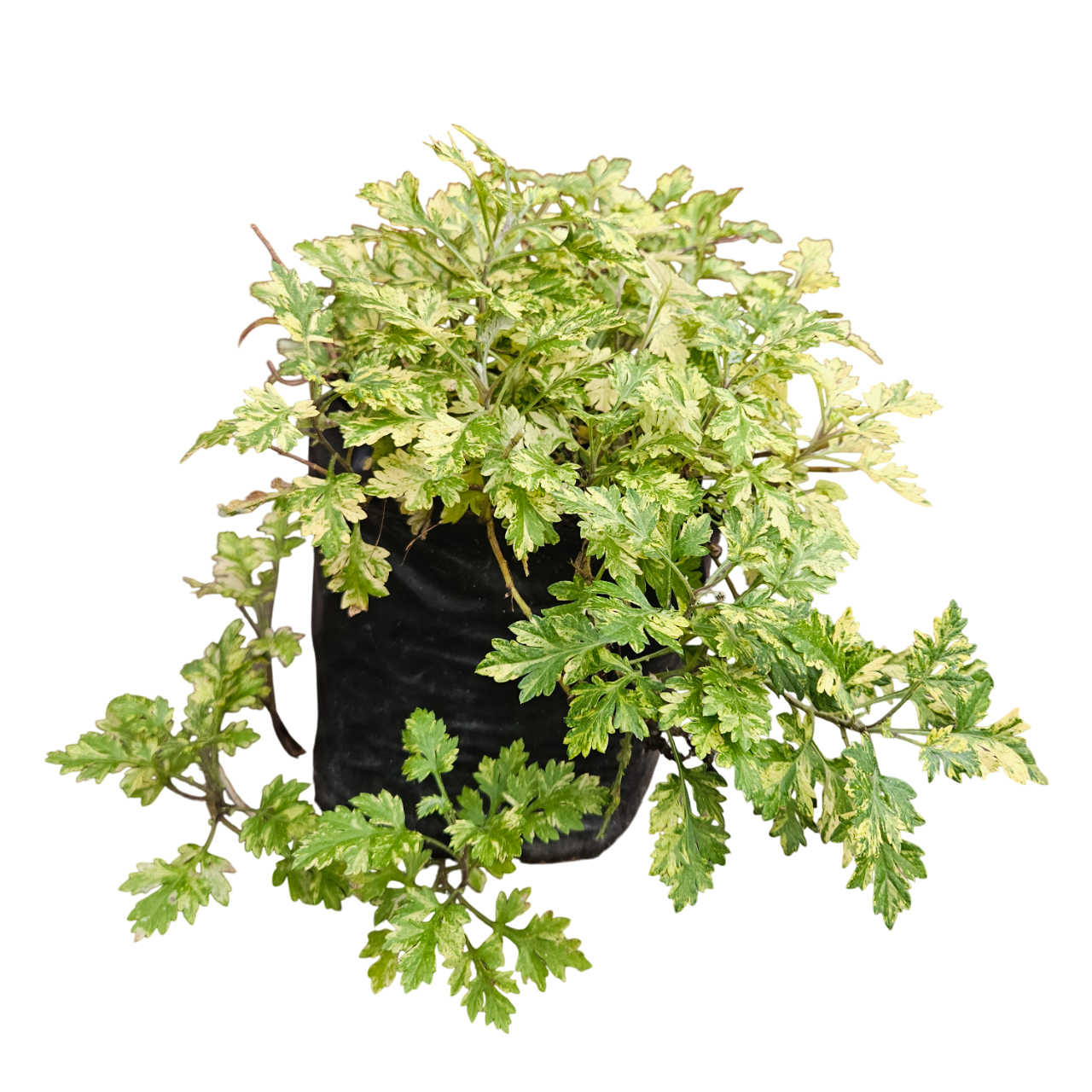
Step into any ancient herb garden, and you’ll likely find this plant growing proudly. Common Mugwort is a robust, rhizomatous perennial with upright, angular, reddish-brown stems that can tower up to 2 metres tall. Its distinctive, deeply lobed leaves are rich, deep green above and covered in dense, white, woolly felt beneath. Brush against them, and you’ll release a complex, spicy, slightly sage-like fragrance. In late summer to early autumn, dense panicles of small, creamy-yellow to reddish-brown flowers appear, adding subtle texture at the top of the plant.
Originally from Eurasia and northern Africa, Common Mugwort has naturalised in parts of South Africa, including the Eastern Cape, and adapts well to the Western Cape’s temperate climate. It grows happily in full sun to partial shade and isn’t fussy about soil—well-drained loam, sand, or even poor, dry spots work fine, as long as it’s not waterlogged. Once established, it’s highly drought-tolerant, handles coastal winds with ease, and is exceptionally frost-hardy. A word of caution: it spreads vigorously via rhizomes and self-seeding, so consider planting it in a contained area or pot to keep it in check.
Key Features:
- Deeply lobed dark green leaves with silvery-white undersides and a complex herbal fragrance
- Known as the “Mother of Herbs” with centuries of traditional and medicinal use
- Water-wise and hardy—thrives with minimal water once established
- Perfect for the back of borders, cottage gardens, or herb gardens
Gardening Note: Plant in well-drained soil in full sun for the most robust growth. Water regularly until established; mature plants are highly drought-tolerant. Cut back hard in late autumn or early spring to encourage fresh growth. Divide clumps in spring if it outgrows its space.
Caution: Avoid use during pregnancy and in large quantities, as it contains thujone.