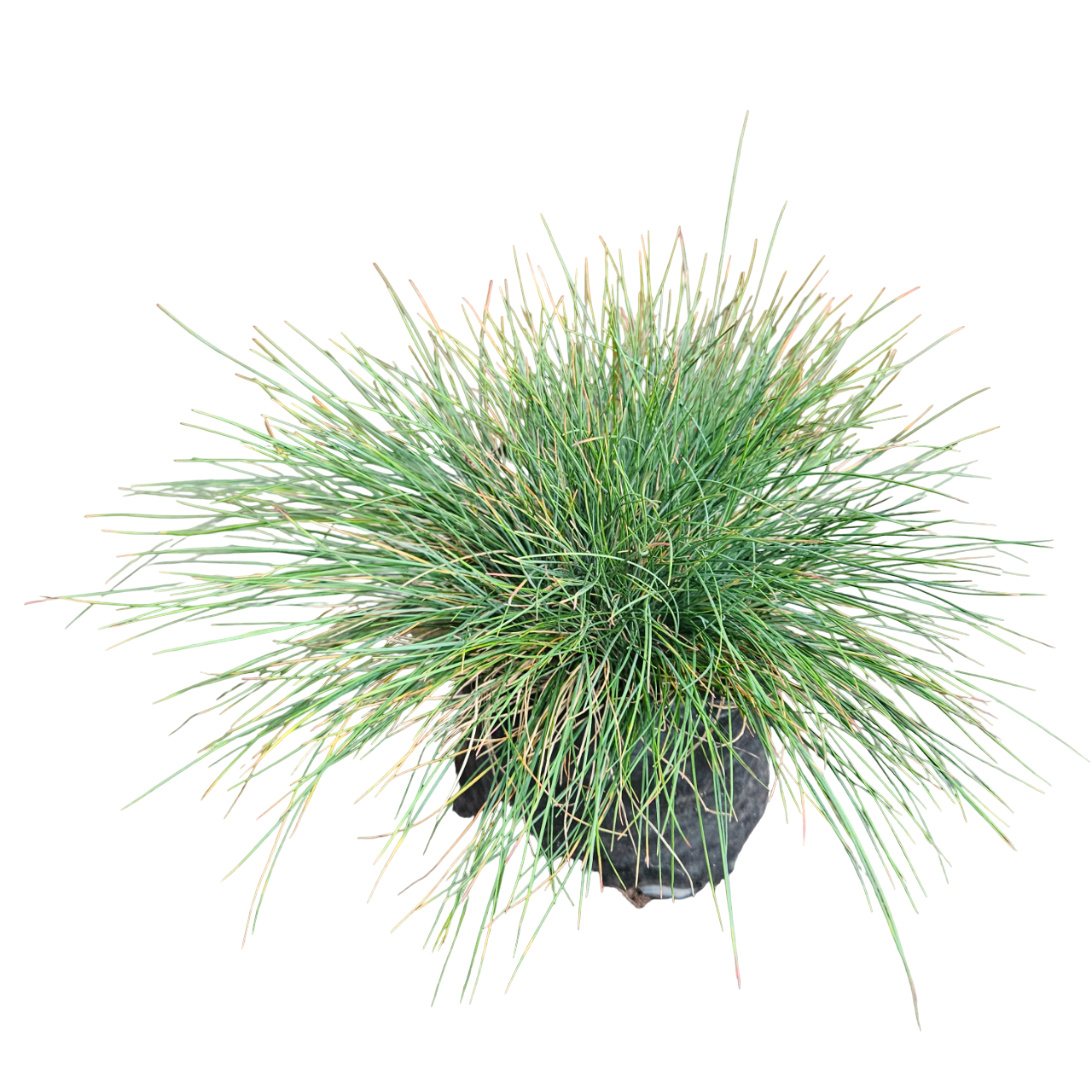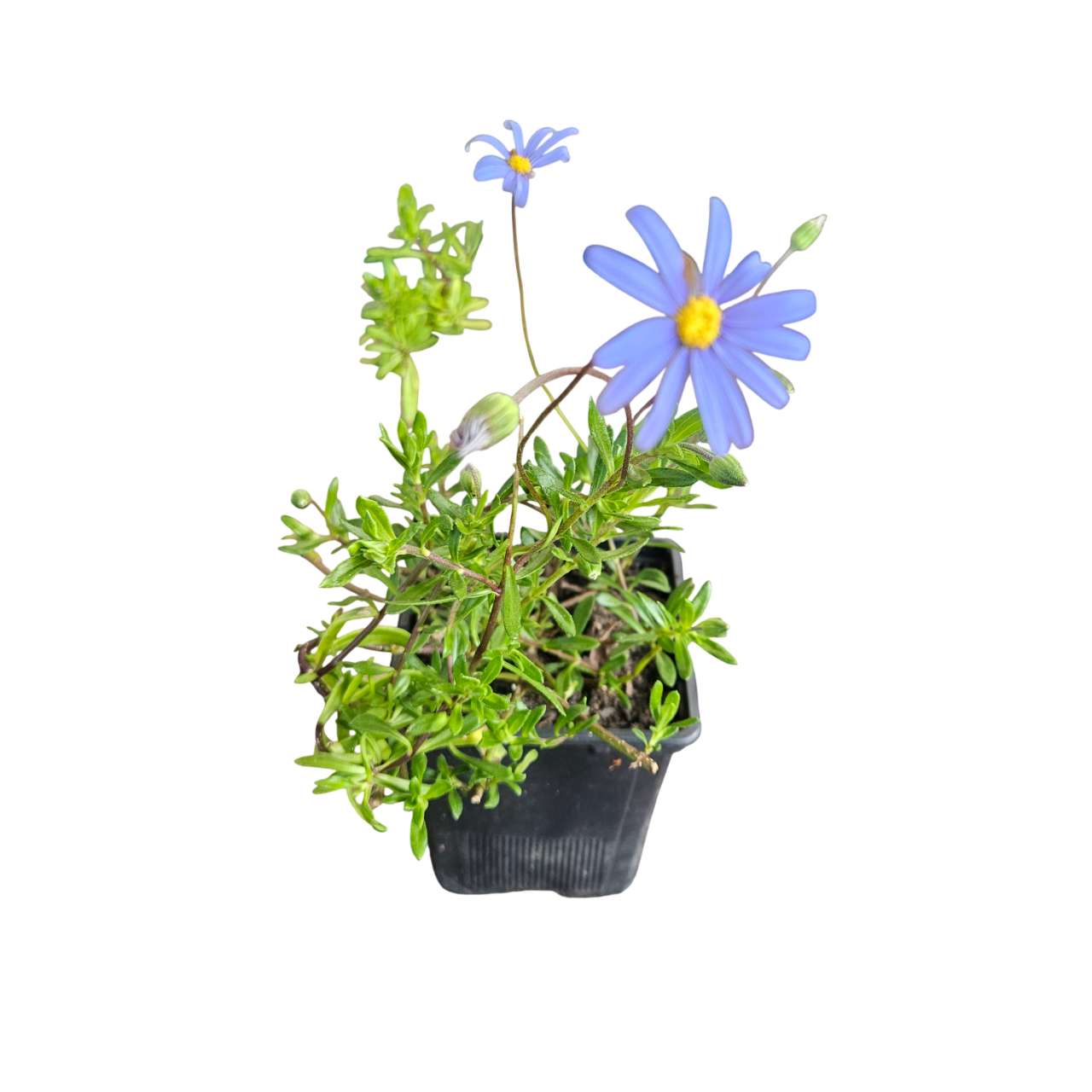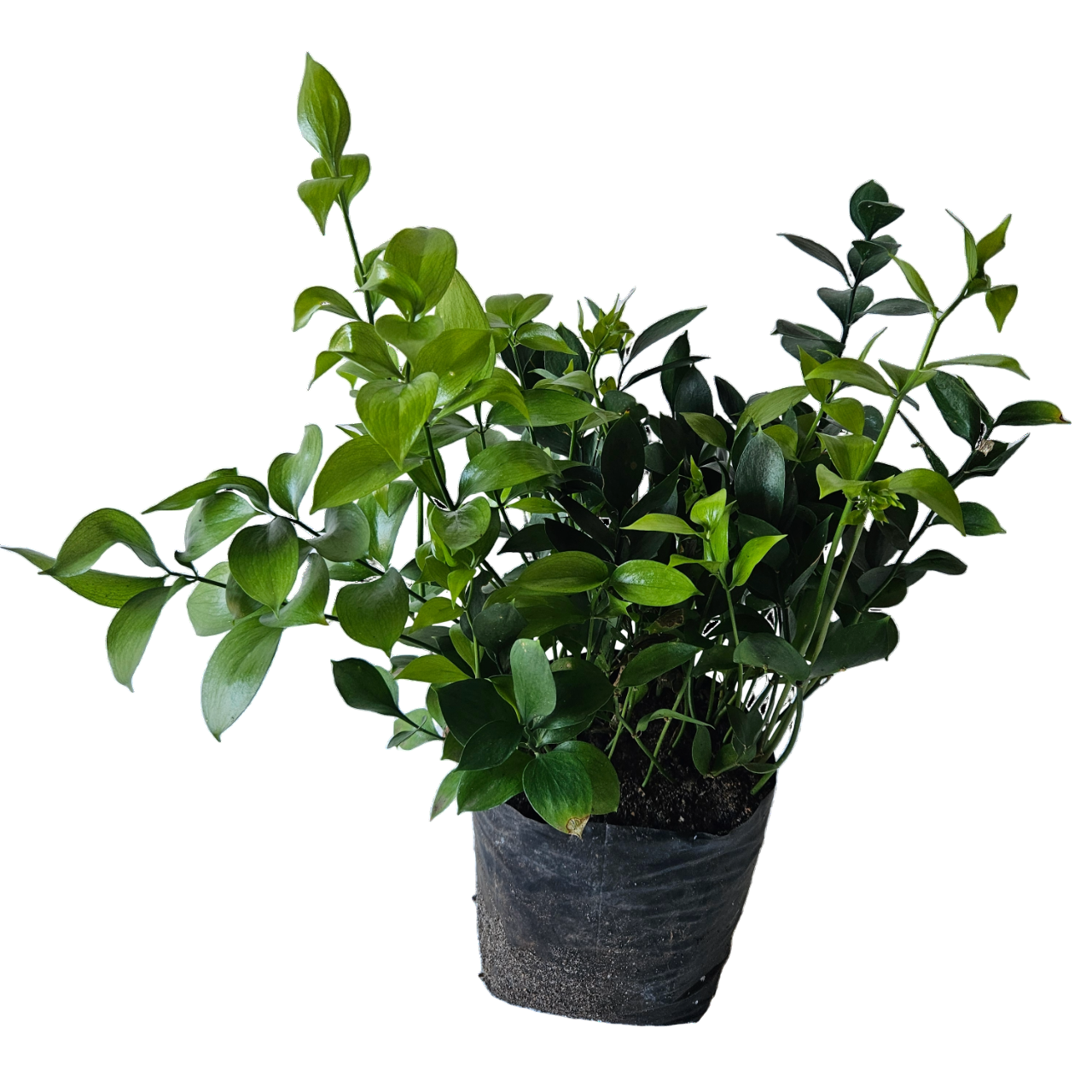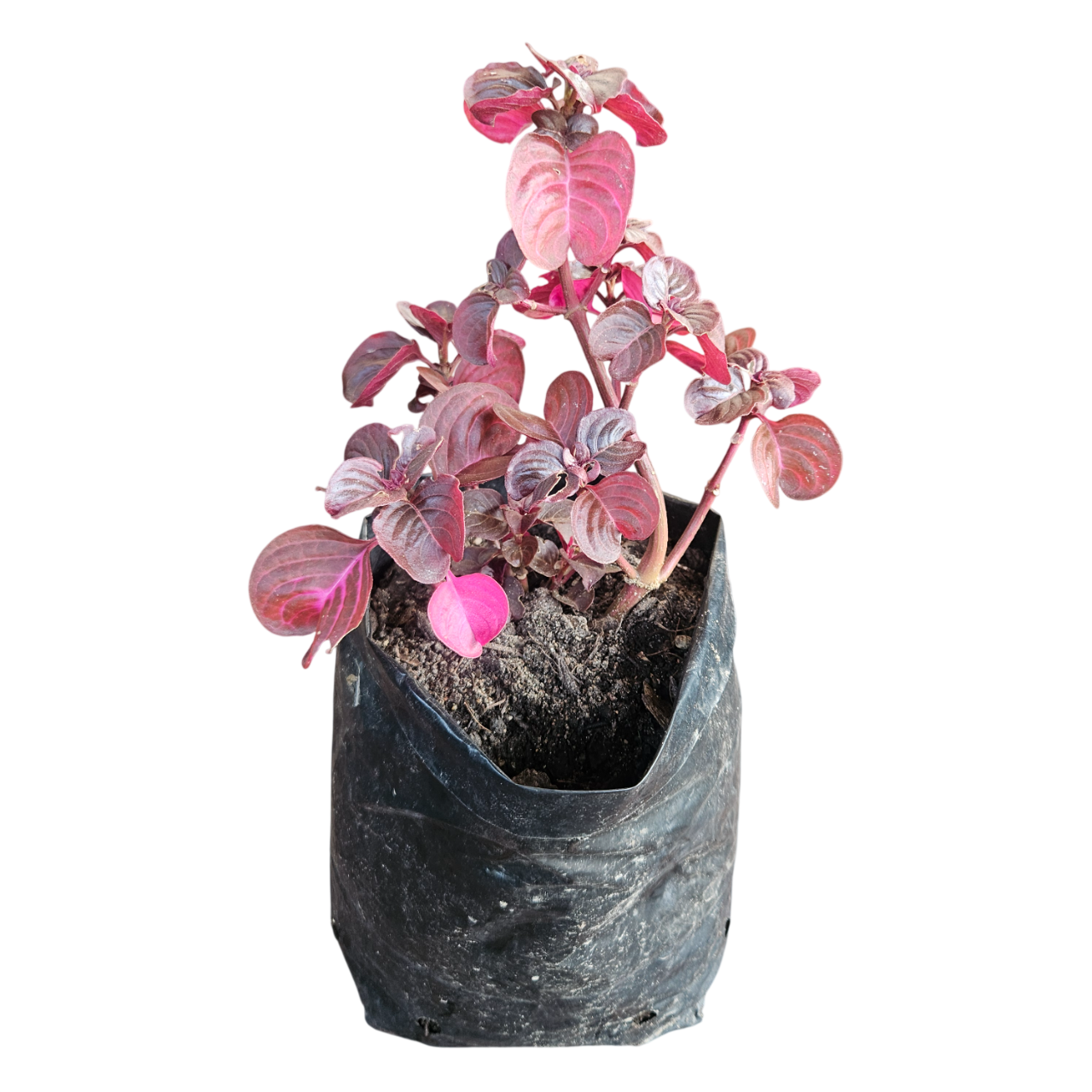
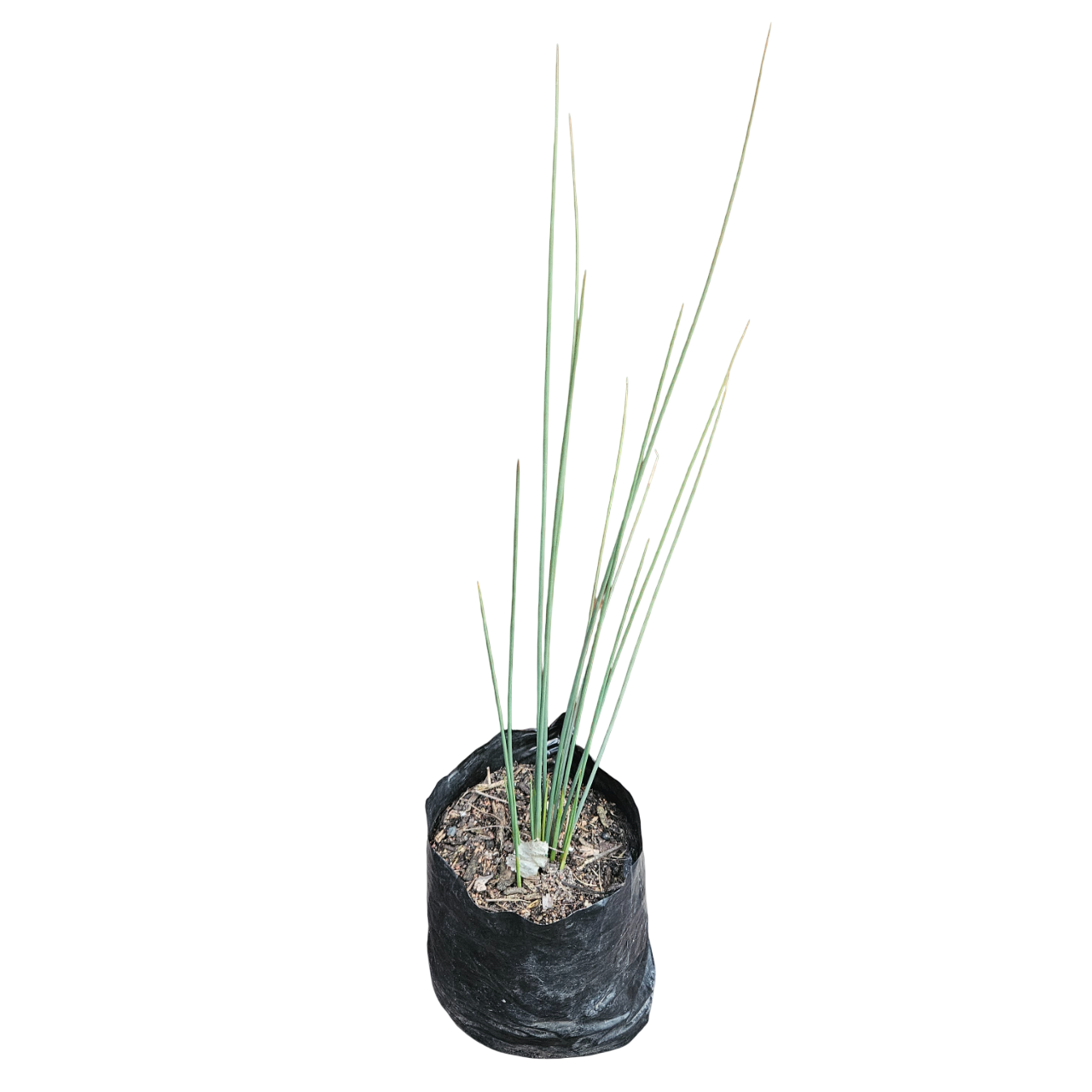
For bold vertical texture that stands tall through every season, Hard Rush is a wonderful choice. Also known as Blue Rush, this very hardy, densely tufted evergreen perennial forms a dense clump of erect, cylindrical, grey-green to blue-green stems that rise like a living sculpture from the ground. Those wiry stems, reaching up to 1m tall, are prominently ridged and filled with interrupted spongy pith, giving them characteristic rigidity. In spring and summer, small, dry, scaly flowers in straw-to-reddish-brown appear in loose clusters near the stem tips, followed by reddish-to-golden-brown seed capsules.
Native to South Africa (including the Western Cape, Eastern Cape, Free State, and KwaZulu-Natal), Hard Rush is perfectly at home in local gardens. It thrives in full sun along rivers, streams, marshes, vleis, and dams, providing essential habitat for small water-side creatures. It prefers permanently moist to wet, heavy soils with a neutral to alkaline pH, and will even grow in standing water up to several inches deep. Once established, it’s remarkably low-maintenance and surprisingly tolerant of slightly drier conditions, as long as the soil doesn’t completely dry out. It handles coastal conditions easily and is cold-hardy. Reaching about 1m tall, it’s perfect for pond margins, bog gardens, rain gardens, or as a striking vertical accent in large containers.
Key Features:
- Dense clumps of stiff, erect, grey-green to blue-green stems for bold vertical structure
- A proud South African native that thrives in consistently moist or wet soils
- Ideal for pond edges, bog gardens, rain gardens, or alongside streams
- Provides shelter for dragonflies and other small water-side creatures
Gardening Note: Plant in consistently moist to wet soil in full sun for the strongest stems and best colour. It thrives in boggy conditions and even in standing water a few inches deep. Once established, it requires little attention; remove dead stems once a year to keep the clump tidy. Divide clumps in spring if a larger spread is desired. The stems have been used traditionally for basket weaving.