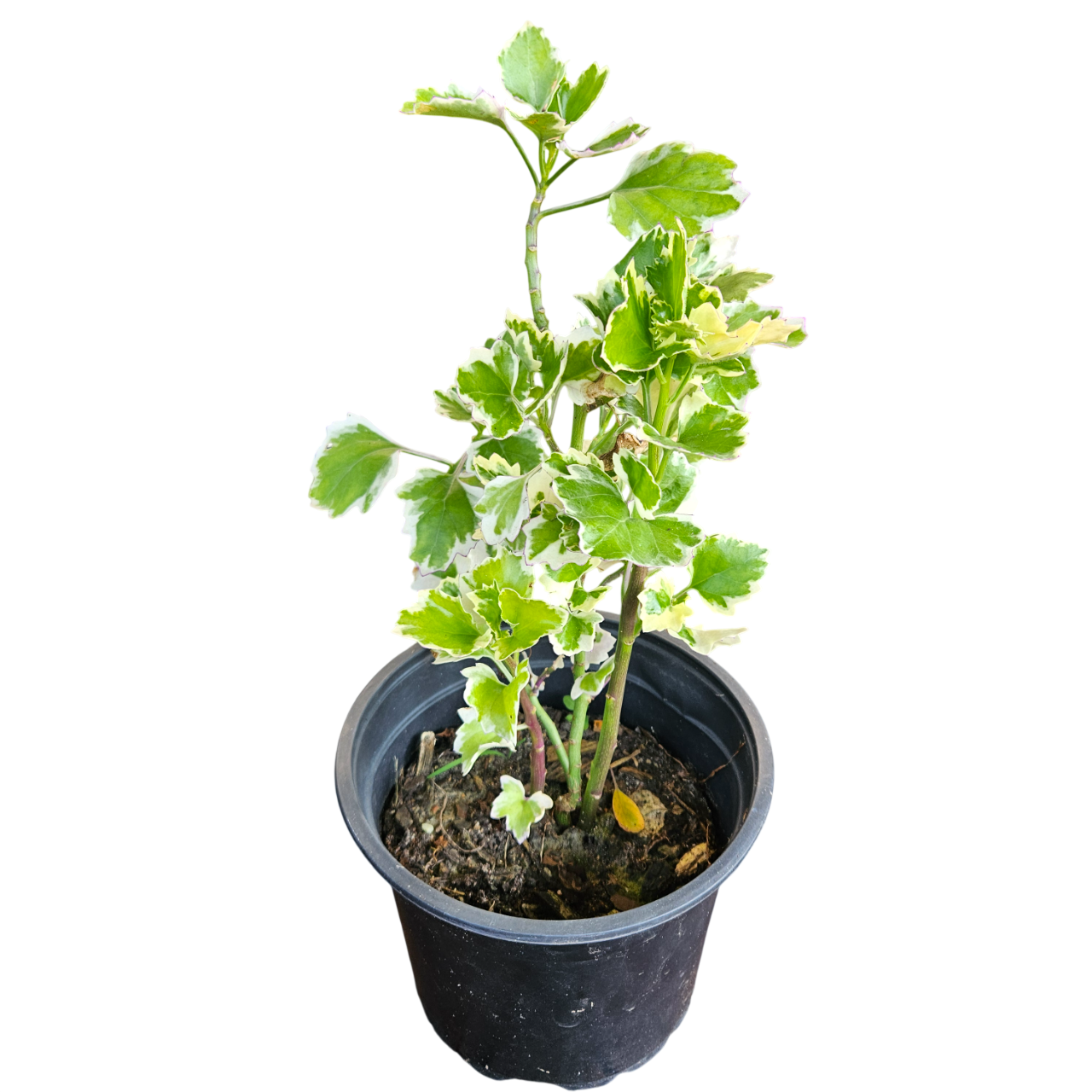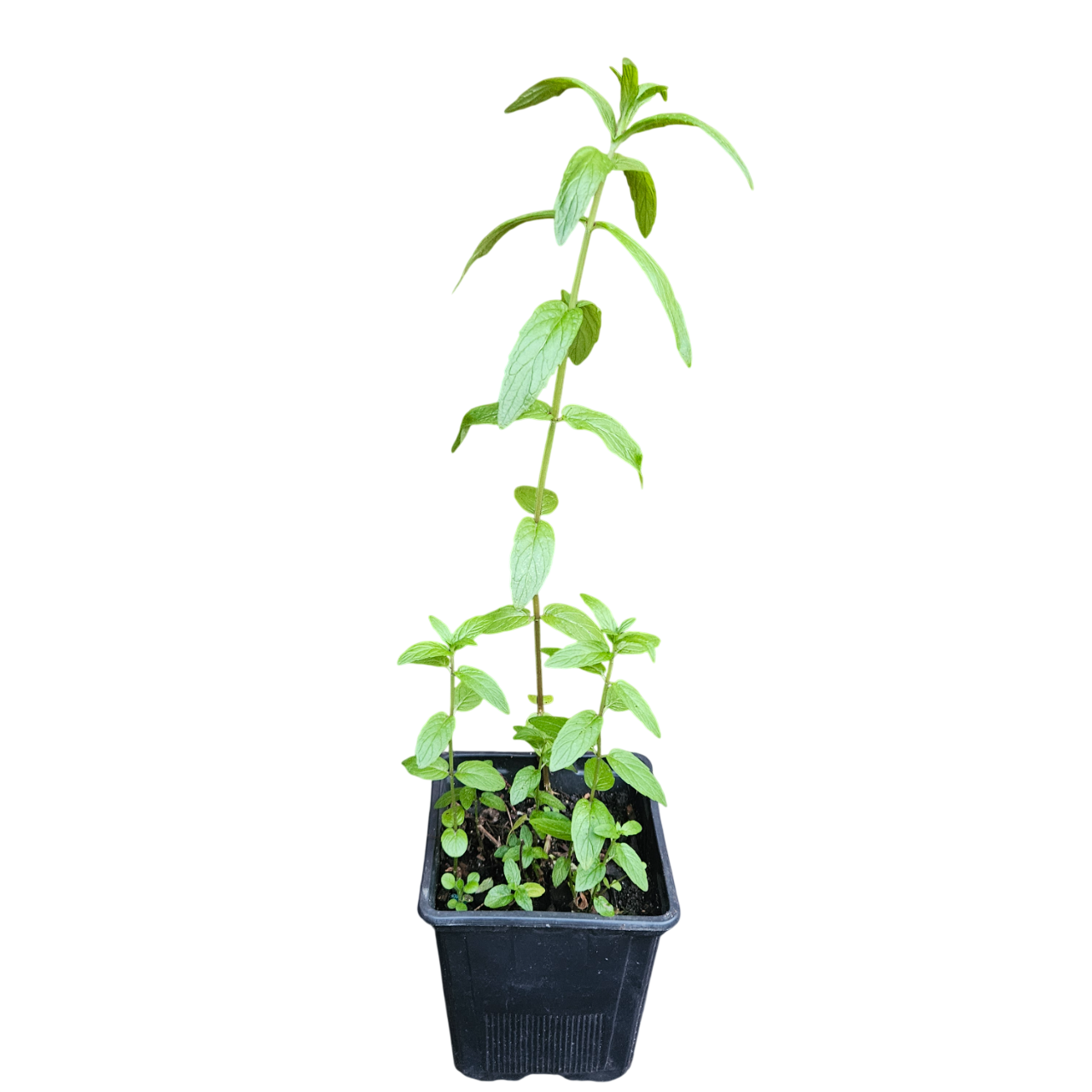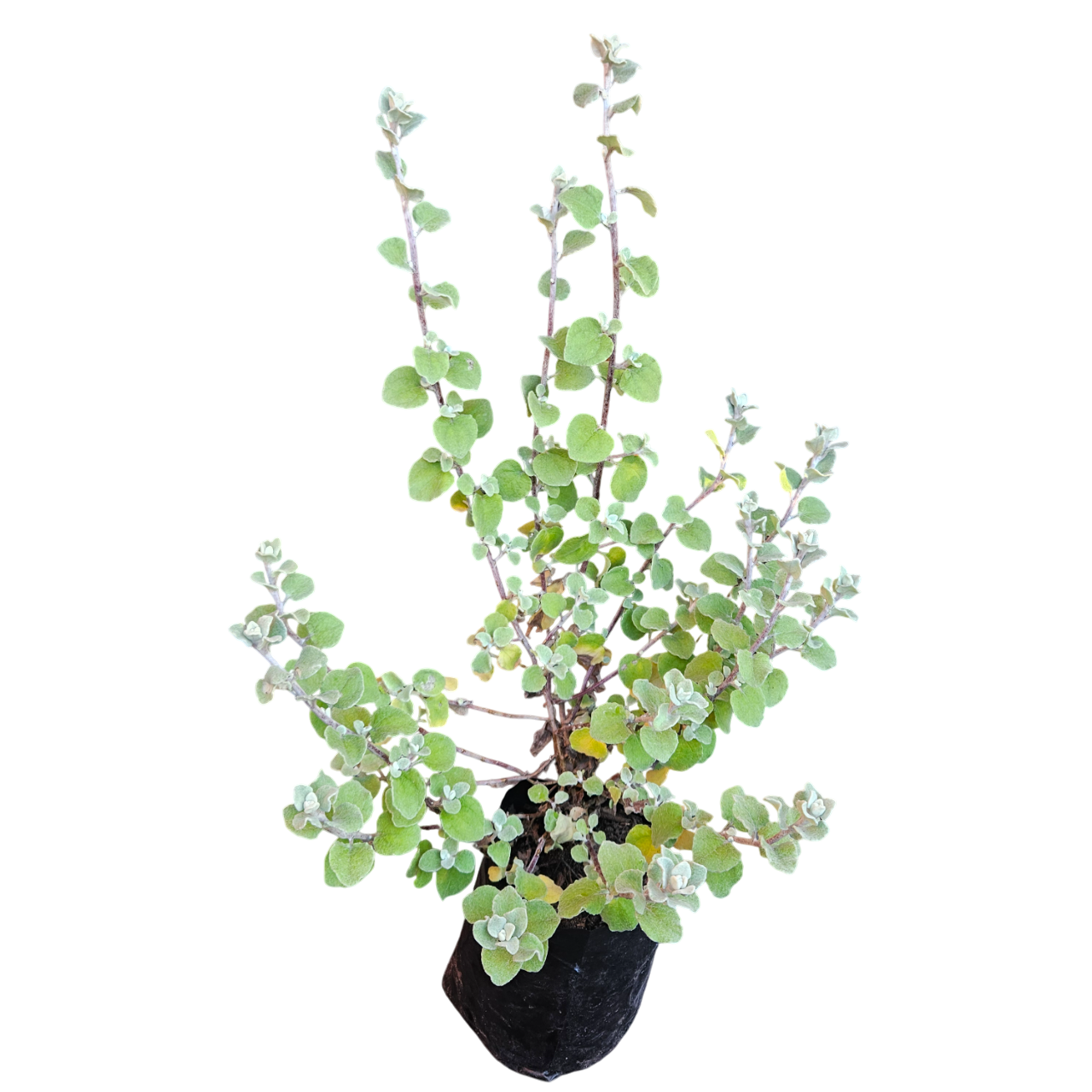
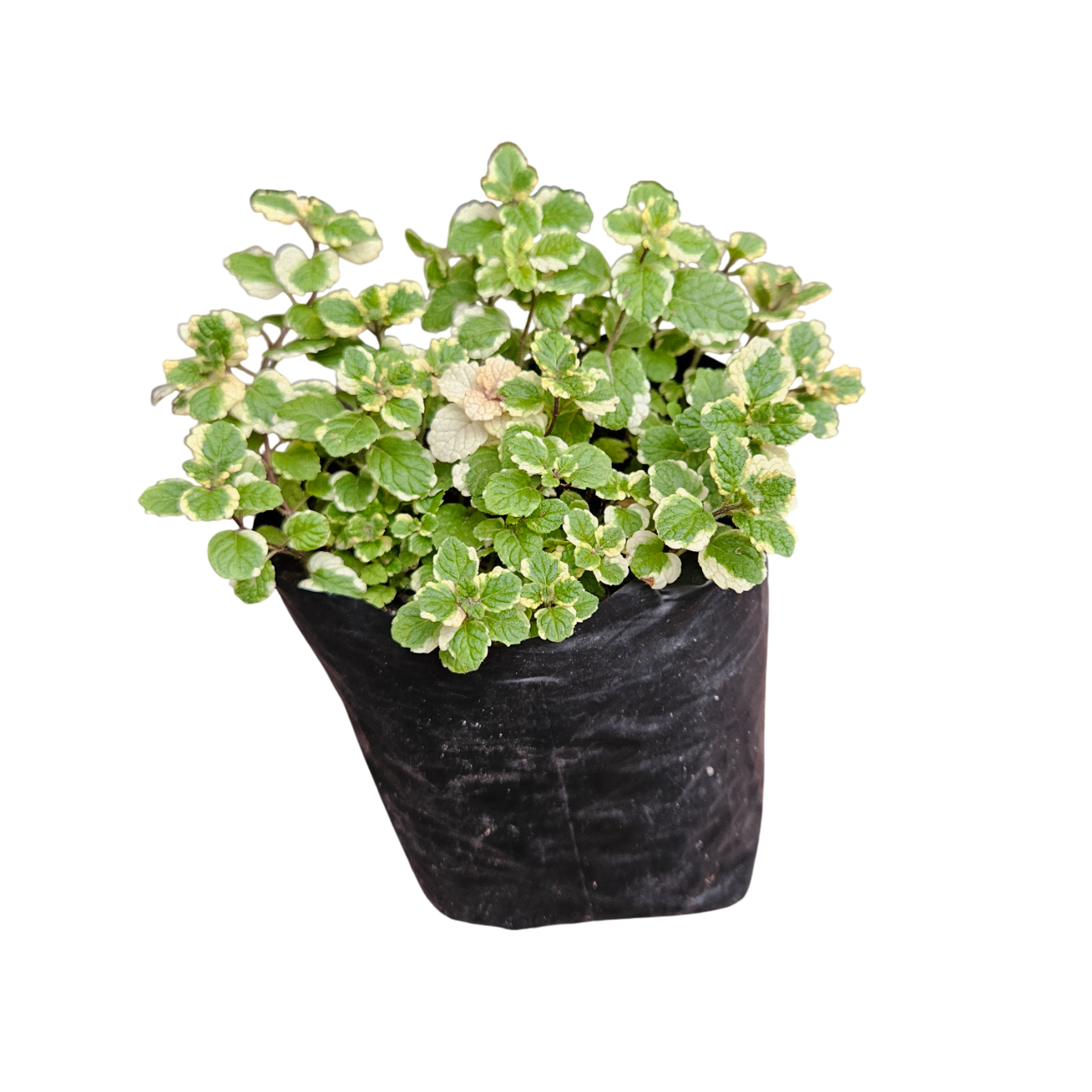
Brush against this mint, and you’ll be transported by its sweet, fruity scent. Pineapple Mint, a variegated form of Apple Mint, is a vigorous, spreading perennial that forms a lush, bushy clump of softly hairy, oval to rounded leaves. Each leaf is a lovely pale green dramatically splashed with irregular, creamy-white margins and markings, with a puckered, crinkled texture. In late summer, dense spikes of tiny, tubular flowers in soft mauve, white, or pale pink appear, attracting bees, butterflies, and other pollinators.
Native to southern and western Europe and the Mediterranean, Pineapple Mint has proven wonderfully suited to the Western Cape’s temperate climate. It thrives in full sun to partial shade—in hotter inland gardens, afternoon shade protects its delicate variegated leaves from scorching. It prefers rich, moist, well-drained soil and, once established, is fairly drought-tolerant, though it looks best with regular watering. It’s a fully hardy perennial, tolerating light to moderate frost, dying back in winter before resprouting vigorously in spring. Reaching 40–60 cm tall and spreading 90 cm or more, it’s perfect for containers, herb gardens, or as fragrant, colourful groundcover in a contained area.
Key Features:
- Soft, pale green leaves with striking, irregular creamy-white margins for bright ornamental colour
- Delightful, sweet, pineapple-like scent when brushed—distinctive among mints
- Flavours teas, jellies, fruit salads, and desserts; beautiful as a fragrant garnish
- Late summer mauve or pinkish flower spikes attract bees and butterflies
Gardening Note: Plant in full sun to partial shade in rich, moist, well-drained soil. To control its vigorous spreading nature (via underground runners), it is essential to plant Pineapple Mint in a container to prevent it from taking over garden beds. Water regularly to keep soil evenly moist. Pinch back stems regularly to encourage bushy growth. If any all-green stems appear, cut them out immediately to prevent reversion. Cut plants back to the ground at the end of the growing season to encourage fresh spring growth. Easily propagated by division in spring or autumn.