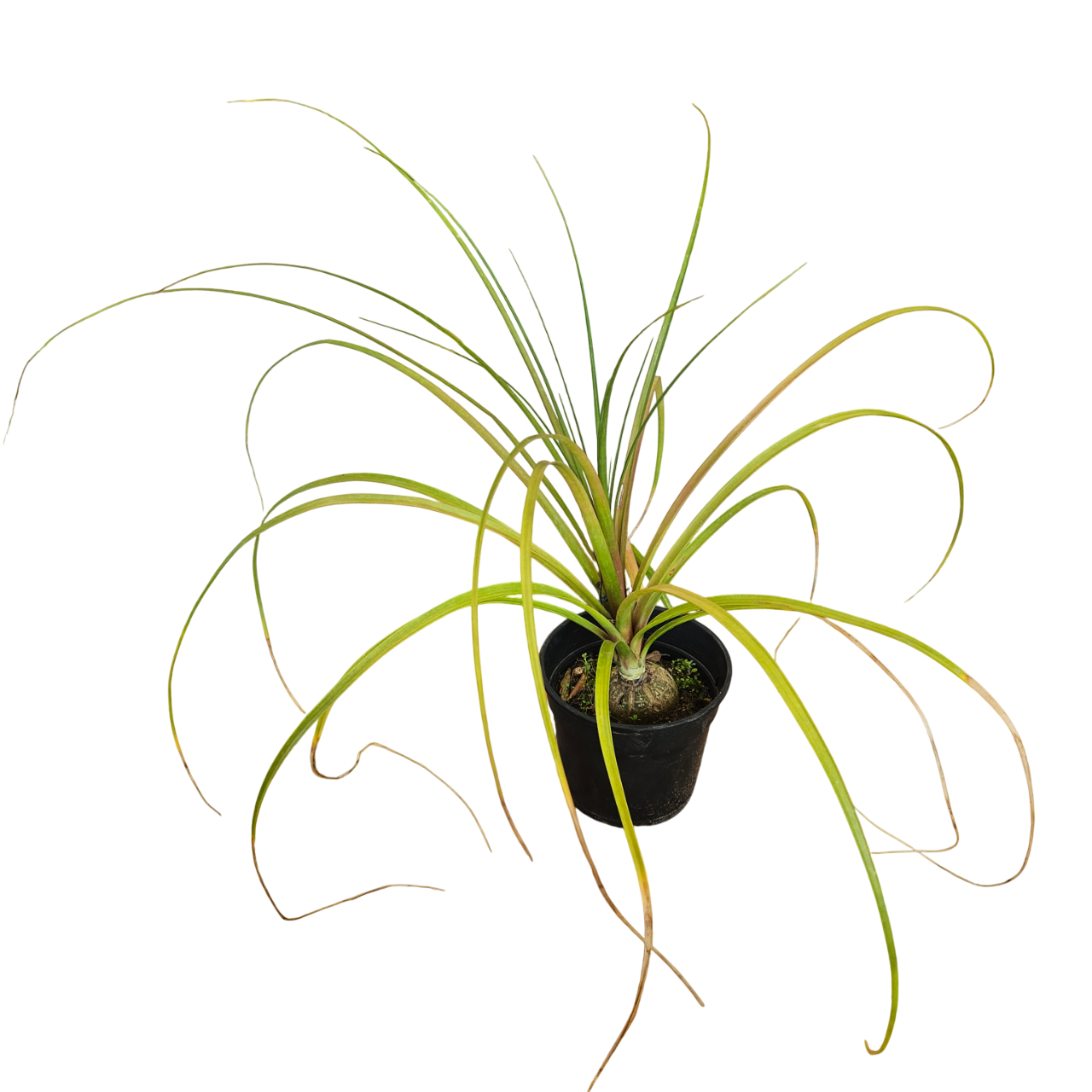
Despite its name, this quirky plant isn’t a palm at all—it’s a succulent in disguise. The Ponytail Palm, also known as Elephant’s Foot or Bottle Palm, is a slow-growing evergreen perennial with a distinctive swollen base, or caudex, that stores water. From the top rises a single palm-like stem bearing a terminal tuft of long, slender, leathery green leaves that arch and curl gracefully like a fountain or ponytail. Once the plant reaches over 10 years of age, it may occasionally produce tall panicles of small, creamy-white flowers, followed by pinkish winged fruit.
Native to the rocky, low-deciduous forests of eastern Mexico, this adaptable plant thrives in the Western Cape’s climate. It needs bright, indirect light to full sun—in hotter inland gardens, afternoon shade prevents leaf scorch. It demands very well-drained, sandy or cactus-mix soil and, once established, is remarkably drought-tolerant thanks to its water-storing trunk. It’s sensitive to severe frost, requiring a sheltered spot or container culture in colder inland valleys, but thrives in mild coastal areas. Reaching 1.5–2.5m indoors and up to 6m in ideal outdoor conditions, it’s perfect as a striking focal point in living rooms, on sunny patios, or in modern, water-wise landscapes.
Key Features:
- Comical, bulbous trunk topped with a fountain of curly, ribbon-like leaves for living sculpture
- Swollen base stores water—thrives on neglect, ideal for forgetful waterers and water-wise gardens
- Non-toxic to cats, dogs, and horses—a safe choice for households with pets
- Slow-growing and long-lived; known to help purify indoor air
Gardening Note: Plant in full sun to partial shade in very well-drained, sandy or cactus-mix soil. Water thoroughly, then allow soil to dry completely before watering again—overwatering is the most common cause of failure. Reduce watering significantly in winter. Sensitive to severe frost; in colder inland areas, grow in a movable container. Wipe leaves occasionally with a damp cloth to remove dust. To maintain the plant’s distinctive shape, avoid snipping the ends of the leaves, as this will cause them to stop growing and look blunt.