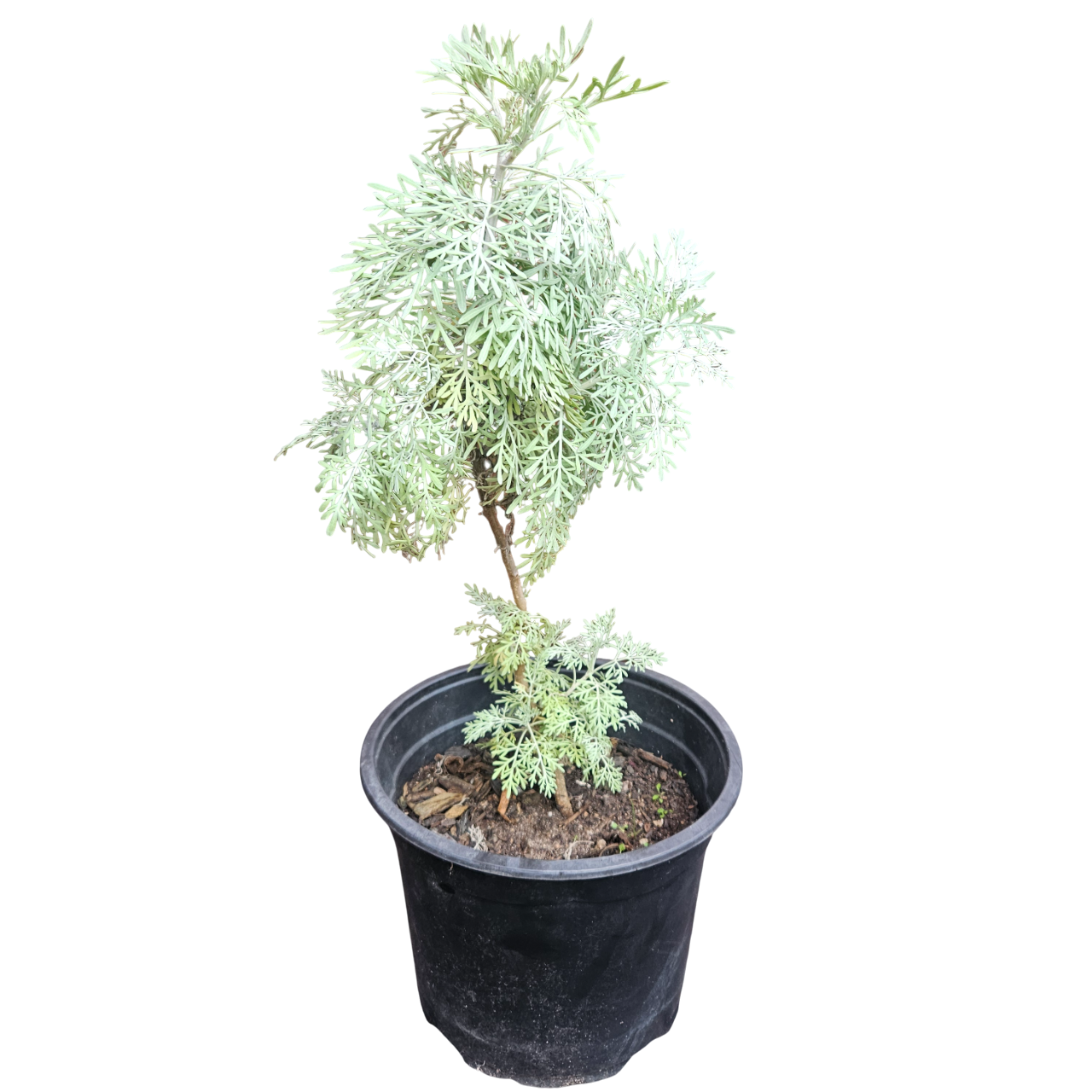

Mysterious, medicinal, and unmistakably beautiful—Common Wormwood has quite a reputation. This is the very plant from which the infamous spirit absinthe is derived. A hardy, shrubby perennial, it forms a bushy, rounded clump of upright, multi-branched, grey-green stems covered in fine, silky hairs. The leaves are the true showstoppers: deeply lobed and finely divided, they’re covered in dense, silvery-white hairs on both sides, creating a soft, velvety, luminous effect that seems to glow in the garden. Brush against them, and you’ll release a strong, sharp, sage-like fragrance. In late summer (January to March), loose panicles of small, yellowish-grey flower heads add subtle textural interest.
Native to Europe, West Asia, and North Africa, Common Wormwood has adapted beautifully to the Western Cape’s temperate climate. It thrives in full sun—at least 6 hours of direct light for the best silver colour—and demands well-drained, even poor, sandy or gravelly soils. Once established, it’s remarkably drought-tolerant. In our climate, excellent drainage is essential; it hates wet feet and is prone to root rot in waterlogged winter soils. It handles coastal winds easily and is exceptionally frost-hardy. Reaching 60cm to 1.2m tall and wide, it’s perfect for the back of borders, herb gardens, rockeries, or as a striking silver accent.
Key Features:
- Stunning, finely textured silver-grey foliage that seems to glow
- Historically significant—used in absinthe, traditional medicine, and as an insect repellent
- Exceptionally drought-tolerant and hardy once established
- Planted near kennels or stables, it helps deter ants, fleas, and moths
Gardening Note: Plant in well-drained soil in full sun for the best silver colour. Water regularly until established; mature plants are highly drought-tolerant. Cut back hard in late winter or early spring to encourage fresh growth. Avoid overwatering or heavy, wet soils—it dislikes “wet feet”.
Caution: Avoid use during pregnancy and in large quantities, as it contains thujone.