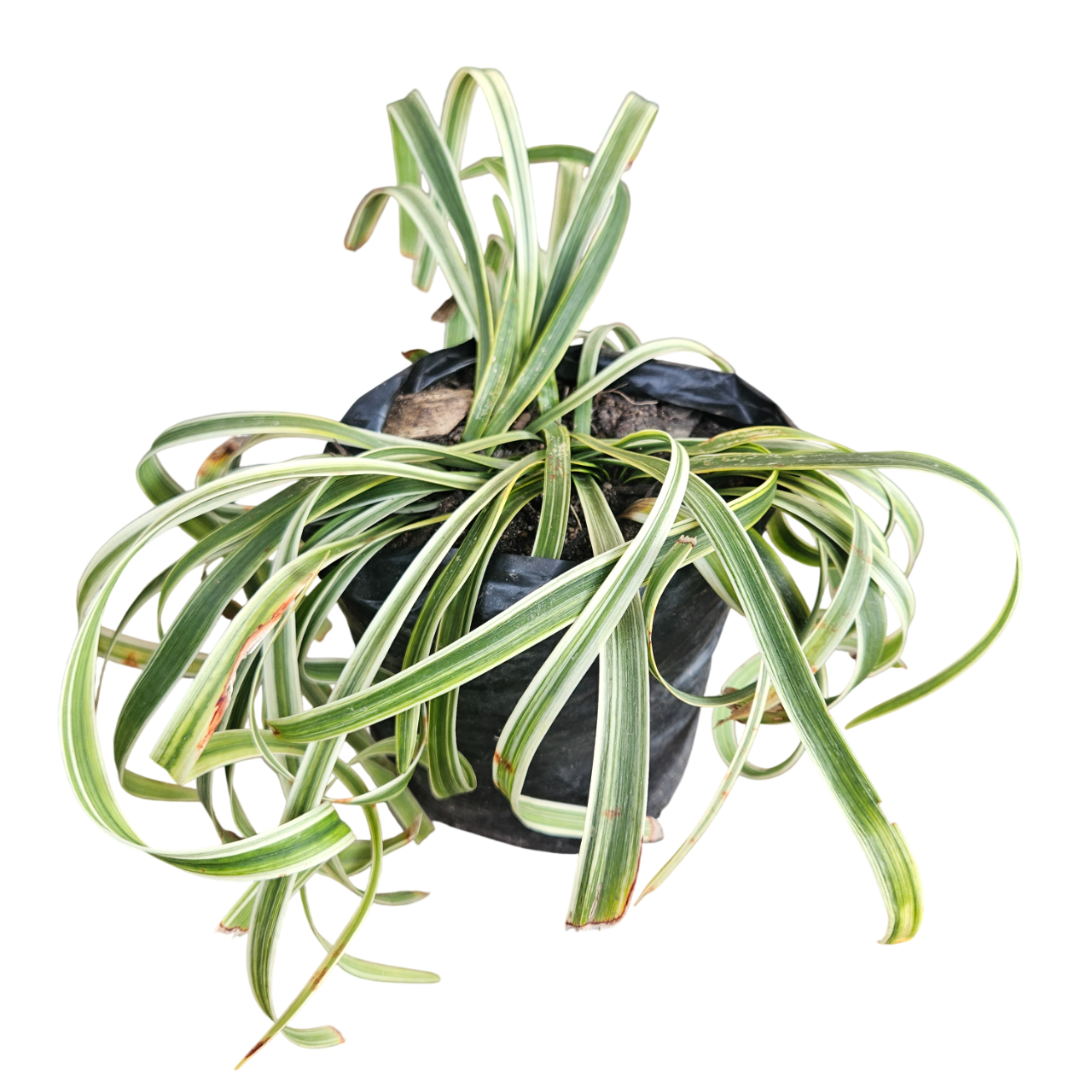

Those arching, strap-like leaves with their soft creamy-yellow margins have a way of brightening the darkest corners of the garden. Variegated Lilyturf is a clump-forming, evergreen perennial that forms a neat, dense tuft of rich, dark green leaves dramatically edged with soft creamy-yellow to golden-white margins. From late summer through autumn, slender, upright spikes bear small, densely clustered, bell-shaped flowers in shades of lavender-purple to violet, followed by pea-sized, ornamental black berries that persist well into winter.
Native to the forests and shady slopes of East Asia, this adaptable plant has proven wonderfully suited to South African gardens. It thrives in part shade to full shade—an invaluable solution for tricky, low-light areas under trees or on the south side of buildings. It tolerates some morning sun but needs protection from harsh afternoon rays, which can scorch the delicate variegation. It prefers well-drained, fertile soil but adapts to most garden soils, including clay, loam, and sand. Once established, it’s remarkably drought-tolerant, though it looks best with regular watering. It handles coastal conditions well and is hardy to moderate frost. Reaching 30–45 cm tall and wide, it’s perfect for edging pathways, underplanting trees, mass planting as groundcover, or adding soft contrast in containers.
Key Features:
- Arching, strap-like, dark green leaves with soft, creamy-yellow margins for a bright, luminous year-round presence
- Upright spikes of small, bell-shaped lavender-purple flowers in late summer, followed by ornamental black berries
- Thrives in shade—invaluable for low-light areas under trees or on south-facing walls
- Drought-tolerant, handles coastal conditions, and hardy to moderate frost
Gardening Note: Plant in part shade to full shade in well-drained, fertile soil. Protect from harsh afternoon rays, which scorch variegated leaves. Water regularly until established; mature plants are drought-tolerant but look best with occasional watering during dry spells. Cut leaves back to the ground in late winter or early spring before new growth appears. Divide overcrowded clumps every few years in spring or autumn to maintain vigour. Virtually pest-free.