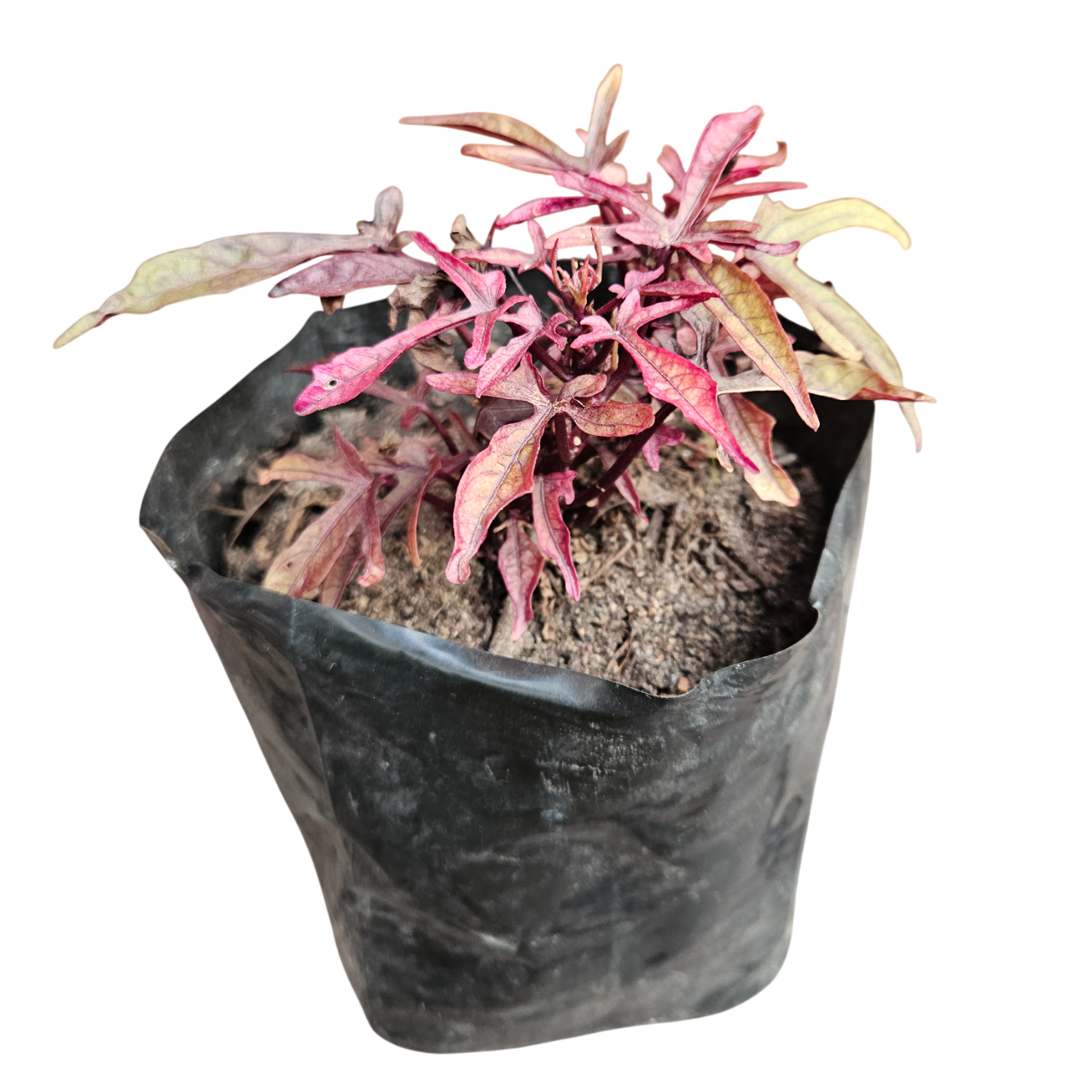

Forget the flowers—this plant’s leaves steal the show. The Ornamental Sweet Potato Vine, a close relative of the edible sweet potato, is a vigorous, trailing perennial grown entirely for its spectacularly coloured, heart-shaped foliage. Depending on the cultivar, you can choose from the deep, dramatic purple of ‘Blackie’, the bright, luminous chartreuse of ‘Marguerite’, or the unique, finely cut, lacy foliage of varieties like ‘Illusion Penny Lace’. Long, trailing stems spill gracefully over pot edges or scramble across the ground, forming a dense, flowing carpet of lush colour.
These ornamental cultivars have been bred for striking foliage and are wonderfully suited to the Western Cape’s warm, sunny summers. They thrive in full sun to partial shade—a sunny spot brings out the most intense, vibrant leaf colours. They prefer fertile, well-drained soil and need regular watering, especially during Cape Town’s dry summer months, to keep foliage lush and vigorous. Extremely sensitive to frost, they’re best treated as summer annuals, planted after all danger of cold weather has passed. With stems easily reaching 1–2 metres in length over a single summer, they’re perfect for hanging baskets, window boxes, mixed containers, or as fast-growing, colourful groundcover.
Key Features:
- Large, heart-shaped leaves in dramatic shades of deep purple, bright chartreuse, or variegated combinations
- Vigorous, trailing stems perfect for the “spiller” role in hanging baskets and containers
- Thrives in summer heat, providing a lush, tropical feel when other plants struggle
- Deep purple colour offers dramatic contrast
Gardening Note: Plant in full sun to partial shade in well-drained, fertile soil—full sun produces the most vibrant leaf colours. Water regularly to keep soil evenly moist but not waterlogged; they don’t like to dry out completely. Apply a balanced, slow-release fertiliser at planting time or feed with liquid fertiliser every few weeks through summer. Extremely sensitive to frost—plant after all danger of frost has passed in spring and treat as a summer annual. Tubers are not grown for flavour and may have been treated with pesticides, so enjoy as an ornamental only.