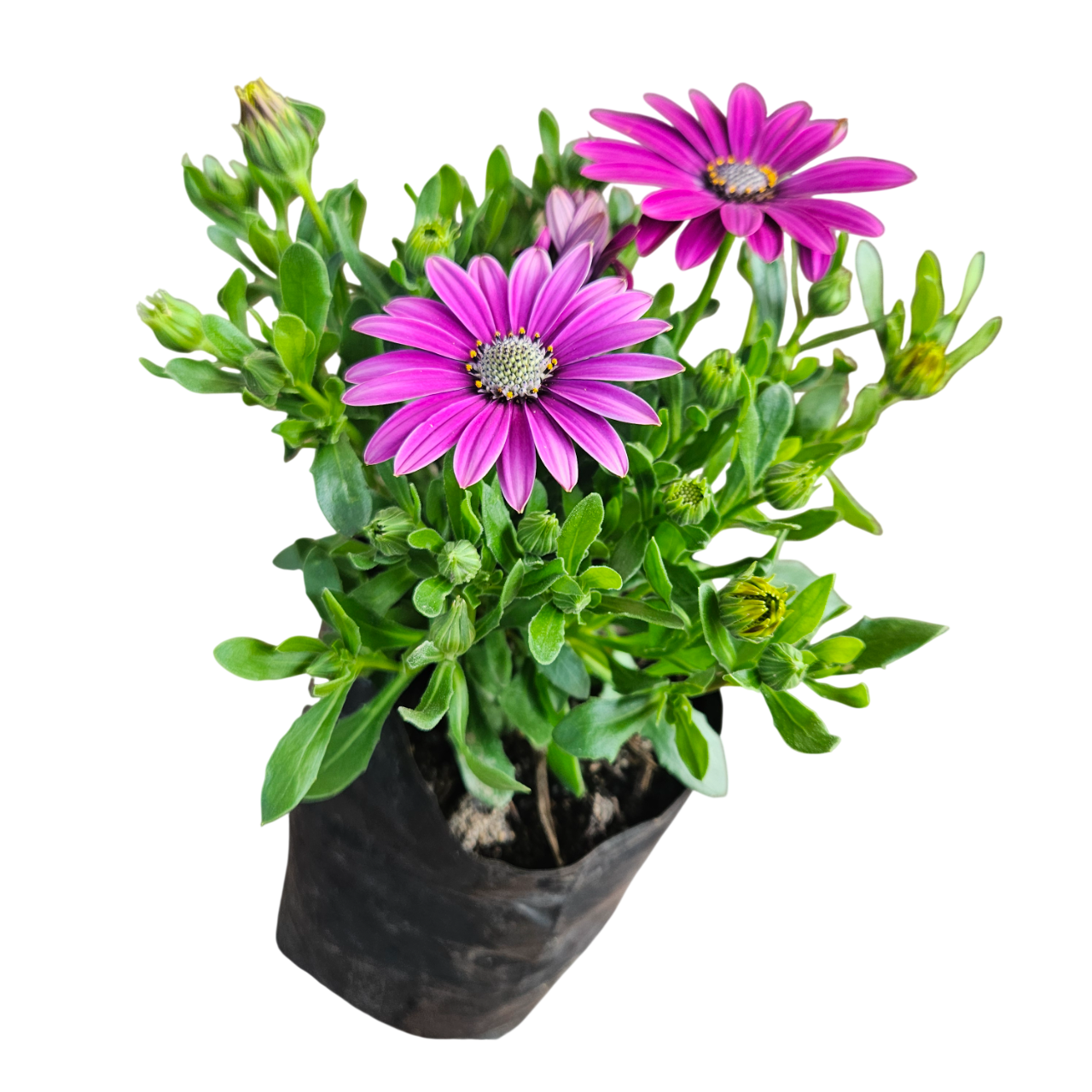
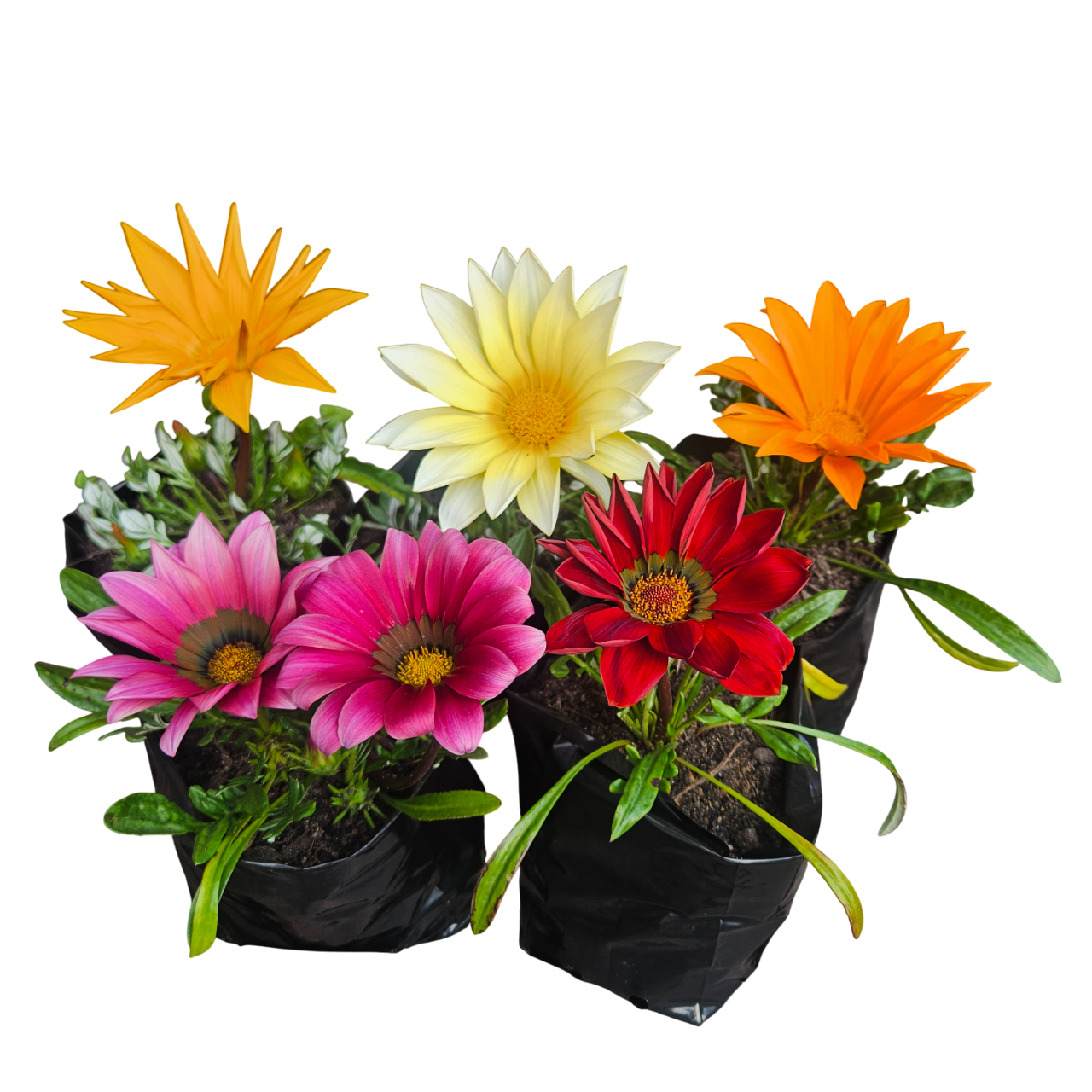


Watch these brilliant daisies close their petals at dusk, then burst open again with the morning sun—it’s like watching the garden wake up. The Treasure Flower, also known as Trailing Gazania or Strandgazania, is a spreading, evergreen perennial that forms a low, mat-forming carpet of attractive, narrow, lance-shaped leaves—glossy, deep green above and soft, silvery-grey to white beneath. From spring through summer and into autumn, it produces an abundance of solitary, daisy-like flower heads in brilliant yellow, fiery orange, rich bronze, pure white, and soft pink, often with striking dark spots or rings at the base of the petals.
Proudly native to South Africa (along the coastal regions of the Western Cape from Mossel Bay westwards and the Eastern Cape), the Treasure Flower is perfectly at home in local gardens. It thrives in full sun—at least 6 hours of direct light for the most abundant display and to keep flowers open and cheerful. It’s unfussy about soil, growing well in most well-drained types, including sandy, loamy, and even poor, rocky soils, but won’t tolerate heavy, waterlogged clay. Once established, it’s exceptionally drought-tolerant, handling strong winds, salt spray, and sandy soils with ease, and tolerates light frost. Reaching 15–30 cm tall and spreading 40–100 cm wide, it’s perfect for mass plantings as groundcover, stabilising slopes, cascading from containers, or adding cheerful colour to rockeries.
Key Features:
- Spectacular, daisy-like flowers in vibrant yellows, oranges, pinks, and whites with dark contrasting eye-spots
- Flowers close at night and on overcast days, bursting open again with the sun—a fascinating interactive habit
- A proud South African native, perfectly adapted to coastal and water-wise gardens
- Exceptionally tolerant of coastal winds, salt spray, sandy soils, and drought
Gardening Note: Plant in full sun in well-drained soil—will not tolerate heavy, waterlogged clay. Water regularly until established; mature plants are highly drought-tolerant. Remove spent flowers regularly to encourage continuous blooming. Trim back lightly if leggy. Easily propagated by division in spring or autumn or from basal cuttings. Tolerant of light frost; in severe inland valleys, a sheltered spot is recommended.