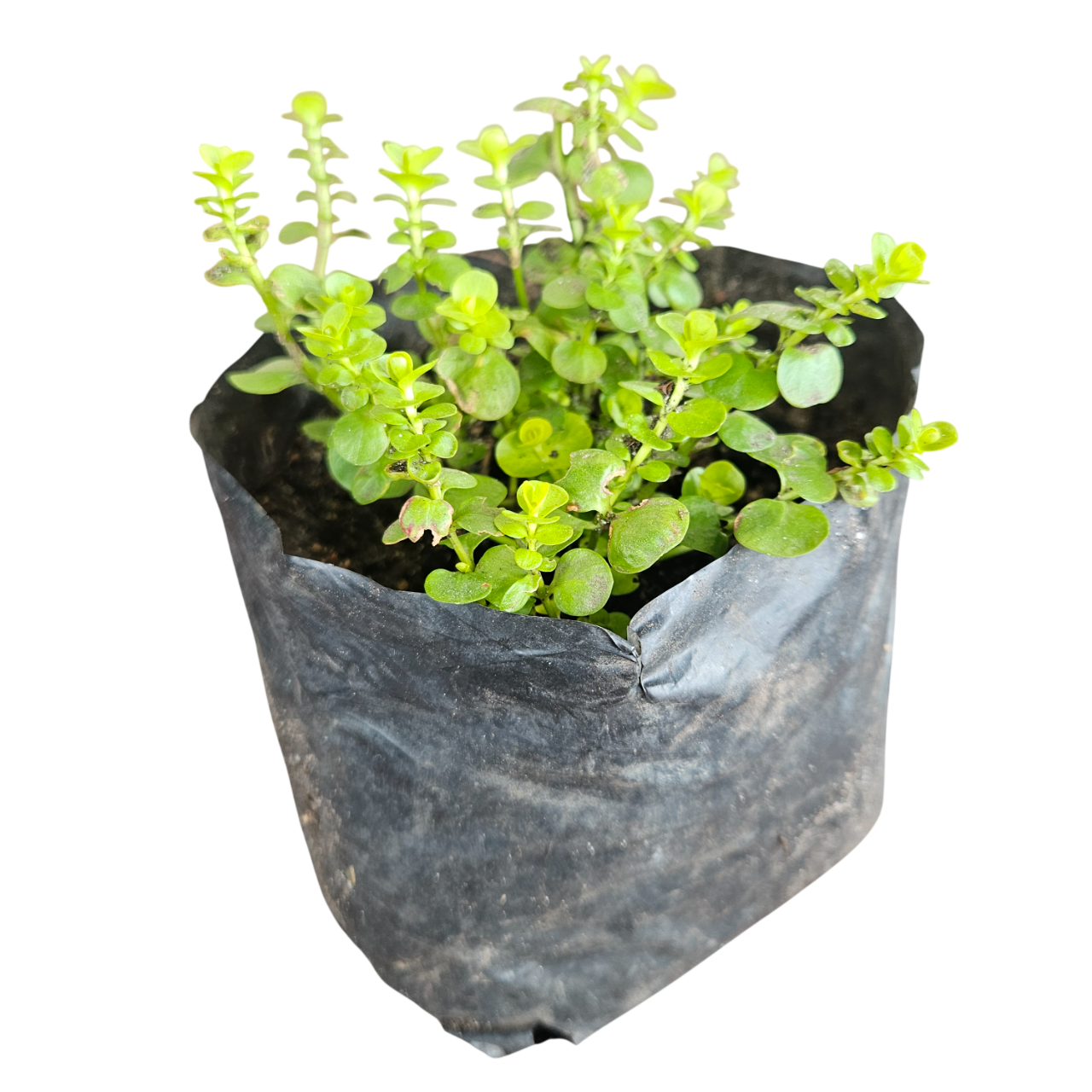
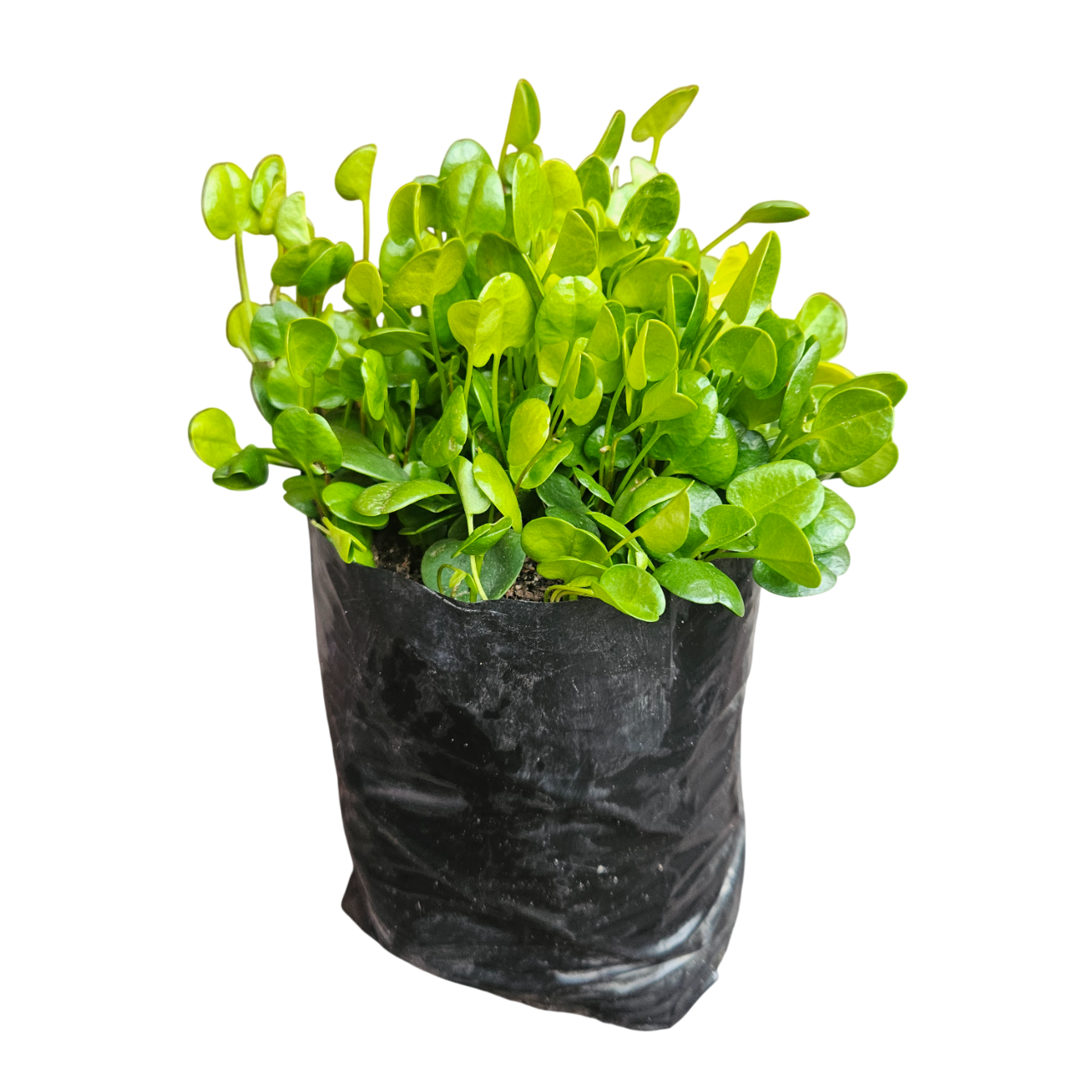

Step onto a pathway planted with this living carpet, and you’ll feel like you’re walking through a field of tiny white trumpets. White Carpet, also known as African Morning Glory, Creeping Falkia, or Oortjies (“little ears”), is a fast-growing, mat-forming perennial that forms a flat, tight mat of small, rounded to broadly ovate leaves—slightly succulent, shiny, and a cheerful green to yellowish-green, each leaf resembling a tiny ear. From late September to December, it produces an abundance of solitary, trumpet-shaped flowers in pure white, sometimes blushed with soft pink, creating a stunning, carpet-like display.
Proudly endemic to the Eastern and Western Cape, White Carpet is perfectly at home in local gardens. It thrives in full sun to partial shade and even tolerates deep shade, making it one of the most versatile groundcovers available. It prefers well-drained, fertile, humus-rich soil and needs moderate, regular watering. Despite its delicate appearance, it’s remarkably resilient, tolerating heat, drought, and poor soil once established. It’s also frost-hardy. Reaching a mere 5–10 cm in height and spreading rapidly via runners that root at nodes, it’s perfect for planting between stepping stones, as a lawn substitute in low-traffic areas, underplanting trees, or cascading from containers.
Key Features:
- Masses of pure white, trumpet-shaped flowers (sometimes blushed with pink) in spring for a stunning carpet-like display
- A proud Cape native—flowers attract tiny insects that feed lizards and frogs
- Thrives in full sun, partial shade, and even deep shade; tolerates dry and damp conditions
- Ideal for planting between stepping stones and pavers; tolerates light foot traffic
Gardening Note: Plant in full sun to shade in well-drained, fertile soil enriched with compost. Space plants 30–45 cm apart—they spread fast. Water regularly until established; mature plants are moderately drought-tolerant but look best with consistent moisture. Snip off flowers after blooming to keep energy focused on growth. Cut back hard if it starts to turn brown. Dig up and divide every 3–4 years to stimulate healthy growth. Easily propagated from rooted runners.