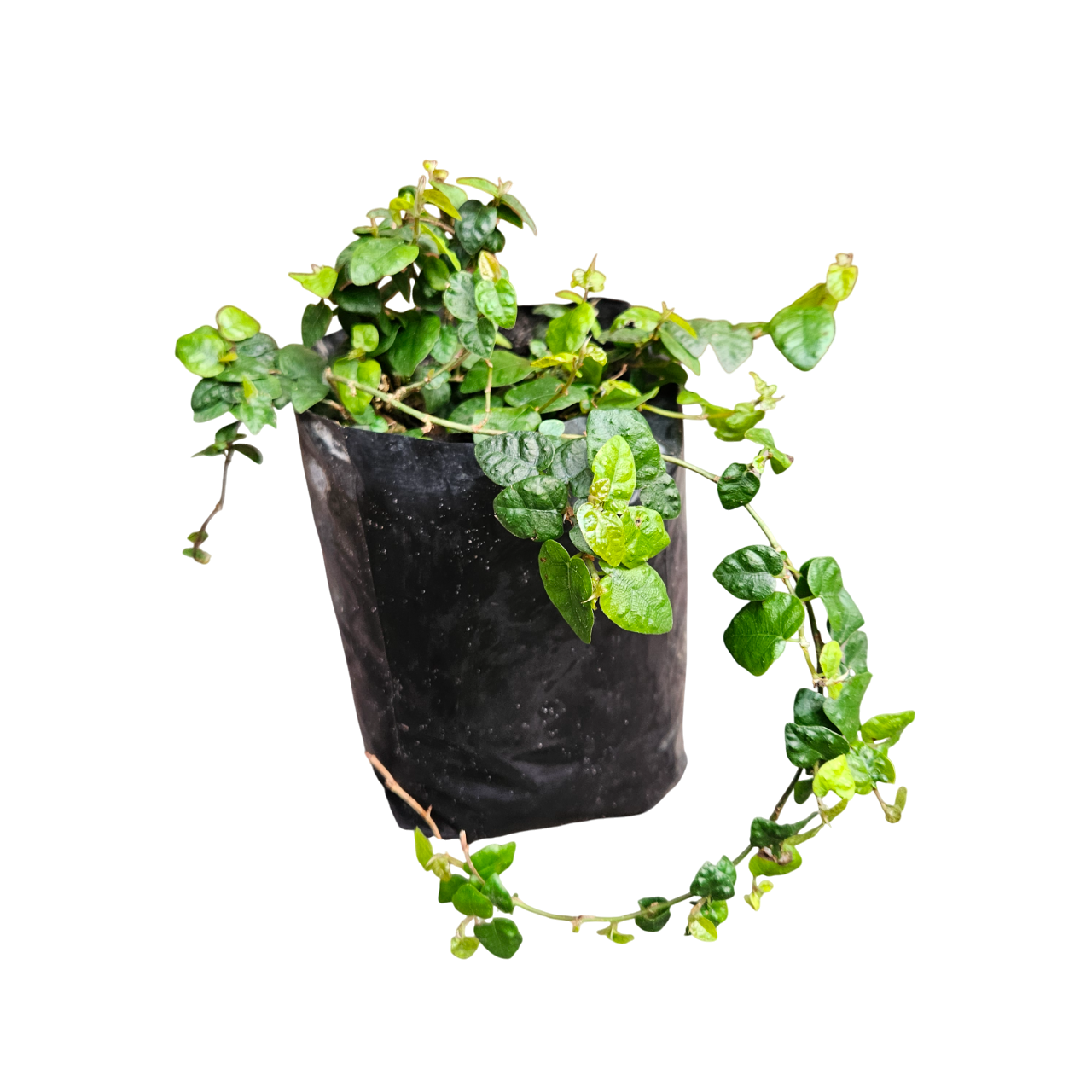
Watch it cling to a bare wall, and you’ll see how this climber transforms hard surfaces into living tapestries. Tickey-Creeper, also known as Creeping Fig or Climbing Fig, is a vigorous evergreen climber with tiny, round to heart-shaped, dark green leaves that overlap like shingles, adhering to walls and fences by means of adhesive aerial rootlets. As the plant matures, the foliage transforms, producing larger, thicker, oval leaves on woody stems, and may eventually bear small, fig-like fruits on old wood.
Native to East Asia (including China, Japan, Taiwan, and Vietnam), this fast-growing plant has proven wonderfully suited to South African gardens, especially for covering unsightly structures. It thrives in full sun to partial shade, tolerating shade well, though leaves may be smaller in brighter conditions. It’s unfussy about soil, growing in most well-drained types, including chalk, clay, loam, and sand. It requires moderate watering, becoming fairly drought-tolerant once established. It tolerates light frost but isn’t fully hardy in very severe winters, needing a sheltered spot in colder inland valleys. Its vigorous, clinging habit can climb or spread 5–15 metres or more, perfect for covering walls, fences, unsightly outbuildings, or as fast-growing groundcover.
Key Features:
- Small, overlapping, heart-shaped leaves create a lush, tapestry-like cover on vertical surfaces
- Adhesive aerial rootlets attach firmly to walls and fences—no trellis or support needed
- Ideal for rapidly creating “living walls,” covering unsightly structures, or dense groundcover
- Adapts to most well-drained soils; becomes fairly drought-tolerant once established
Gardening Note: Plant in full sun to partial shade in well-drained soil. Water regularly until established; mature plants are fairly drought-tolerant. Requires regular pruning to keep in bounds and prevent spread to unwanted areas, including under eaves and into gutters. Caution: Strong adhesive roots can cause structural damage to buildings with fragile mortar or wooden fences. Keep away from house foundations and monitor growth on walls. Tolerant of light frost but needs protection in very cold regions.